Last month, a woman named Carol told me something that broke my heart. She said she was “too old” to start strength training at 65. She believed her muscle-building years were behind her, that she’d missed her chance.
I wish I could tell every woman over 60 this truth: it’s never too late to build strength. Your muscles can still grow, your bones can still strengthen, and your body can still surprise you with what it’s capable of. Strength training for women over 60 isn’t about vanity or proving anything. It’s about independence, vitality, and living fully in the body you have right now.
Why strength training becomes essential after 60
Here’s what happens naturally as we age. After 60, we lose about 3-5% of our muscle mass per decade if we do nothing to stop it. This isn’t just about appearance; this muscle loss directly affects your metabolism, balance, and ability to live independently.
Women face unique challenges after menopause, as declining estrogen levels accelerate bone density loss and muscle deterioration. About 20% of women over 50 develop osteoporosis, making strength training not optional but essential.
But here’s the encouraging part. Research shows that even frail, sedentary adults over 65 can build muscle and improve physical function through consistent strength training. Your body retains its ability to adapt and grow stronger, regardless of your starting point.
The benefits you’ll actually feel
Let me be honest about what strength training does for women our age. The changes go far beyond the scale.
Improved daily function
Within weeks, women notice they can carry groceries more easily, get up from chairs without using their hands, and climb stairs without getting winded. These aren’t small improvements; they’re the difference between independence and relying on others.
Better metabolic health
Muscle tissue burns more calories at rest than fat tissue does. When you build muscle, you naturally increase your resting metabolic rate. This makes weight management significantly easier, even if you’re eating the same amount.
Bone protection
Strength training is one of the few activities that actually stimulates bone growth. While you can’t completely stop age-related bone loss, you can dramatically slow it down and maintain bone density far better than with cardio alone.
Enhanced balance and fall prevention
Falls are a leading cause of injury in women over 60. Strength training improves balance, coordination, and reaction time. The confidence this brings transforms how you move through your daily life.
Starting strength training at home
You don’t need fancy equipment or a gym membership to begin. I’ve seen women transform their strength using nothing but their body weight and a pair of resistance bands.
Essential beginner exercises
Start with these foundational movements three times per week, allowing rest days between sessions:
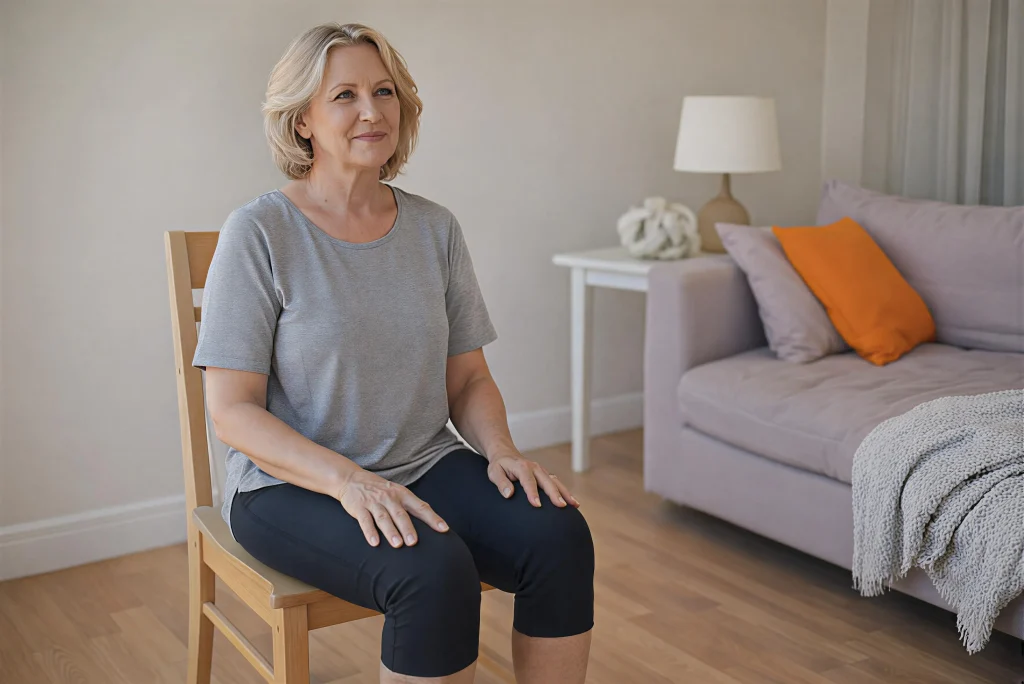
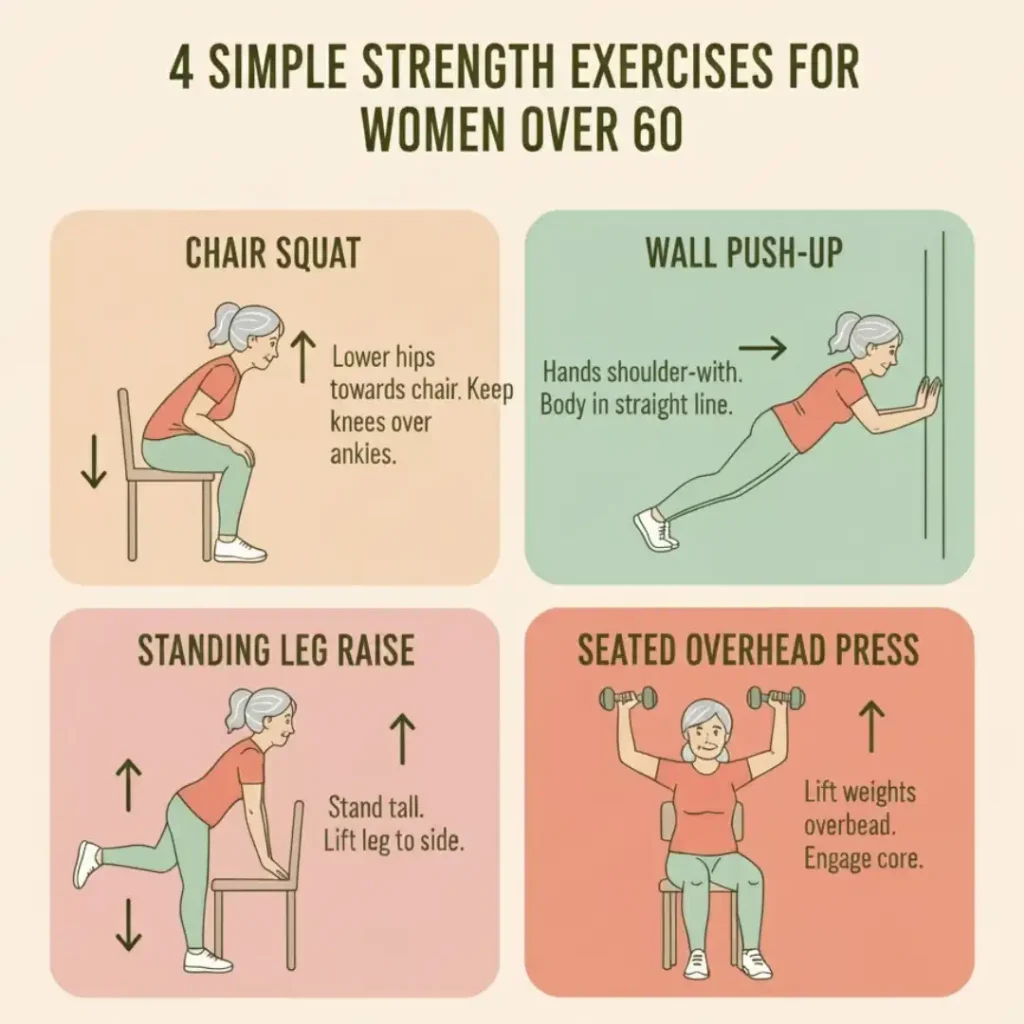
Chair Squats: Stand in front of a sturdy chair. Lower yourself slowly until you lightly touch the seat, then stand back up. This builds leg strength essential for daily activities. Start with 8-10 repetitions.
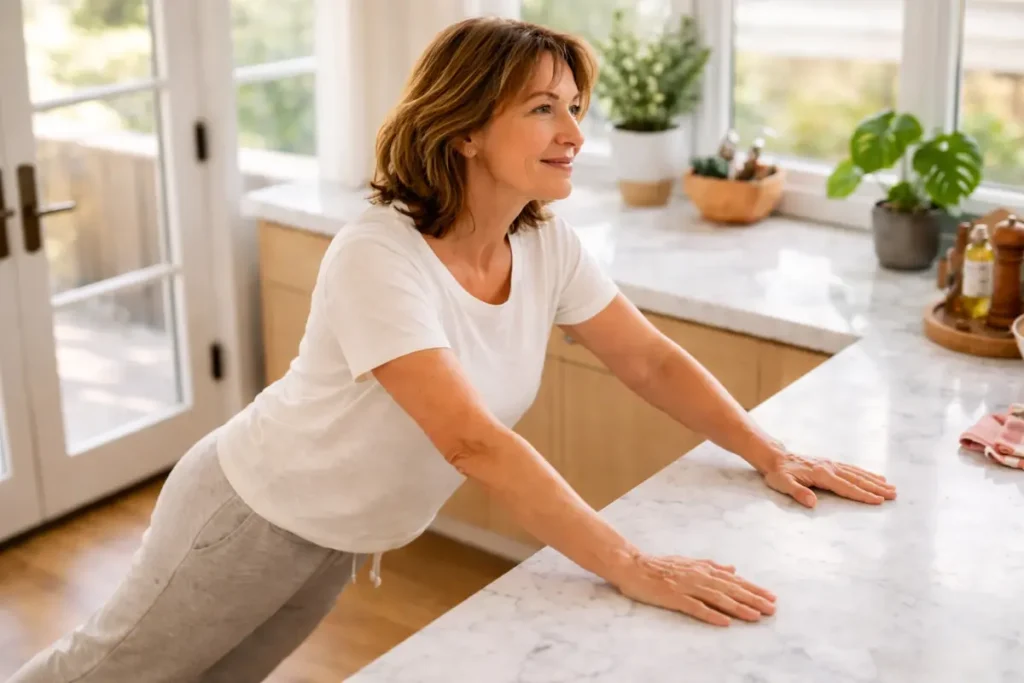
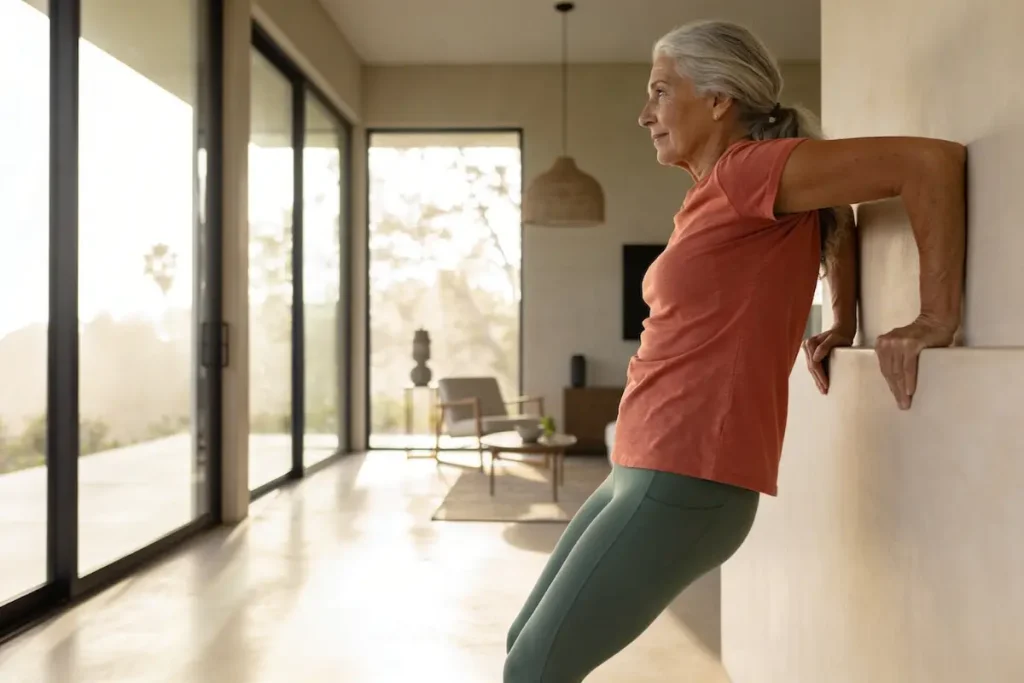
Wall Push-ups: Stand arm’s length from a wall. Place your hands flat against it at shoulder height. Lean in slowly, then push back. This strengthens your chest, shoulders, and arms without stress on your joints. Begin with 8-12 repetitions.
Standing Leg Raises: Hold the back of a chair for balance. Lift one leg out to the side, keeping it straight. This strengthens the muscles crucial for balance. Do 8-10 repetitions per side.
Seated Overhead Press: Sit in a chair holding light weights (or water bottles). Press your arms straight overhead, then lower slowly. This builds shoulder strength. Start with 8-10 repetitions.
The key is gently and progressively work your muscles, as they need time to adapt, especially if you’ve been sedentary.
How to progress safely
Many women make the mistake of doing too much too soon. Here’s a smarter approach.
Week 1-2: Focus on learning proper form with no weights or very light resistance, do 1-2 sets of each exercise.
Week 3-4: Add a second set. Move slowly and deliberately, feeling each muscle working.
Week 5-8: Gradually increase resistance by adding light weights, thicker resistance bands, or more challenging variations.
Listen to your body carefully, mild muscle soreness the next day is normal and good, sharp pain during exercise is not, stop immediately and reassess your form or reduce resistance.
Working around common challenges
Women over 60 often face specific obstacles to strength training. Let’s address the most common ones.
Joint Pain and Arthritis
If you have joint issues, focus on controlled, smooth movements through a comfortable range of motion. Avoid exercises that cause sharp pain. Water-based resistance training or swimming can provide excellent alternatives if land-based exercise hurts too much.
Fatigue and Recovery
Your body needs more recovery time now than it did at 40 days between strength sessions. Prioritize sleep. This is when muscle repair and growth actually happen. If you’re consistently exhausted, you may be doing too much too soon.
Chronic Health Conditions
Many women over 60 manage conditions like diabetes, hypertension, or heart disease. Training can actually improve these conditions when done properly. Work with your healthcare provider to develop a safe plan that accommodates your specific health needs.
Balance Issues
If balance is a concern, do all standing exercises near a sturdy chair or counter that you can hold for support. As your strength improves, your balance typically improves too.
Nutrition to support muscle building
You can’t build muscle through exercise alone; your body needs proper nutrition, especially adequate protein.
Women over 60 need approximately 1.0-1.2 grams of protein per kilogram of body weight daily to maintain and build muscle for a 150-pound woman; that’s roughly 68-82 grams daily.
Good protein sources include lean meats, fish, eggs, Greek yogurt, cottage cheese, beans, and legumes. Spread protein intake throughout the day rather than consuming it all at once. Your muscles use protein more efficiently when it arrives in steady amounts.
Don’t forget calcium and vitamin D for bone health; many women over 60 are deficient in both, and strength training benefits.

Creating a sustainable routine
Consistency beats intensity every single time. I’ve watched women who did gentle strength work three times for months achieve far better results than those who went hard for three weeks then quit.
Sample weekly schedule
Monday: 20-minute strength session (upper body focus)
Tuesday: Rest or gentle walk
Wednesday: 20-minute strength session (lower body focus)
Thursday: Rest or gentle stretching
Friday: 20-minute full-body strength session
Weekend: Active rest, gardening, dancing, leisurely activities you enjoy
Start with just 15-20 minutes per session. As you build stamina and confidence, you can gradually extend to 30 minutes if desired.
Tracking progress beyond the scale
The scale doesn’t tell the whole story. In fact, you might gain weight initially as you build muscle, which is denser than fat.
Better progress markers include:
- How your clothes fit, especially around your arms and shoulders
- Daily activities that become easier (opening jars, carrying bags, climbing stairs)
- Improved posture and reduced back pain
- Better sleep quality
- Increased energy throughout the day
- Improved mood and mental clarity
These functional improvements matter far more than any number on a scale.
When to seek professional guidance
While many women can start basic strength training independently, consider working with a qualified fitness professional if you have significant health conditions, severe joint issues, or a history of falls.
A physical therapist or certified trainer experienced with older adults can create a personalized program that addresses your specific needs and limitations. This investment in proper guidance often prevents injuries and accelerates progress.
Frequently asked questions
Building strength after 60 isn’t about turning back time or competing with your younger self. It’s about claiming the life you want to live right now, independent, energetic, and fully capable.
You don’t need perfection. You don’t need a gym. You need to start, stay consistent, and trust your body’s remarkable ability to grow stronger. For more guidance on supporting your fitness journey, explore our articles on nutrition for women over 50 and managing menopause symptoms through lifestyle changes. Always consult your healthcare provider before starting any new exercise program, especially if you have existing health conditions.
What’s one strength exercise you’ll try this week? Your future self will thank you for starting today.