

How often have you found yourself in the kitchen, staring at the coffee maker as though it were a spaceship control panel? You’ve brewed coffee in that same spot for fifteen years, yet suddenly your mind blanks on whether you’ve already added water. That foggy, frustrating feeling? It’s been a familiar companion since menopause arrived, and I bet you know exactly what I mean. If you’re searching for ways to boost memory after menopause because you’re tired of forgetting names, losing your train of thought mid-sentence, or wandering into rooms unsure of why you’re there, you’re not alone. Studies show that up to two-thirds of women experience memory changes during the menopause transition. The good news? These changes are often temporary and can be managed with simple, effective lifestyle adjustments. This is about understanding the process and taking thoughtful, practical steps that truly make a difference.
Why your memory feels different after menopause
When I first started forgetting simple words and losing track of conversations, I panicked. Was this early dementia? Turns out, what I was experiencing is incredibly common and tied directly to the hormonal earthquake happening inside our bodies.
During menopause, estrogen levels drop dramatically, and this hormone plays a crucial role in brain function, particularly in areas related to memory and learning. Studies show that women going through menopause often experience temporary declines in verbal memory and processing speed, which typically stabilize after the transition is complete. Think of it as your brain recalibrating to a new hormonal baseline, not breaking down.
But here’s what many doctors don’t emphasize enough: hormones are only part of the story; poor sleep from night sweats, increased stress from life changes, mood fluctuations, and even medications can all compound the memory fog. When I finally started addressing my terrible sleep patterns (which I’d been blaming on everything except menopause), my memory improved noticeably within weeks.
What I’ve learned is that brain fog isn’t permanent for most of us. Research indicates that cognitive function often returns to normal ranges post-menopause when we support our bodies properly. If you’re also dealing with the exhaustion that makes everything harder, you might find helpful strategies in this guide on menopause fatigue
The key is not to suffer in silence or assume this is just “how it is now.” It’s about understanding the whole picture and working with your body, not against it.
How to balance your hormones as a woman
When people talk about memory after menopause, it balances hormones, and yes, hormone balance matters, but let’s get realistic about what that actually means.
I’m not a doctor, and I won’t pretend to be one. What I can share is that hormone balance after menopause isn’t about getting back to your 30-year-old levels; it’s about finding your new equilibrium and supporting your body’s adjustment. Some women benefit from hormone replacement therapy (HRT) prescribed by their doctors, while others find relief through lifestyle modifications alone.
What genuinely helps with hormonal balance and memory:
- Stable blood sugar levels through balanced meals with protein, healthy fats, and fiber at each sitting
- Regular physical activity that improves insulin sensitivity and supports hormone metabolism
- Stress management practices like meditation, yoga, or even just daily walks, since chronic stress disrupts hormone balance
- Quality sleep, which allows your body to regulate hormones properly
I learned the hard way that skipping meals and living on coffee creates a blood sugar roller coaster that makes brain fog exponentially worse. When I started eating protein-rich breakfasts and stopped the mid-afternoon sugar crashes, my afternoon memory improved dramatically. You might find more detailed guidance in this piece about vital vitamins for women 50 and breakfast.
Some women explore supplements like black cohosh, evening primrose oil, or maca root, but the research on these is mixed at best. Before trying any supplement or hormone therapy, talk with your doctor. What works for your friend might not work for you, and some supplements can interact with medications or existing health conditions.
The truth? There’s no magic pill. Hormone balance is about consistent, gentle support through how you eat, move, sleep, and manage stress. And when you need medical help, asking for it isn’t weakness, it’s wisdom.
What to drink to balance hormones and support memory
Sound surprising? What you drink throughout the day actually matters more for your memory and hormone balance than most of us realize. I used to think my afternoon brain fog was just inevitable until I started paying attention to my hydration habits.
Plain water is the foundation. Dehydration can cause or worsen brain fog, concentration problems, and mood swings. I aim for 8 glasses of water daily, and honestly, when I forget to drink enough water, my memory feels noticeably fuzzier; it’s simple but powerful.
Beyond water, certain beverages can support your brain and hormonal health:
- Green tea contains L-theanine and antioxidants that research links to better cognitive function and memory
- Herbal teas like chamomile, peppermint, or sage may support relaxation and sleep quality, which directly impacts memory
- Bone broth provides amino acids and minerals that support overall health and stable energy
What doesn’t help? Loading up on sugary drinks, excessive caffeine, or alcohol. I’m not saying never have wine or coffee; I certainly enjoy both, but moderation matters. When I was drinking three or four coffees daily plus wine most evenings, my sleep was terrible and my memory even worse.
One change that surprised me: switching my evening wine to herbal tea. It felt boring at first, but within two weeks, my sleep quality improved, and mornings felt clearer. Small shifts really do add up. There are more ideas on supportive beverages during this life stage, you can check out what drinks are good for menopause symptoms.
The bottom line? Hydration isn’t glamorous, but it’s foundational. Your brain is about 75% water, and mildly, cognitive function suffers. Simple fix, big impact.
Fruits that balance hormones in females and feed your brain
Let’s talk about something delicious: fruit. While no single food will “fix” your hormones or memory, certain fruits contain compounds that genuinely support brain health and hormonal balance through their nutrients, fiber, and antioxidants.
Berries are memory superstars; blueberries, strawberries, and blackberries are packed with flavonoids that research associates with slower cognitive decline and improved memory. I keep frozen berries in my freezer year-round and add them to morning yogurt or afternoon smoothies. They’re one of the easiest brain-healthy habits I’ve adopted.
Other fruits worth eating regularly:
- Avocados provide healthy fats that support hormone production and brain cell health
- Citrus fruits offer vitamin C and antioxidants that protect brain cells from damage
- Apples and pears deliver fiber that supports gut health and stable blood sugar, both crucial for hormone balance
- Pomegranates contain compounds that may support estrogen metabolism and have antioxidant properties
Here’s what doesn’t work: treating fruit like medicine while the rest of your diet is junk. Fruit is most powerful as part of an overall whole-foods approach that emphasizes vegetables, whole grains, lean proteins, healthy fats, and yes, fruit.
I follow a loosely Mediterranean-style eating pattern, which research consistently links to better brain health and slower cognitive aging. If you’re curious about this approach, the article on Mediterranean diet breakfasts.
The truth is, there’s no single “hormone-balancing superfruit,” but eating a variety of colorful fruits daily provides your brain and body with nutrients they need to function at their best, and bonus: fruit satisfies sweet cravings naturally without the blood sugar crash that worsens brain fog.
Train your brain: simple daily habits that sharpen memory
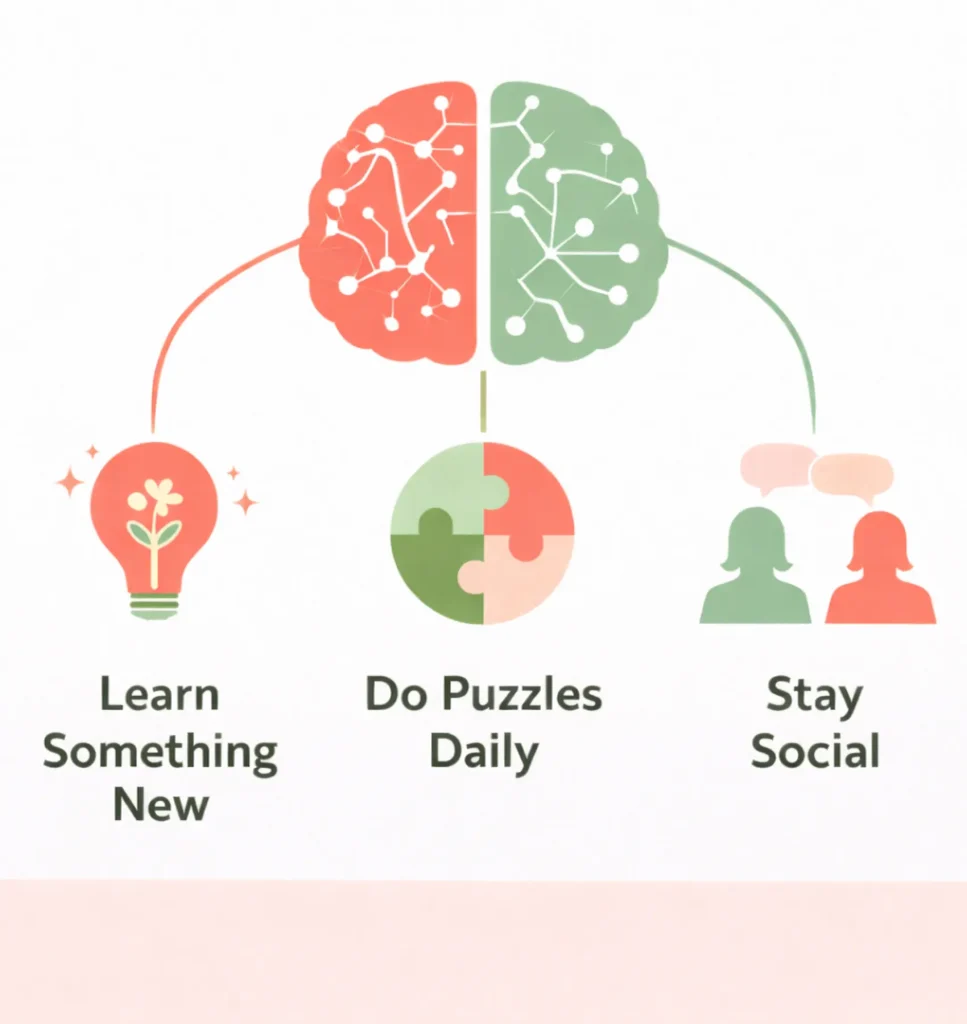
Want to know what actually helps improve memory after menopause? Using your brain in new, challenging ways, it sounds almost too simple, but research strongly supports that mental stimulation helps maintain and even improve cognitive function as we age.
I’m not talking about expensive programs (though some people enjoy those). I mean genuinely engaging your mind in ways that feel slightly difficult but doable. Here’s what works:
Learn something new. I started learning basic Spanish at 52, and while I’m far from fluent, the mental stretch of vocabulary and grammar rules definitely keeps my brain active. Other women I know have taken up painting, piano, knitting, or even. The specific skill matters less than the challenge.
Do puzzles regularly. Crosswords, Sudoku, word games, jigsaw puzzles, they all count. I do the daily crossword with my morning coffee. Some days I finish it, some days I don’t, but I’m consistently working my brain.
Stay socially active. Meaningful conversations and social engagement are incredibly protective for brain health. Join a book club, volunteer, take a class, or prioritize regular coffee dates with friends. Isolation is terrible for memory.
Use memory aids without shame. Lists, calendars, phone reminders, sticky notes, these aren’t signs of failure. They’re smart strategies that free up mental energy. I keep a small notebook in every room and my purse. It works.
What I’ve noticed is that when I’m mentally engaged and learning, my overall memory feels sharper. The research backs this up: cognitive stimulation builds what scientists call “cognitive reserve,” which helps protect against age-related decline.
If you’re looking for a comprehensive approach to staying mentally sharp, the guide on mental clarity after 50 connects brain health with lifestyle habits.
The key is consistency without pressure. This isn’t about becoming perfect. It’s about staying curious, engaged, and connected.
Move your body, boost your brain

Here’s something that surprised me: exercise is one of the most powerful tools for improving memory after menopause. Not supplements, not fancy brain games, movement.
Research shows that regular aerobic exercise increases blood flow to the brain, promotes the growth of new brain cells, and improves memory and thinking skills. When I started walking briskly for 30 minutes most days, I noticed improvements in my mental clarity within a couple of weeks. It wasn’t my imagination; it was biology.
What kind of movement helps?
- Aerobic exercise like walking, swimming, cycling, or dancing, which studies link directly to better memory and cognitive function
- Strength training at least twice weekly, which supports overall brain health and hormone balance
- Yoga or tai chi, which combine movement with stress reduction and balance training
You don’t need to become a gym rat. I’m definitely not one. But moving your body most days, in ways you actually enjoy, makes a measurable difference in how your brain functions.
I also discovered that exercise improves sleep quality, creating a positive cycle. Better sleep means better memory, which means more energy to exercise, which improves sleep. Win-win-win. If sleep is your struggle, improving sleep naturally after 50 has practical strategies that work alongside exercise.
The truth? Movement is medicine for your brain. It’s free, it has no negative side effects (when done safely), and the benefits extend far beyond memory to mood, bone health, heart health, and overall vitality.
Start where you are; a 10-minute walk counts. So does dancing in your kitchen. Movement is movement, and your brain will thank you.
Frequently asked questions: your memory questions answered
The simple Truth about memory after menopause
Learning how to improve memory after menopause isn’t about finding one miracle solution. It’s about understanding that your changing hormones, sleep quality, stress levels, nutrition, and movement all weave together to affect how your brain functions. The women I see thriving after 50 aren’t the ones chasing expensive supplements or complicated protocols. They’re the ones making small, consistent changes that honor where they are right now.
Your brain is resilient and adaptable, even after menopause. By moving your body regularly, feeding it nutrient-rich foods, challenging it with new learning, protecting your sleep, and managing stress with compassion, you give yourself the best possible foundation for a sharp, vibrant mind. And please, always partner with your doctor on any concerns or major changes, because your health deserves professional guidance.
If you’re ready to explore more about thriving in this chapter, healthy aging after 50 offers a comprehensive roadmap that connects all these pieces.
What’s one small step you’ll commit to this week? A daily walk, more water, a new puzzle, bedtime? Share in the comments below, and let’s support each other