

Somewhere between my fiftieth birthday and now, food became my ally in ways I never expected. Not in a restrictive, diet culture way, but in a deeply nourishing, this actually makes me feel better way. When menopause symptoms started showing up uninvited, I realized my usual eating habits weren’t serving me anymore. Learning which healthy foods to eat during menopause felt like discovering a secret language my body had been trying to speak all along. Small changes in my everyday meals brought relief I’d been searching for, and I want to share what actually works.
Why Food Becomes Your Best Ally During Menopause
We’re navigating a time when our hormones feel like they’re playing hide and seek, and honestly, what we put on our plates matters more than ever. The declining estrogen levels during menopause affect everything from our metabolism to our bone density to how our body stores fat. I’ve noticed that when I focus on nutrient-dense whole foods, my body responds with more energy, fewer mood swings, and yes, even better sleep.
Research shows that women who eat more whole grains, vegetables, and unprocessed foods experience less severe menopausal symptoms compared to those eating highly processed diets. “Research shows that women who eat more whole grains, vegetables, and unprocessed foods experience less severe menopausal symptoms compared to those eating highly processed diets. Understanding how to thrive with energy, confidence and vitality at 50 means recognizing that food choices directly impact our wellbeing. This is about nourishing our bodies with what they genuinely need during this transition. Think of it as feeding your hormones the raw materials they need to function optimally, even when estrogen levels are naturally declining.
The Mediterranean-style eating pattern has emerged as particularly beneficial for midlife women, offering nutrients that protect heart health, preserve muscle and bone, and stabilize mood. What I love about this approach is how flexible and enjoyable it feels, nothing rigid or punishing about it.
The Power Players: Essential Nutrients Your Body Craves Now
Calcium and vitamin D become absolutely critical during menopause because our bones lose density faster without adequate estrogen protection. If you’re wondering about the optimal vitamin D intake for menopausal women, it’s essential to understand how these nutrients work together. I make sure to include low-fat dairy like Greek yogurt and cottage cheese throughout my day, but I’ve also discovered that green leafy vegetables, nuts, seeds, and calcium-fortified plant milks give me plenty of options.
Protein deserves special attention during this phase. Current guidelines suggest about 0.75g of protein per kilogram of body weight daily, roughly 45g for an average woman. I’ve found that spreading protein across meals, whether it’s eggs at breakfast, chicken at lunch, or tofu at dinner, helps maintain my energy and supports muscle mass. This matters because preserving muscle becomes harder as we age, and muscle tissue actually helps regulate metabolism.
Omega-3 fatty acids from fatty fish like salmon, along with walnuts, chia seeds, and flaxseeds, support heart health and may help reduce inflammation. What’s fascinating is how these healthy fats also support hormone production itself. I try to include fatty fish at least twice weekly, and honestly, my joints feel better for it.
How to Balance Your Hormones as a Woman
Balancing hormones during menopause is about working with the natural changes. Phytoestrogens are plant compounds that gently mimic estrogen’s effects in our bodies, and I’ve learned to embrace foods rich in these compounds.
Whole soy foods like tofu, edamame, soy milk, and tempeh contain isoflavones that can help ease hot flashes. I was skeptical at first, but adding a serving of organic tofu to my stir-fries or enjoying a soy latte actually made a noticeable difference. Other phytoestrogen-rich foods include flaxseeds, sesame seeds, chickpeas, and lentils.
Cruciferous vegetables deserve their superfood status when it comes to hormone balance. Broccoli, cauliflower, Brussels sprouts, and kale contain compounds that support healthy estrogen metabolism. I’ve made it a habit to include at least one serving of these vegetables daily, and they’re incredibly versatile whether roasted, steamed, or added to soups.
What we often overlook is gut health’s role in hormone balance. Probiotic-rich foods like unsweetened Greek yogurt, kefir, and fermented vegetables support the gut bacteria that actually help metabolize and eliminate excess hormones. This connection between digestive health and hormonal balance was eye-opening for me, and it’s why I now start most mornings with yogurt topped with berries and seeds.
What to Drink to Balance Hormones
Hydration goes far beyond plain water when you’re managing menopause symptoms. I’ve discovered that strategic drinks throughout the day can genuinely support hormone balance and energy levels in ways I hadn’t expected.
Herbal teas have become my go-to throughout the day. Peppermint and sage tea provide cooling relief during hot flashes, while spearmint tea contains compounds that may help balance hormones naturally. Green tea offers antioxidants and a gentle energy boost without the jitters that coffee sometimes brings. The minerals in green tea, including calcium, magnesium, and zinc, are essential for hormone functionality. If you’re curious about what drinks are good for menopause symptoms, you’ll discover numerous options beyond plain water that actively support hormone balance.
What surprised me most was learning about adaptogenic drinks. Red maca smoothies and golden milk with turmeric have become part of my routine because they help my body adapt to stress and support hormone balance. A simple golden milk before bed, made with plant milk, turmeric, cinnamon, and a touch of honey, aids inflammation and actually helps me sleep better.
Coconut water replenishes electrolytes lost during hot flashes, and I keep it on hand for those moments when I need quick rehydration. Fruit-infused water with cucumber or berries makes staying hydrated more enjoyable, and the added minerals support overall wellness. One habit that’s made a real difference? Starting my day with warm lemon water before anything else, it gently supports liver function and hormone detoxification.
Fruits That Balance Hormones in Females
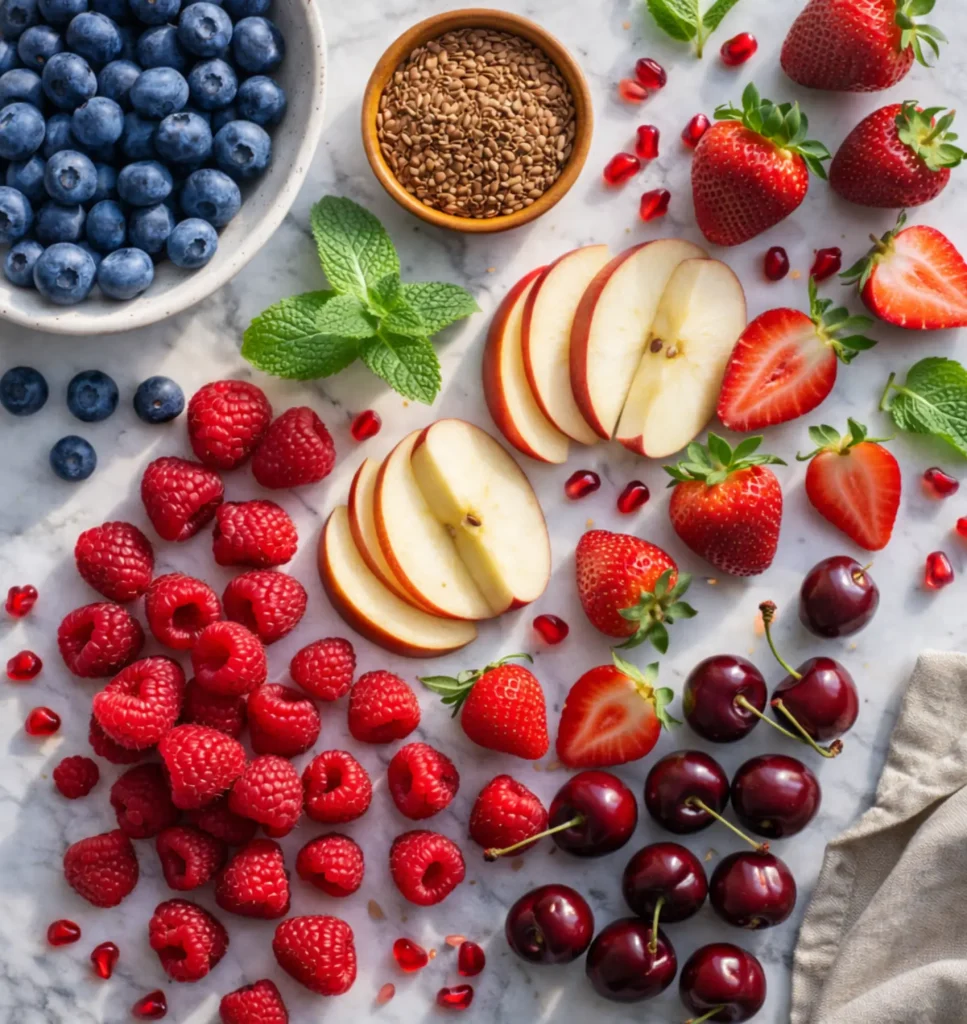
Not all fruits affect our hormones equally, and some actually offer specific benefits during menopause. Berries, including strawberries, blueberries, raspberries, and blackberries, are rich in antioxidants that fight inflammation, a key contributor to hormonal imbalances. Their high fiber content and low glycemic index mean they won’t spike blood sugar the way some fruits might.
Apples became one of my favorite discoveries because they contain calcium D-glucarate, a compound that helps detoxify estrogen from the liver and improve estrogen metabolism. The fiber in apples then helps flush this processed estrogen out through the digestive system. I’ve made it a habit to enjoy an apple with a handful of nuts as an afternoon snack, it’s satisfying and hormone-supportive.
Pomegranates are true hormone heroes. They act as natural blockers against harmful or excess estrogens in the body, which can contribute to mood changes, weight gain, and other uncomfortable symptoms. Rich in vitamins A, C, and E, plus folic acid, pomegranates support healthy hormone production. I add pomegranate seeds to salads and yogurt, and the burst of flavor makes me actually crave this healthy choice.
Cherries, particularly tart cherries, offer benefits beyond hormone balance. They’re rich in anthocyanidins and support better sleep when consumed in the evening, thanks to their natural melatonin content. Since sleep disruption is such a common menopause symptom, incorporating these fruits feels like a natural remedy that actually works.
Building Your Menopause-Friendly Plate Every Day
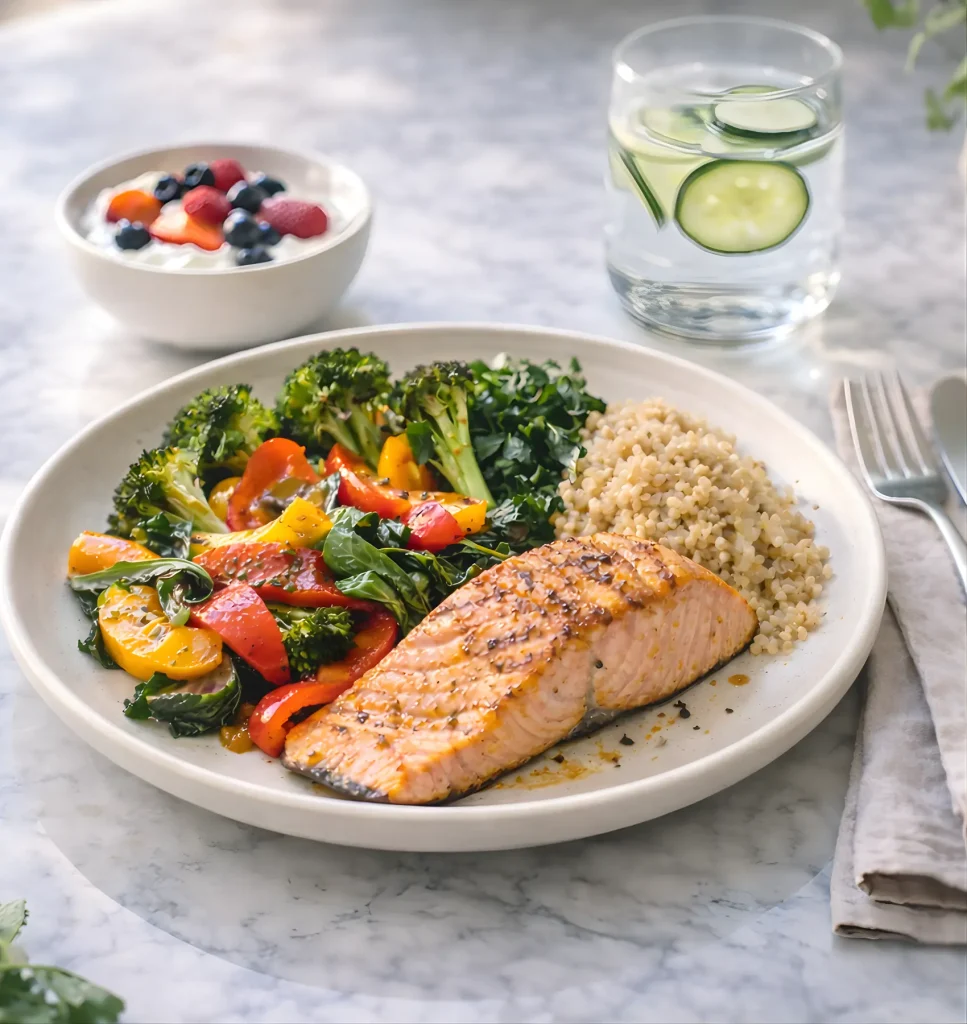
Creating meals that support hormone balance doesn’t require complicated recipes or exotic ingredients. I’ve learned to build my plates around these principles, and it’s become second nature.
Start with vegetables filling half your plate. Leafy greens like spinach and kale are low in calories, rich in fiber, and packed with calcium. I rotate through colorful options including bell peppers, carrots, tomatoes, and cruciferous vegetables to get a variety of nutrients. The fiber in these vegetables helps with weight management and supports healthy digestion, both crucial during menopause.
Add a palm-sized portion of lean protein. This could be grilled chicken, baked salmon, scrambled eggs, or plant-based options like lentils or tofu. Protein helps maintain muscle mass and keeps you feeling satisfied longer, reducing those afternoon cravings that used to derail me.
Include healthy fats in moderation. A drizzle of olive oil on vegetables, a quarter of an avocado on toast, or a sprinkle of nuts and seeds adds satisfaction and supports hormone production. These fats are essential, our bodies need them to create hormones and absorb fat-soluble vitamins.
Choose whole grains over refined carbohydrates. Quinoa, brown rice, oats, and whole grain bread provide fiber that helps stabilize blood sugar levels and supports hormone production. Since switching from white rice to brown rice and quinoa, I’ve noticed more stable energy throughout the day.
What Foods Should You Reconsider During Menopause?
Being honest about what doesn’t serve us anymore matters just as much as embracing helpful foods. I’m not talking about never enjoying certain foods again, but understanding which ones might intensify symptoms helps us make informed choices.
Ultra-processed foods topped my list of things to minimize. These foods, often loaded with added sugars, unhealthy fats, and sodium, can exacerbate weight gain and inflammation. I’ve learned to read labels carefully because even seemingly healthy items like flavored yogurts, breakfast cereals, and granola bars can contain significant added sugars.
Alcohol deserves honest consideration. While an occasional glass of wine is fine for most women, regular or heavy alcohol consumption can worsen hot flashes, disrupt sleep, and contribute to weight gain. I’ve noticed that limiting alcohol to special occasions rather than making it a nightly habit has improved my sleep quality significantly.
Spicy foods can trigger or intensify hot flashes for many women. This doesn’t mean eliminating all spice, but paying attention to your body’s response helps. I’ve found that mild seasonings work better for me than fiery curries during this phase.
High-sodium foods contribute to water retention, bloating, and can worsen blood pressure issues that become more common during menopause. Processed meats, canned soups, salty snacks, and frozen meals often contain excessive sodium. Cooking at home more often has helped me control salt intake naturally.
Refined carbohydrates and added sugars impact blood sugar stability and can contribute to that stubborn menopause belly. White bread, white pasta, sugary drinks, and baked goods cause blood sugar spikes followed by crashes, leaving you tired and craving more sugar. Switching to whole grain alternatives has made a noticeable difference in how I feel throughout the day.
Frequently Asked Questions
Your Path Forward
The journey through menopause doesn’t mean giving up foods you love or following restrictive eating plans that leave you feeling deprived. What I’ve learned is that nourishing our bodies with wholesome, nutrient-dense foods while being mindful of what triggers uncomfortable symptoms creates a foundation for thriving during this transition. Small, consistent changes, like adding more vegetables to your plate, choosing whole grains, including lean proteins, and staying hydrated with hormone-supportive drinks, add up to significant improvements in how you feel.
Before making major dietary changes, especially if you have underlying health conditions or take medications, consult with your healthcare provider or a registered dietitian who understands menopause nutrition. They can provide personalized guidance based on your specific needs and health status.
What’s one small step you’ll try this week? Maybe it’s adding berries to your morning yogurt, swapping white rice for quinoa, or trying that golden milk before bed. Small changes create momentum, and momentum creates transformation. I’d love to hear what works for you, share your experiences in the comments below.
For more comprehensive guide to healthy aging for women over 50 and unlock the secrets to thriving beyond midlife