

I remember the exact moment I started paying attention to collagen. I was washing my face one morning, and I noticed my skin didn’t spring back the way it used to when I pressed my fingers into my cheek. Not dramatic. Just… different. That small moment sent me down a rabbit hole researching the best collagen supplements for women over 50, and what I found surprised me.
Here’s the thing: it’s not about chasing your twenty-year-old skin. It’s about understanding what collagen supplements can realistically support after 50, and how to choose one without getting lost in marketing claims.
In this guide, I’m sharing what I’ve learned about choosing a quality collagen supplement, what the research actually says, and how to make sense of forms, sources, labels, and realistic expectations. If you want the fuller picture first, our complete guide to collagen for women over 50 covers the broader changes in collagen after 50, including food, lifestyle, skin, joints, and bone health.
Why supplement choices can matter more after 50
Collagen is the most abundant protein in your body and contributes to the structure of skin, joints, bones, and connective tissue. Natural collagen production changes with age, and menopause-related hormonal shifts can contribute to changes in collagen-rich tissues.
That doesn’t mean every change in your skin, joints, or bones is caused by collagen loss, or that a supplement can reverse normal aging. It does explain why many women start looking more closely at collagen products after 50 and why choosing a supplement based on evidence, ingredients, and personal needs matters.
What I’ve noticed in my own reading is that women often assume collagen is purely cosmetic. The conversation is broader than wrinkles, but supplements should still be viewed as one optional part of an overall approach to healthy aging. If bone health is on your radar, too, it’s worth exploring our guide on bone health supplements for seniors for a fuller picture.
What to look for in the best collagen supplements for women over 50
Walk down any supplement aisle, and you’ll find dozens of jars promising the moon. Here’s what I’ve learned: actually check the label.
Hydrolyzed collagen peptides are collagen proteins broken into smaller peptides. This is a commonly studied form in oral collagen research. Look for a clearly identified source and collagen type rather than relying on a vague “collagen blend.” Types I and III are common in products marketed for skin support, while Type II is often used in joint-focused products.
Also worth a glance: independent quality testing when available, a clear ingredient list, allergen information, and a transparent sourcing statement, whether that’s bovine, marine, or another animal source. These details are more useful than dramatic front-label promises when you’re comparing collagen supplements for women over 50.

What the research actually shows
The short version: the evidence is promising in some areas, but collagen is not a miracle treatment. Studies of oral hydrolyzed collagen have reported improvements in measures such as skin hydration or elasticity, although results vary by study design, product, dose, and population. Research has also explored collagen alongside other nutrients in postmenopausal women, but that does not mean collagen alone prevents bone loss.
None of this replaces resistance or weight-bearing exercise, adequate nutrition, or medical care when needed. It simply helps put supplement claims into perspective. If joint discomfort is part of what brought you here, our separate guide to supplements for menopause-related joint pain looks at that narrower question.
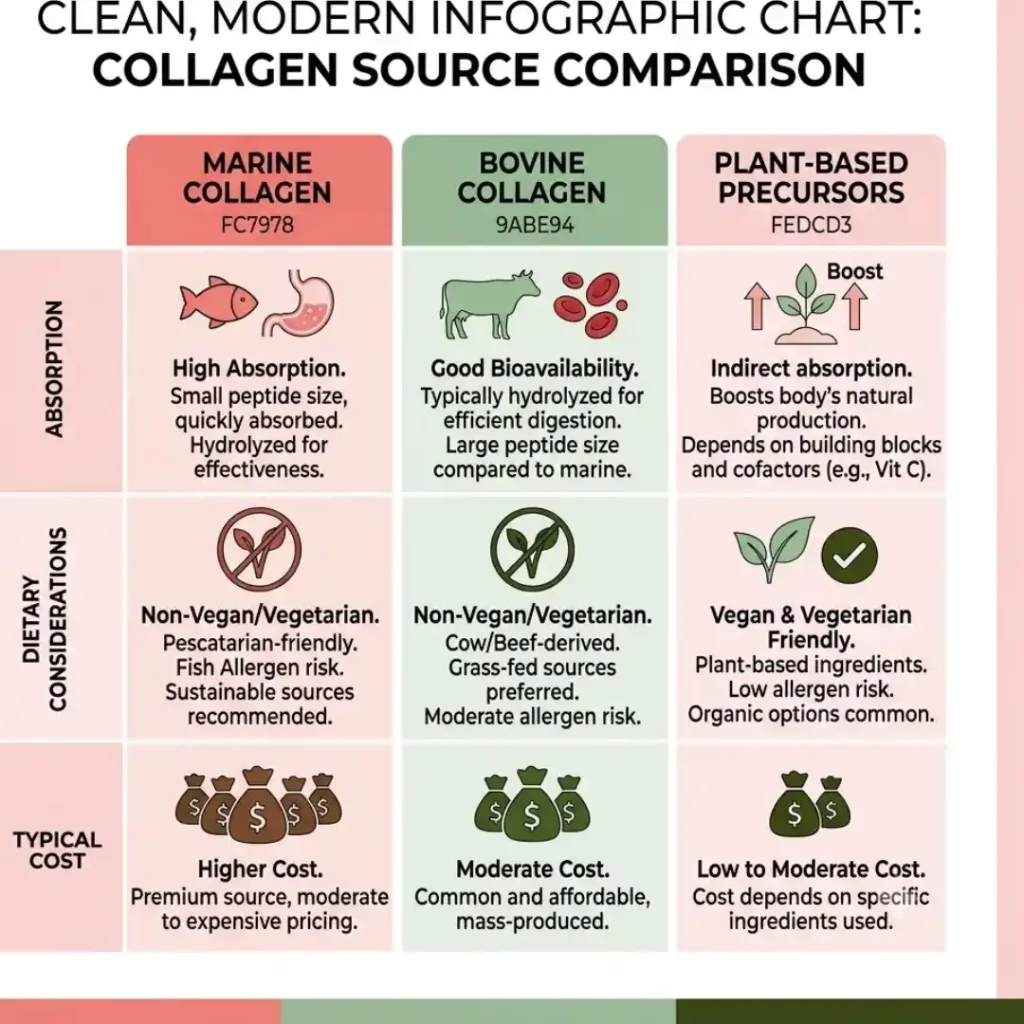
Marine, bovine, or plant-based: which type fits your life?
Ever wondered why the collagen aisle feels like its own foreign language? Here’s the short version.
Marine collagen is generally sourced from fish and is typically rich in Type I collagen. Bovine collagen commonly contains Types I and III and is widely available. Plant-based “collagen boosters” don’t contain collagen because plants do not make collagen; instead, they provide nutrients involved in the body’s own collagen production.
There isn’t a universal winner. Your best fit depends on allergies, dietary preferences, source transparency, budget, and what you’ll realistically take consistently. If you avoid fish, marine collagen obviously isn’t appropriate; if you have a fish or shellfish allergy, checking the source and allergen labeling is especially important.
How to make collagen supplementation practical
I’m not someone who sticks to complicated routines. The practical lesson here is simple: if you decide to use collagen, choose a format that fits your normal routine rather than building your day around the supplement. Unflavored powders can be mixed into foods or drinks, while capsules may be easier for some people.
Consistency also matters when evaluating whether a product is useful for you. Collagen studies generally measure outcomes over weeks or months rather than days, so overnight promises should make you skeptical. Follow the product directions, consider the amount of collagen actually provided per serving, and discuss supplementation with a qualified healthcare professional if you have a medical condition, allergies, kidney concerns, or take medications.
Frequently asked questions
How long before I notice a difference?
Collagen studies commonly assess outcomes after several weeks or months of consistent use rather than a few days. The timeframe and results vary depending on the product, the outcome being measured, and the individual.
Is collagen the same thing women need for perimenopause symptoms?
No. Perimenopause symptoms such as hot flashes, sleep disruption, and mood changes are primarily related to hormonal changes. Collagen supplements are not treatments for those symptoms, although collagen-rich tissues also change with age and menopause.
Can I get collagen-supporting nutrients through food instead?
Yes. Protein-rich foods provide amino acids the body uses to build proteins, while nutrients such as vitamin C are involved in normal collagen synthesis. Collagen-containing foods and supplements are options, not requirements for everyone.
Are there any side effects?
Collagen supplements are generally well tolerated in studies, but digestive discomfort, taste issues, or allergic reactions can occur. Check the source carefully if you have fish, shellfish, egg, or other food allergies, and discuss supplements with a healthcare professional when appropriate.
Does the best collagen supplement for women over 50 differ from what younger women should take?
There is no single formula that every woman over 50 needs. The more useful comparison is product quality, source, serving size, allergens, added ingredients, and whether the supplement fits your individual health and dietary needs.
The bottom line
Choosing among the best collagen supplements for women over 50 isn’t about finding a fountain of youth in a jar. It’s about knowing what you’re buying, separating evidence from marketing, and deciding whether a supplement makes sense within your broader approach to healthy aging. Look for a clearly sourced product, transparent labeling, and a form that fits your needs and routine.
If you want to understand the bigger picture beyond supplements, return to our complete guide to collagen for women over 50, where we cover the broader role of nutrition, lifestyle, skin, joints, and healthy aging after 50.