

I was sitting on the edge of my bed last spring, coffee already in hand, phone already in the other, mentally running through everything I needed to do before noon. And I was exhausted. Not the kind of tired that one good night’s sleep necessarily fixes, but the kind that makes the day feel demanding before your feet even touch the floor.
That was when I started looking more closely at my first hour of the day. I did not need a perfect morning routine. I needed to notice which ordinary choices made my mornings feel more rushed, under-fueled, or mentally overloaded. These are the 3 morning habits that secretly drain your energy after 50 that stood out most.
These habits are not a diagnosis or an explanation for persistent fatigue. If you feel tired throughout the day, the broader guide to persistent tiredness after 50 can help you decide whether the pattern goes beyond your morning routine.
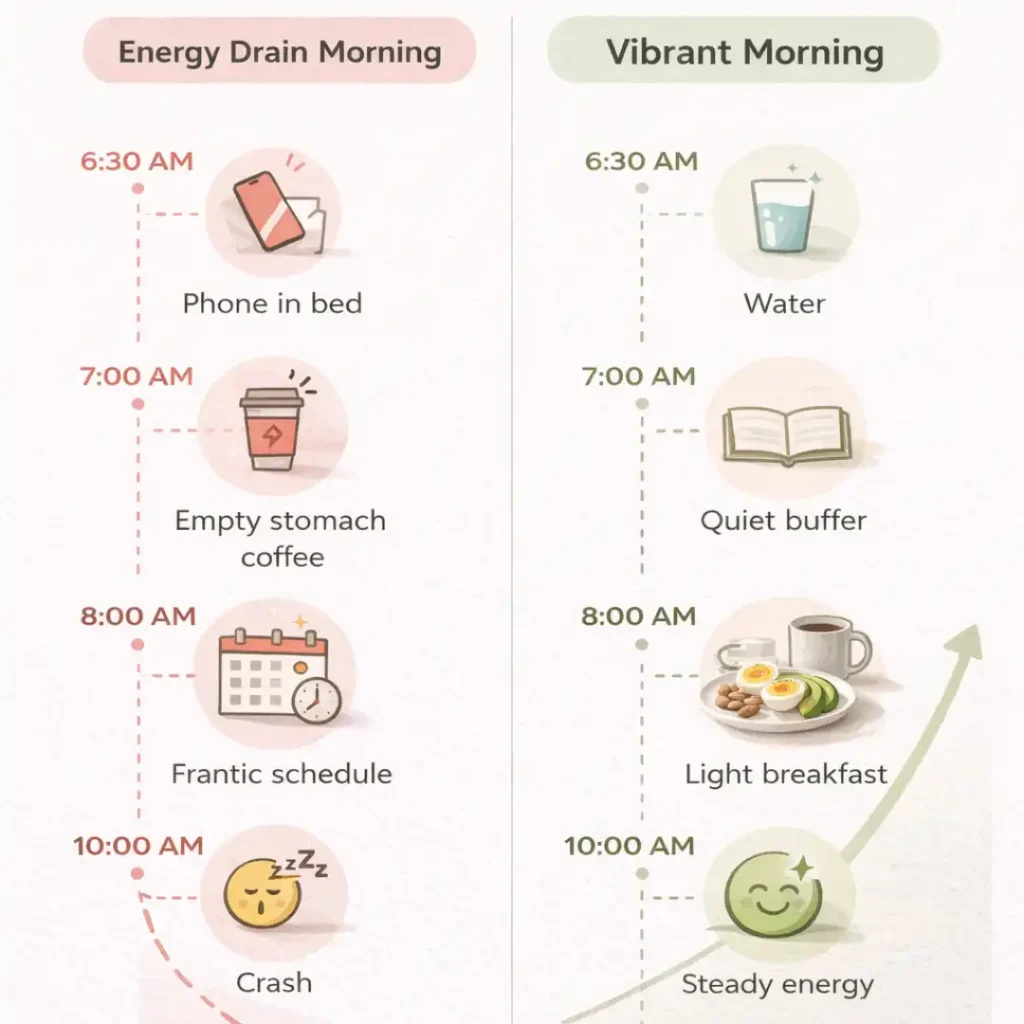
Habit 1: Reaching for Your Phone Before You Have Even Started the Day
Picture this: your alarm sounds and within seconds you are scanning messages, headlines, appointments, and overnight emails. Nothing dramatic has happened, but your attention is already divided among other people’s priorities before you have decided what your own morning needs.
The problem is not that a phone “steals” energy through one specific hormone response. It is simpler and more useful than that: immediate notifications can turn a quiet transition from sleep into instant mental load. If that leaves you feeling rushed or scattered, the habit is worth testing.
Try this instead: give yourself a short screen-free buffer after waking. Ten or fifteen minutes is enough to test the idea. Drink something, open the curtains, wash, stretch gently if that feels good, or simply decide what matters most today before opening everyone else’s messages.
What to notice: not whether you feel “transformed,” but whether the first part of your morning feels less reactive and easier to organize.
Habit 2: Letting Coffee Replace Food and Then Chasing the Morning Slump
I am not interested in turning coffee into the villain. For many of us, it is a small pleasure and a familiar ritual. The pattern worth questioning is using coffee as breakfast, then adding more caffeine when energy drops later.
Caffeine affects people differently, and there is no universal rule that every woman over 50 must eat before coffee or delay her first cup for an exact number of minutes. But if your mornings regularly include very little food, repeated caffeine, and a noticeable energy dip before lunch, it makes sense to test a more supportive routine.
Try this instead: on mornings when you are hungry or know lunch will be late, pair your coffee with a simple meal or snack that gives you actual nourishment. Greek yogurt and fruit, eggs with whole-grain toast, or another combination you already enjoy can be easier to repeat than an elaborate “perfect” breakfast.
If you are not hungry early, avoid forcing a rigid rule. The useful question is whether your current pattern leaves you under-fueled for the demands of your morning.

Habit 3: Giving Everyone Else Your Attention Before Checking What You Need
This was the quietest habit for me. I could wake up and, within minutes, be thinking about someone else’s appointment, a family responsibility, work, messages, errands, and the list of things I had promised to handle.
Caregiving and responsibility are not bad habits. But a morning with no transition between waking and managing everyone else’s needs can feel mentally exhausting. The issue is not that caring for people automatically causes a specific hormone imbalance. It is that sustained mental load can leave very little room to notice your own limits.
Try this instead: create one small boundary before the day accelerates. It might be five quiet minutes, getting dressed before checking messages, writing your top two priorities, or eating breakfast before starting non-urgent errands.
What to notice: whether this small buffer helps you begin the day with more intention instead of feeling behind before breakfast.
A Better Morning Does Not Need to Be a Perfect Morning
The biggest mistake I made was assuming that fixing my mornings required a long wellness routine. It did not. The changes that lasted were the ones small enough to survive ordinary life.
| Current pattern | Small experiment | What to observe |
|---|---|---|
| Phone immediately after waking | 10–15 minutes before notifications | Do you feel less rushed or scattered? |
| Coffee replacing food | Add a simple meal or snack when appropriate | Is morning energy steadier? |
| Everyone else’s needs come first | Protect a five-minute personal buffer | Does the morning feel more manageable? |
Try a 3-Morning Test Before Changing Your Whole Routine
Choose the one habit that looks most like your real morning and test only that change for three mornings. Keep the rest of your routine as normal as possible. At the end of each morning, write down three things: how rushed you felt, whether you had enough energy for your usual tasks, and whether the change felt realistic enough to repeat.
If nothing meaningful changes, that is useful information. You do not need to keep a habit simply because it sounds healthy. Move to the next pattern, or step back and consider whether your tiredness is broader than your morning routine.
When Morning Tiredness Is Not Just a Morning-Habit Problem
A morning routine cannot explain every case of fatigue. If you regularly wake exhausted despite adequate opportunities for sleep, if tiredness continues throughout the day, or if your energy has changed substantially without an obvious reason, the pattern may extend beyond your morning habits. Persistent or unexplained fatigue deserves a broader assessment rather than an endless series of morning-routine changes.
Seek urgent medical care if fatigue is accompanied by chest pain, fainting, severe or sudden shortness of breath, new neurological symptoms, or rapid deterioration.
Frequently Asked Questions
Can morning habits make me feel more tired after 50?
They may contribute to how your morning feels, especially if your routine starts with immediate mental demands, very little nourishment, or no transition before responsibilities begin. These habits do not explain every case of fatigue, so persistent or unexplained tiredness deserves a broader look.
Do I need to stop drinking coffee in the morning?
Not necessarily. Caffeine affects people differently. The useful question is whether coffee is replacing food you need, whether you rely on repeated caffeine to manage tiredness, or whether its timing appears to interfere with your sleep.
Should I avoid my phone completely after waking?
No universal rule requires this. A short screen-free buffer can be a useful experiment if notifications make your mornings feel rushed or mentally overloaded. Keep it only if it genuinely improves your routine.
What is the easiest morning habit to change first?
Choose the pattern that is most obvious in your own routine. For one person that may be delaying notifications; for another it may be preparing an easy breakfast or protecting five quiet minutes before non-urgent responsibilities begin.
When should morning fatigue be medically evaluated?
Seek medical advice when fatigue is persistent, unexplained, worsening, substantially different from your normal baseline, or interfering with daily life. Urgent symptoms such as chest pain, fainting, severe shortness of breath, new neurological symptoms, or rapid deterioration require prompt care.
The Bottom Line
The 3 morning habits that secretly drain your energy after 50 are worth examining because they are ordinary enough to go unnoticed: starting with instant digital demands, letting caffeine stand in for nourishment, and giving away your attention before checking what you need. None is guaranteed to explain fatigue. Test one small change at a time, keep what genuinely helps, and treat persistent or unusual tiredness as a broader question rather than another morning-routine problem.
This article is for general education and does not replace individualized medical advice, diagnosis, or treatment.