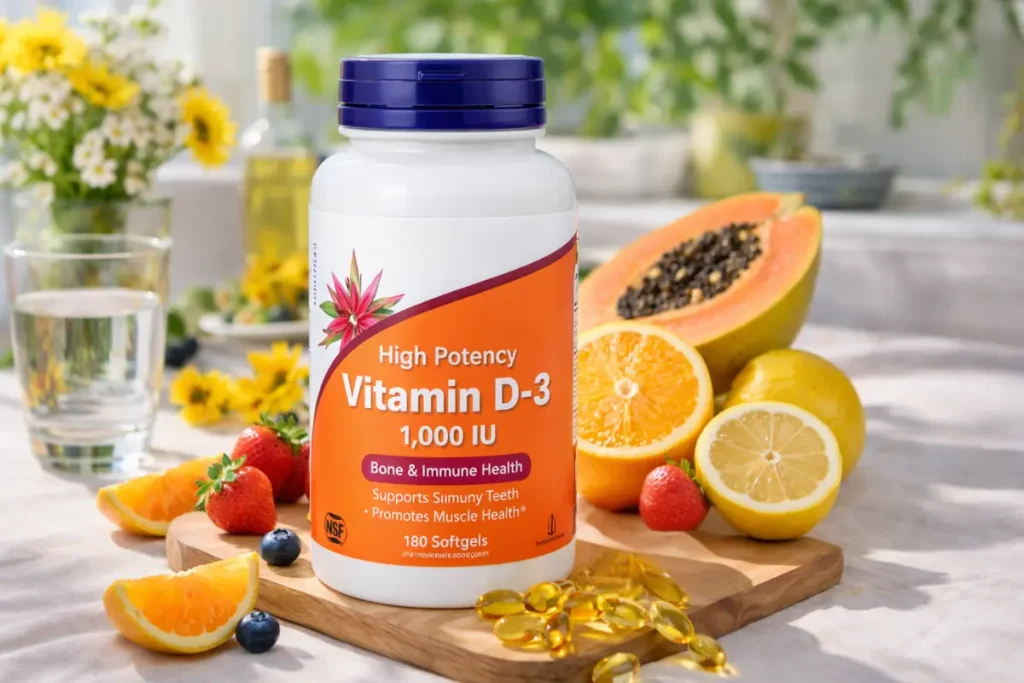
Can you take vitamin D on an empty stomach? I still remember a woman in her sixties asking me almost exactly that question at the pharmacy counter after reading conflicting advice online late into the night.
The short version? You can take vitamin D on an empty stomach, but taking it with a meal that contains some fat may improve absorption. This isn’t about rules or perfection. It’s about understanding what helps absorption while building a routine that works in real life.
For the wider micronutrient picture after 50, start with our guide to vitamins and nutrients for women over 50. This article stays focused on one narrower question: food, fasting, absorption and stomach comfort.
Why the Empty-Stomach Question Keeps Coming Up
Vitamin D is fat-soluble, which means dietary fat can help with its absorption. Taking vitamin D with a meal that contains some fat may improve absorption compared with taking it under fasting conditions, but taking it without food does not automatically make the dose useless.
The bigger issue is finding a routine you can follow consistently while respecting the product directions and any advice from your healthcare professional.

With Food or Without Food: The Practical Approach
If taking vitamin D with breakfast, lunch, or dinner helps you remember it and the meal contains some fat, that is a practical approach. If you occasionally take it without food, that does not mean you have ruined your routine.
The exact clock time is a different search intent. If you are deciding between morning, lunch, or evening, our vitamin D3 and K2 timing guide covers that question without mixing it with the food-versus-fasting issue.
When an Empty Stomach May Not Feel Comfortable
Some people notice nausea or stomach discomfort when taking supplements without food. If that happens with your vitamin D product, taking it with a meal may be easier to tolerate. Persistent or significant symptoms deserve a conversation with a healthcare professional rather than trial-and-error changes to several supplements at once.
Medication timing matters too. Some prescription medicines have specific instructions about food, fasting, minerals, or spacing from other products. Do not move a prescribed medicine or change its schedule just to accommodate vitamin D without checking the instructions or asking your pharmacist.
The amount of vitamin D you need is also a separate question. For intake, testing or deficiency decisions during menopause, use our vitamin D dosage and testing guide.
The Fat Factor: What Actually Counts

You do not need to add a large amount of fat just for a supplement. A normal meal containing foods such as nuts, avocado, yogurt, eggs, olive oil, or fish may be a practical pairing. The point is not to hit a special gram target or add unnecessary calories.
Frequently Asked Questions
Can I take vitamin D with just coffee in the morning?
You can take vitamin D without a meal, but coffee itself does not provide the dietary fat that may help vitamin D absorption. If it is practical, taking the supplement with a normal meal containing some fat may support absorption. Follow the product directions and any individualized advice you have been given.
Does it matter if I take vitamin D in the morning or evening?
There is no universal clock time that is best for everyone. Morning-versus-evening timing is separate from the food-versus-fasting question; consistency, product directions, medicines and personal tolerance all matter.
Can vitamin D upset my stomach if I take it without food?
Some people may experience digestive discomfort when taking supplements without food. If that happens, taking the product with a meal may be easier to tolerate. Persistent or significant symptoms should be discussed with a healthcare professional.
Does taking vitamin D with food change how much I should take?
No. Food and absorption are separate from determining an appropriate intake or treatment dose. Do not increase the dose simply because you previously took vitamin D without food.
Should I take vitamin D and calcium together?
Vitamin D supports calcium absorption, but that does not mean every person needs both supplements or that they must always be taken together. Diet, total intake, health history, medicines and professional advice should guide supplement decisions.
You do not need to overthink the empty-stomach question. Vitamin D can be taken without food, but pairing it with a normal meal that contains some fat may support absorption and may also be easier on the stomach for some people.