
I used to wake up every morning, reaching for my phone before my eyes were fully open. I’d scroll through news headlines, emails, and social media before I’d even gotten out of bed. By the time I stumbled into the kitchen for coffee, I was already anxious, overwhelmed, and behind. My days started in reactive mode, and that pattern colored everything that followed.
Then I hit 53, and something shifted; my energy felt different, my sleep was unpredictable, my mood swung in ways I couldn’t control; Understanding why life feels different after 50 helped me recognize these weren’t personal failures but biological realities that required new approches, I realized I needed to change not just what I did each morning, but how I approached the entire start of my day. The morning rituals I developed didn’t require an hour of meditation or elaborate routines; they took about 10 minutes total, and they completely transformed how I experience this life stage.
Why mornings matter more after 50
Let me be honest about something that surprised me: mornings after 50 feel fundamentally different from they did in earlier decades.
You might wake up feeling stiff in ways you didn’t before, and your energy doesn’t kick in as quickly. Your sleep quality has probably changed, whether from hormonal fluctuations, stress, or your body’s shifting needs. Many women tell me they wake up feeling foggy or depleted rather than refreshed.
Here’s what I’ve learned about why intentional morning rituals become even more crucial during this life stage. Your cortisol, the hormone that helps you wake up and feel alert, naturally peaks in the early morning hours. For women navigating perimenopause or postmenopause, cortisol regulation can become more unpredictable. An intentional morning practice helps support this natural rhythm rather than fighting against it.
Your metabolism has likely slowed compared to your younger years. How you start your morning, what you eat, and how you move directly impact your energy and blood sugar stability for the rest of the day. The morning sets metabolic patterns that either support or undermine your well-being for hours to come.
Your mindset is most malleable in those first waking moments. Developing a positive mindset after 50 begins with how you choose to approach each day before external demands flood in, before you’re pulled in twenty directions, you have a brief window to choose with intention how you want to show up. That window closes quickly once you’re in reactive mode, responding to everyone else’s needs and priorities.
I noticed that on mornings when I started intentionally, my entire day flowed differently; I handled stress better, I made clearer decisions, and I had more patience with myself and others. On mornings when I grabbed my phone first thing and let external demands dictate my start, I felt frazzled and behind all day long. The difference wasn’t about having more time; it was about using the time I had more intentionally.
the 10-minute morning framework
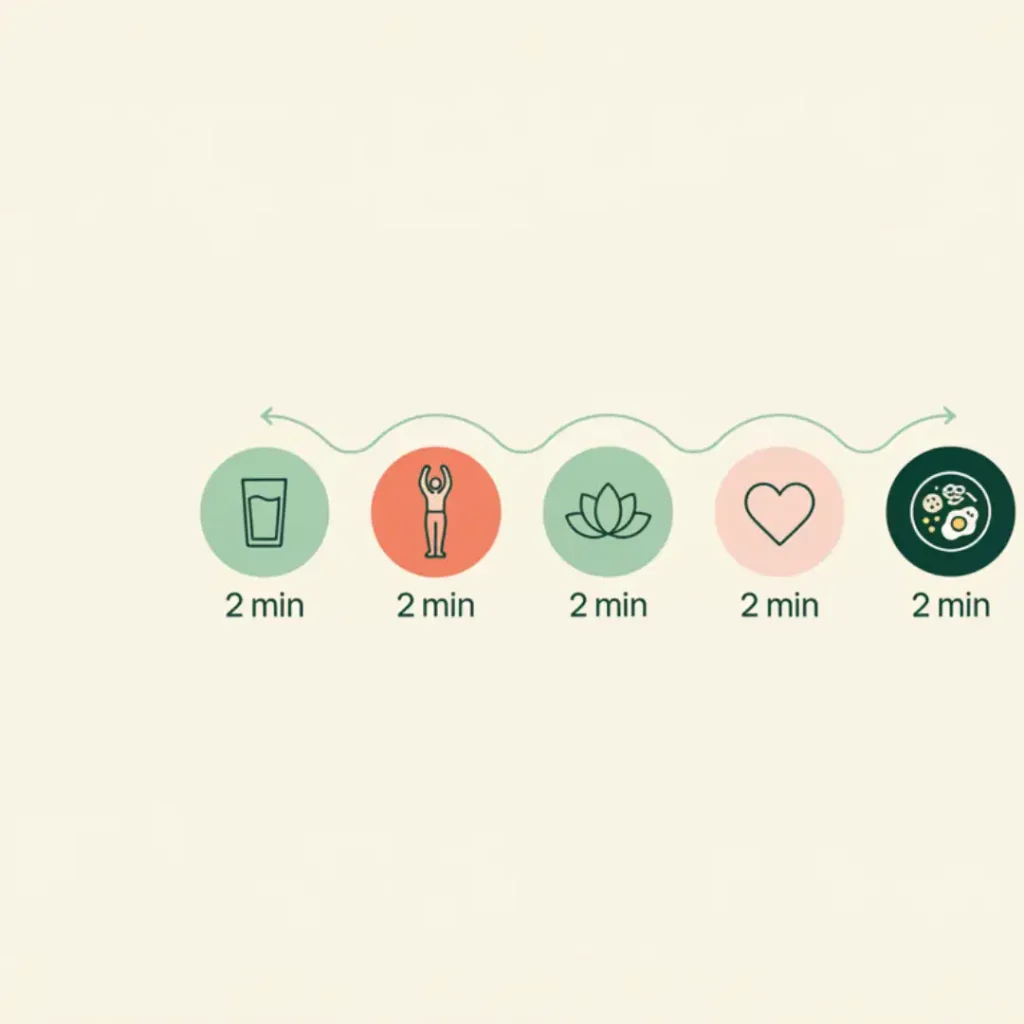
Here’s what works: five simple rituals, each lasting two minutes, that address your body, mind, and spirit without requiring you to wake up at dawn or follow complicated protocols.
This isn’t about perfection; some mornings you’ll do all five. Other mornings, maybe just two or three. The goal is consistency over time, not flawless execution every single day.
Ritual 1: hydrate before caffeinate (2 minutes)
Before you reach for coffee, drink a full glass of water. Your body has been without hydration for 7-8 hours. You’re mildly dehydrated every single morning, which often shows up as grogginess, stiffness, or brain fog.
I keep a glass of water on my nightstand and finish it before my feet hit the floor; some mornings, I add a squeeze of lemon for vitamin C and to support digestion. The act of drinking water signals to your body that it’s time to wake up and start functioning.
This simple habit addresses a real physiological need. As we age, our thirst signals become less reliable, and we’re more likely to be dehydrated without realizing it. Starting with water sets better hydration patterns for the entire day.
I noticed that on days when I drink water first, I actually want less coffee. My energy feels more stable. I’m not relying solely on caffeine to jolt me awake. The water provides gentle, natural wakefulness that coffee then enhances rather than forces.

Ritual 2: move your body gently (2 minutes)
You don’t need an intense workout. You need to remind your body that it can move, ease stiffness from sleep, and get blood flowing to your brain and muscles.
I do simple stretches before I even get up; arms overhead, gentle twists to each side, pulling knees to chest one at a time, rotating ankles and wrists. These small movements wake up joints and muscles that have been still for hours.
Once I’m standing, I do a few more stretches: gentle forward fold to touch my toes, arms across my body, neck rolls. The whole thing takes maybe two minutes, but it makes a dramatic difference in how my body feels for the rest of the morning.
Movement in the morning does more than ease physical stiffness. It supports mood regulation by triggering the release of endorphin. It helps regulate cortisol, which you want to be higher in the morning and lower at night. I signal to your brain that you’re awake and ready to engage with the day. You’re not trying to get a workout done, you’re simply greeting your body with kindness and movement. This gentle approach supports mental clarity after 50 by increasing blood flow and oxygen to your brain

ritual 3: set one clear intention (2 minutes)
Before the day happens to you, decide how you want to show up for it. I sit on the edge of my bed and take three deep breaths, then I ask myself: what quality do I want to embody today? Sometimes it’s patience, sometimes it’s courage, and sometimes it’s simply presence. I don’t make a long list of things to accomplish; I identify one way I want to be.
This practice gives me an anchor point to return to throughout the day. When I start feeling scattered or reactive, I reconnect with my intention. Did I want to be patient? Am I being patient right now? It brings me back to center.
Setting an intention is different from making a to-do list; it’s about who you want to be, not what you want to do. It addresses the reality that you have more control over your mindset and responses than you do over external circumstances. This practice of self-compassion after 50 means choosing how you’ll treat yourself throughout the day’s challenges.
Some mornings, I write my intention down in a small notebook I keep by the bed; other mornings, I say it quietly to myself. What matters is the conscious choice to orient myself before the day pulls me in all directions.
Ritual 4: practice gratitude (2 minutes)
This might sound like empty positive thinking, but it’s not. Gratitude practice actually rewires your brain over time to notice positive aspects of your life more readily. I think of three specific things I’m grateful for, not generic things like “my family” but concrete specifics: “the way sunlight came through my window this morning,” “my daughter’s text yesterday that made me laugh,” “my body’s ability to move even when it’s stiff.”
The specificity matters. It trains your attention to notice good things in real-time throughout your day, not just during morning gratitude practice. You start seeing more of what’s working instead of only what’s wrong.
Research shows that consistent gratitude practice reduces symptoms of depression and anxiety, improves sleep quality, and supports overall well-being. For women navigating the emotional ups and downs of hormonal changes, including mood swings after 50, this simple practice provides measurable mental health support.
I was skeptical at first; it felt forced, but after a few weeks, I noticed I was spontaneously recognizing positive moments during my day instead of only during my morning ritual. My default mindset was shifting from what’s wrong to what’s working.
Ritual 5: Eat protein within the first hour (2 minutes to prepare, ongoing benefit)
What you eat for breakfast directly impacts your energy, mood, and mental clarity for hours. After 50, protein becomes even more crucial for maintaining muscle mass, supporting stable blood sugar, and providing satiety.
I aim for at least 20-30 grams of protein in my first meal, which might be eggs with vegetables, Greek yogurt with nuts and seeds, a protein smoothie, or leftovers from last night’s dinner. The specific food matters less than hitting that protein target.
Protein-rich breakfasts prevent the mid-morning energy crash that happens when you start with only carbohydrates or skip breakfast entirely. They support lean muscle maintenance, which becomes harder to preserve as estrogen declines. They provide the amino acids your brain needs to produce neurotransmitters that regulate mood.
I used to grab a piece of toast or a muffin and call it breakfast. By 10 AM, I’d be starving, reaching for more carbs, starting an energy roller coaster that lasted all day. When I shifted to protein-first breakfasts, my energy became dramatically more stable.
The two minutes of “ritual” here is the preparation time, but the impact lasts for hours. You’re setting your metabolism and blood sugar regulation patterns for the entire day.
Why small habits create big changes
Here’s what I want you to understand: these five rituals aren’t magic, they’re small, sustainable actions that compound over time.
You might not feel dramatically different after one morning of practicing them, but after a week, you’ll probably notice your mornings feel calmer. After a month, you’ll see patterns in your energy and mood. After several months, these practices become so integrated into your morning that you do them automatically, and the cumulative effect on your mindset and wellbeing becomes unmistakable.
I used to think I needed to overhaul my entire life to feel better, big dramatic change, complete lifestyle transformations. What I discovered is that small, consistent practices create more lasting change than dramatic overhauls that aren’t sustainable.
These morning rituals work because they address real physiological and psychological needs. You’re not fighting against your body’s reality. You’re working with how your body and mind actually function at this life stage.
The hydration supports cellular function and cognition. The gentle movement eases stiffness and supports mood regulation, and the intention-setting gives you agency and direction. The gratitude practice rewires neural pathways toward noticing positive experiences. The protein breakfast stabilizes energy and metabolism. Each ritual serves a purpose. Together, they create a foundation that supports thriving rather than just surviving this life transition.
making it work in real life
I know what you’re thinking: this sounds great in theory, but what about real life when you’re running late, didn’t sleep well, or have an early meeting?
Here’s what actually works: flexibility within structure.
On rushed mornings, I do abbreviated versions. Maybe just water, 30 seconds, and setting my intention while brushing my teeth. The point isn’t rigid perfection. It’s returning to these practices as often as possible.
On mornings after terrible sleep, the rituals become even more important. They give me a sense of control when I’m feeling depleted. Even if I’m exhausted, I can still drink water, move gently, and set an intention. Those small acts of self-care remind me I have agency even when circumstances aren’t ideal.
On weekends when I have more time, I might extend the rituals, five minutes of stretching instead of two, writing a longer gratitude list, and preparing a more elaborate breakfast. The framework stays the same but expands to fit available time.
The key is having a basic structure that’s so simple you can do it even on difficult mornings, but flexible enough to grow when you have more space.
What changes when you’re consistent
After practicing these morning rituals for several months, here’s what I noticed: my stress resilience improved; things that used to derail me completely became manageable annoyances. I recovered from difficult moments more quickly because I had this morning’s foundation of stability to return to.
My energy became more predictable. Instead of wild swings from exhausted to wired, I experienced more even energy throughout the day. The protein breakfast and gentle movement in the morning set patterns that carried through.
My sleep improved. Better morning rituals actually supported better sleep at night. The consistency of waking around the same time, the morning movement, and the reduced phone use first thing all contributed to more stable sleep-wake cycles.
My mood felt more manageable. The gratitude practice didn’t erase difficult emotions, but it gave me more capacity to hold both challenges and positive experiences simultaneously. I stopped catastrophizing as readily.
My sense of control increased; even when external circumstances were chaotic, I had one part of my day that was mine, that I shaped intentionally. A feeling of agency in one area of life spreads to other areas.
Most significantly, my mindset shifted from feeling like this life stage was happening to me to recognizing I had considerable influence over how I experienced it.
frequently asked questions
start tomorrow morning
I want to close by returning to where I started: waking up, reaching for my phone, starting every day in reactive mode, feeling overwhelmed before I’d even gotten out of bed.
That version of morning set a tone that rippled through my entire day and ultimately shaped how I experienced this life stage. I felt like things were happening to me, like I had little control over my energy, mood, or well-being.
The shift to intentional morning rituals gave me back a sense of agency. Not because these practices solved all my problems, but because they created a foundation of stability that supported me through whatever the day brought.
You don’t need an hour-long elaborate routine. You don’t need to wake at dawn or follow someone else’s perfect morning formula. You need a simple, sustainable practice that addresses your real needs at this life stage.
Ten minutes. Five simple rituals. Water, movement, intention, gratitude, protein. These small acts of self-care compound over time into a more resilient mindset and steadier wellbeing.
The women who thrive after 50 aren’t the ones with perfect circumstances. They’re the ones who show up for themselves consistently in small, meaningful ways. Building connections through finding your tribe after 50 and creating supportive daily practices work together to create the foundation for genuine thriving. Morning rituals are one of the most accessible and impactful ways to do that. Your mornings belong to you. How you start them shapes not just your day, but ultimately how you experience this entire life chapter.