That 3 a.m. wake-up call drenched in sweat? The sudden heat wave during your favorite yoga class? We’ve all been there, and honestly, it’s exhausting. After watching too many women in my circle struggle through menopause with gritted teeth and zero support, I went looking for natural menopause treatments that were more than wellness hype.
What I found was more nuanced than a list of miracle fixes. Some complementary approaches have useful evidence for specific symptoms; others are promising but inconsistent, and supplements can have side effects or interact with medicines. I still believe in having options. I just want those options to be realistic, symptom-specific, and safe.
If you want the wider context first, our Menopause after 50 guide explains the transition, common symptoms, and the decisions that often come with it.
Why Natural Menopause Treatments Need a More Honest Conversation
I’m not here to tell you hormone therapy is wrong, and I’m not here to tell you every herb is harmless because it comes from a plant. Menopause care is not a contest between “natural” and “medical.” The useful question is simpler: what problem are you trying to solve, what does the evidence say, and is the option appropriate for you?
Some women cannot or do not want to use hormone therapy. Others use it and still care about food, movement, sleep, and stress. Those choices can coexist. If supplements are what brought you here, keep the detailed product and safety decisions in our supplements guide for perimenopause and beyond.
1. Food First: Phytoestrogen-Rich Foods
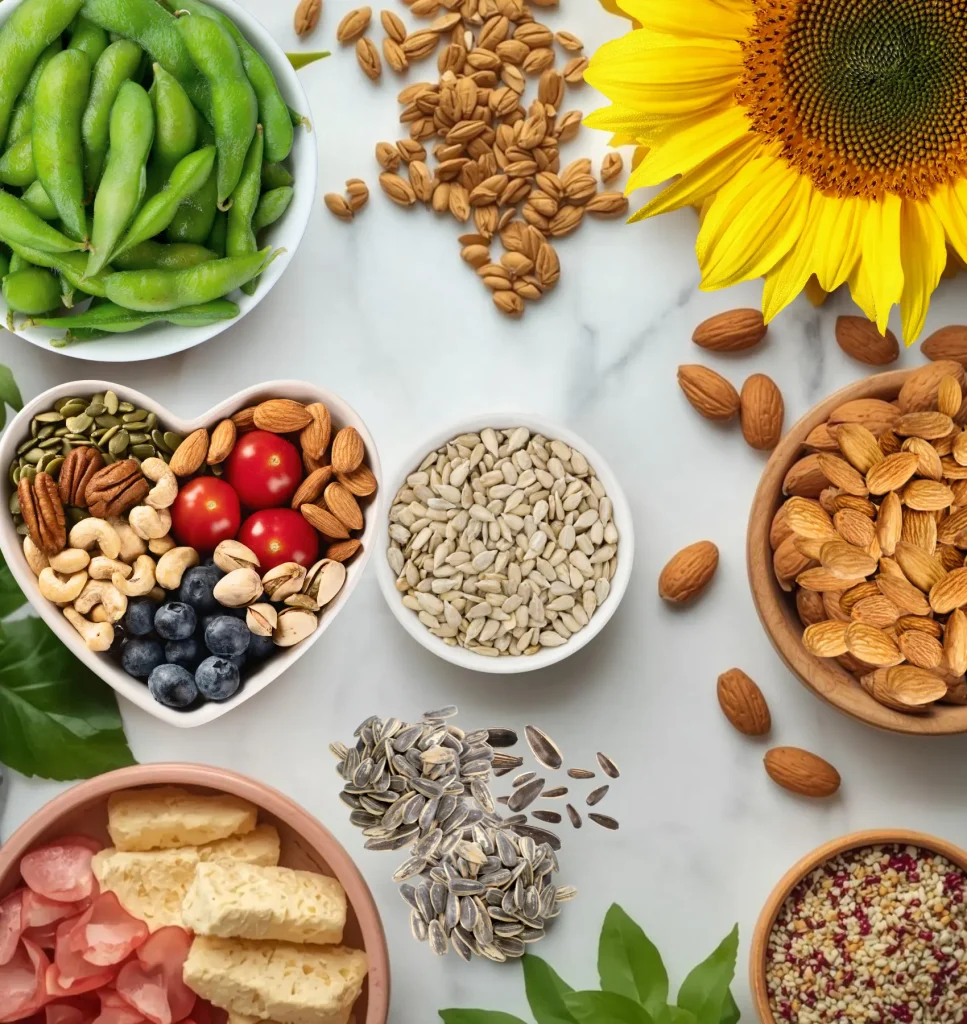
Here’s where things get deliciously practical. Soy foods contain isoflavones, while flaxseed contains lignans. These plant compounds can interact with estrogen receptors, but calling them a replacement for estrogen oversimplifies what happens in the body.
I started adding ground flaxseed to my morning smoothie about six months into perimenopause. I noticed my hot flashes felt less intrusive. That is my experience, not proof that flaxseed will do the same for every woman. Research on phytoestrogens and menopausal symptoms is mixed, and response can vary.
The bigger advantage is that foods such as edamame, tofu, tempeh, beans, seeds, and whole grains can fit into an overall nutritious eating pattern without asking one ingredient to “balance” your hormones. For the food-specific cluster, see healthy foods to eat during menopause.
2. Strength Training and Regular Movement
I was never a gym person, but at 52 I started with simple bodyweight exercises: squats, modified pushups, and movements I could control. I felt stronger, and my clothes fit differently. What I no longer do is promise that one exercise will flatten a menopause belly. We cannot spot-reduce abdominal fat.
Resistance training is valuable for a better reason: it helps maintain or build muscle and supports physical function as we age. Walking, cycling, swimming, and other aerobic movement can complement it. If you’re ready for the detailed progression, use the strength training guide for women over 50 rather than turning this overview into a workout manual.
3. Sleep Support That Targets the Real Disruption
Sleep can unravel for several reasons during midlife: hot flashes, night sweats, stress, insomnia, pain, medications, or conditions unrelated to menopause. I learned quickly that “sleep hygiene” was helpful only when it matched the problem I was actually having.
Start with basics that are low-risk: a consistent wake time, a bedroom that feels comfortable, less late-night stimulation, and a wind-down routine you can repeat. Persistent insomnia deserves more than a supplement recommendation. Our Menopause Insomnia guide owns that deeper sleep question.
4. Mind-Body Practices for Stress and Symptom Coping
This was one of the gentlest changes I made. I started with 10 minutes of guided breathing in the morning. My hot flashes did not magically disappear, but I felt less overwhelmed when they arrived. That distinction matters.
Relaxation practices, mindfulness, yoga, and cognitive-behavioral approaches may help some women with stress, sleep, or how disruptive symptoms feel. The evidence and effect size differ by intervention, so I would not promise a fixed percentage of improvement. Think of these tools as support, not a cure-all.
5. Black Cohosh and Other Herbal Options: Proceed Thoughtfully
Black cohosh is one of the most discussed herbal products for menopausal symptoms, especially hot flashes. The evidence is not strong enough for me to call it a guaranteed solution, and product quality can vary. Herbs can also have contraindications and drug interactions.
The same caution applies to red clover, sage, chasteberry, and ashwagandha. “Natural” does not automatically mean appropriate for your liver, your medicines, a hormone-sensitive condition, or your personal health history. I no longer think a universal dose belongs in a general overview like this. If you are considering an herbal supplement, take the exact product and ingredient list to a clinician or pharmacist who knows your medications and history.
6. Magnesium: Useful Nutrient, Not a Menopause Cure
Magnesium is an essential mineral, and foods such as leafy greens, beans, nuts, seeds, and whole grains contribute it naturally. But menopause symptoms do not prove magnesium deficiency, and more is not automatically better.
If you’re considering a supplement for sleep, muscle symptoms, or another reason, the details belong in our Magnesium for Menopause guide, where forms, safety, medications, and individual context can be discussed properly.
7. Vitamins: Correct a Need, Don’t Chase a Promise
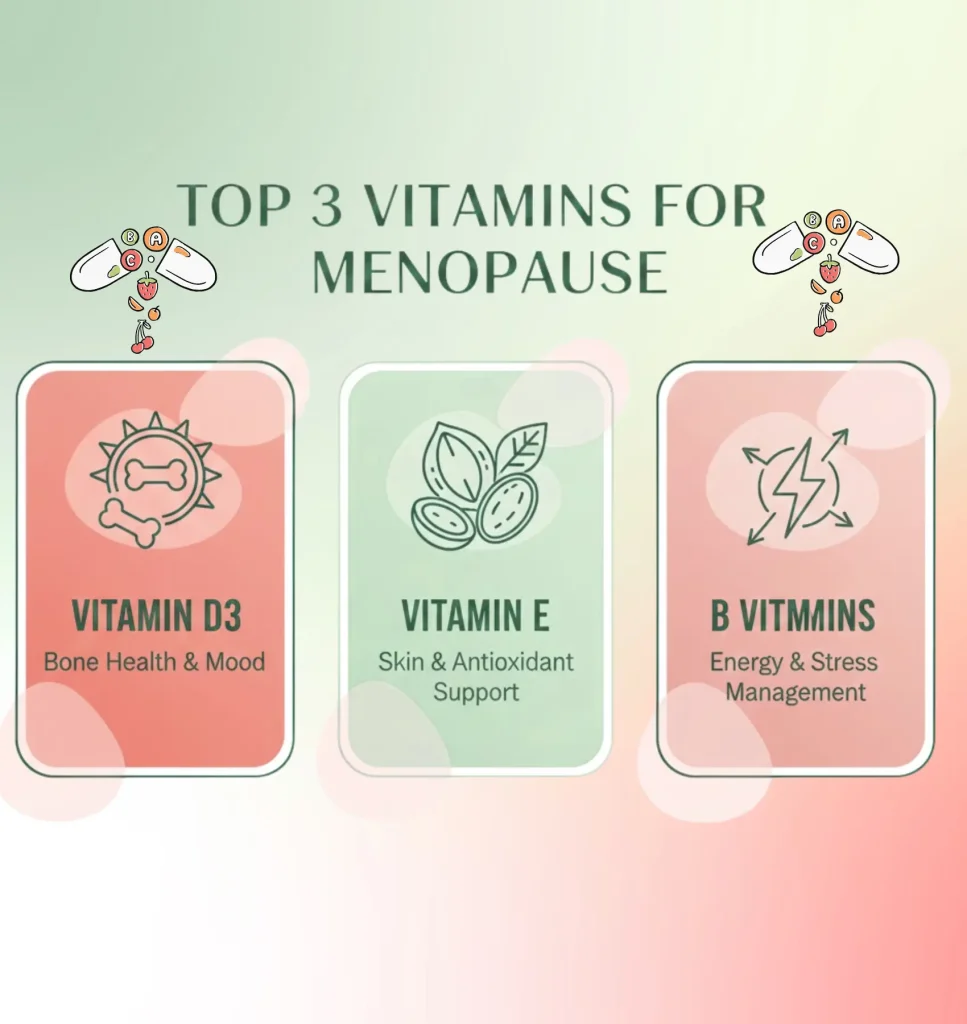
Vitamin D, B12, and other nutrients matter to health, but I would not call three vitamins a universal “menopause support squad.” Needs depend on diet, sun exposure, absorption, medicines, medical conditions, and sometimes laboratory results.
That is especially important with vitamin D: the useful question is not simply “How many IU should every menopausal woman take?” Our dedicated vitamin D guide for menopausal women handles dose and testing decisions without turning this article into a supplement prescription.
How to Choose What to Try First
Start with the symptom that is disrupting your life most. If hot flashes are the issue, do not buy five supplements at once; first understand the symptom and your treatment options in the Hot Flashes During Menopause guide. If sleep is the issue, work from the sleep branch. If your concern is bone health or a deficiency, that deserves its own decision pathway.
Changing one thing at a time also makes it easier to tell what is helping, what is doing nothing, and what is causing side effects. And if symptoms are severe, new, persistent, or affecting your ability to function, “natural first” should never become a reason to delay medical assessment.
The Most Common Questions Women Ask
What is the best natural treatment for menopause?
There is no single best option for every woman. The most useful approach depends on the symptom, your health history, medicines, preferences, and the strength of evidence for that specific intervention. Food, movement, sleep support, and stress-management practices can form a practical foundation; supplements and herbs deserve an individual safety check.
Are natural menopause treatments safer than hormone therapy?
Not automatically. Natural products can cause side effects and interact with medicines, while hormone therapy has benefits and risks that vary by the individual. The safest choice depends on your health history and the symptom being treated.
Can natural treatments stop hot flashes?
Some non-drug approaches may reduce hot-flash frequency or how disruptive they feel for some women, but no natural strategy is guaranteed to stop them. Persistent or severe vasomotor symptoms are worth discussing with a qualified clinician.
Should I take vitamins or herbs for menopause?
Not simply because you are in menopause. Supplement decisions should consider diet, medications, medical conditions, possible deficiencies, product quality, and the specific symptom or goal. A clinician or pharmacist can help review an individual product safely.
Moving Forward with Confidence
Natural menopause treatments aren’t about rejecting modern medicine. For me, they’re about expanding the conversation while staying clear-eyed about what each option can and cannot do.
I still love the practical side of this: a breakfast that nourishes me, strength work that makes me feel capable, ten quiet minutes before the day gets noisy. But I no longer need every habit to be a miracle. Sometimes the most empowering thing is knowing which tool belongs to which problem, and when it’s time to ask for more help.