Last week, a woman told me she felt defeated because she could no longer do high-intensity workouts. She thought that if she couldn’t exercise hard, she couldn’t lose weight. I asked her a simple question: Can you walk? Her face softened. Yes, she could walk.
If you’re trying to figure out how to lose weight at 60 without fighting your body, walking might be the most underestimated tool you have. It’s gentle enough for aging joints, sustainable enough for daily use, and powerful enough to transform your metabolism, mood, and weight. You don’t need fancy equipment, expensive memberships, or perfect weather. You just need to start moving, one step at a time.
Why Walking Works So Well After 60
Walking is often dismissed as “not real exercise.” That’s completely wrong, especially for women over 60.
Walking is an aerobic activity when done at a good pace. It strengthens your cardiovascular system without beating up your joints. It impacts through your bones in ways that support bone density, which matters enormously after menopause when osteoporosis risk increases.
The longer and further you walk, the more your muscle endurance and stamina improve, bringing increased energy levels. This isn’t just about burning calories during the walk itself. Regular walking actually modulates your metabolism and energy homeostasis long-term.
Research shows that walking interventions increase aerobic fitness while decreasing body weight, body mass index, percent body fat, and blood pressure. These aren’t small changes. They’re the foundations of healthy aging and sustainable weight management.
Walking also activates key nutrient-sensing pathways in your cells, including AMPK and sirtuins, which regulate metabolism, mitochondrial function, and cellular resilience. Your body doesn’t just burn calories during the walk. It becomes metabolically healthier because you walked.
The Mental and Emotional Benefits That Support Weight Loss
Weight loss isn’t just physical. Your mental and emotional state profoundly affects your ability to maintain healthy habits. Walking supports both beautifully.
Walking improves your mood, memory, and sleep while reducing stress. All of these factors directly impact weight management. Better sleep regulates hunger hormones. Lower stress reduces cortisol-driven belly fat storage. Improved mood decreases emotional eating.
Getting outside and moving also boosts your immune system. A moderate amount of daily walking strengthens your immune and metabolic systems over time. Better circulation helps your body prepare for future infections and supports overall vitality.
Many women tell me their morning walk becomes the best part of their day. It’s time for themselves, away from demands and screens. This mental clarity and emotional centering often matter as much as the physical benefits for sustaining weight loss efforts.
How Much Walking Do You Actually Need?
You don’t need to walk for hours. You need consistency and a moderate pace that gets your heart rate up a bit.
A brisk 30-minute daily walk burns around 150 calories, which is roughly 1,050 calories per week, and translates to meaningful fat loss over time when combined with healthy eating patterns. But here’s the beautiful part: even 10 minutes daily brings measurable benefits to your weight and fitness levels. If 30 minutes feels overwhelming right now, start with 10. Add five minutes every week. Small, sustainable increases create lasting habits.
The keyword is brisk. You should be able to talk but not sing. You’re working a bit, breathing a bit harder, but not gasping for air. This moderate intensity brings the metabolic benefits without exhausting you or risking injury.
Three 10-minute walks spread throughout your day work just as well as one 30-minute walk. Morning, lunch, and evening walks add up. This flexibility makes walking accessible even on busy days.
Walking and Protein: The Powerful Combination
Walking becomes even more effective for weight loss after 60 when you pair it with adequate protein intake. Let me explain why this combination matters so much.
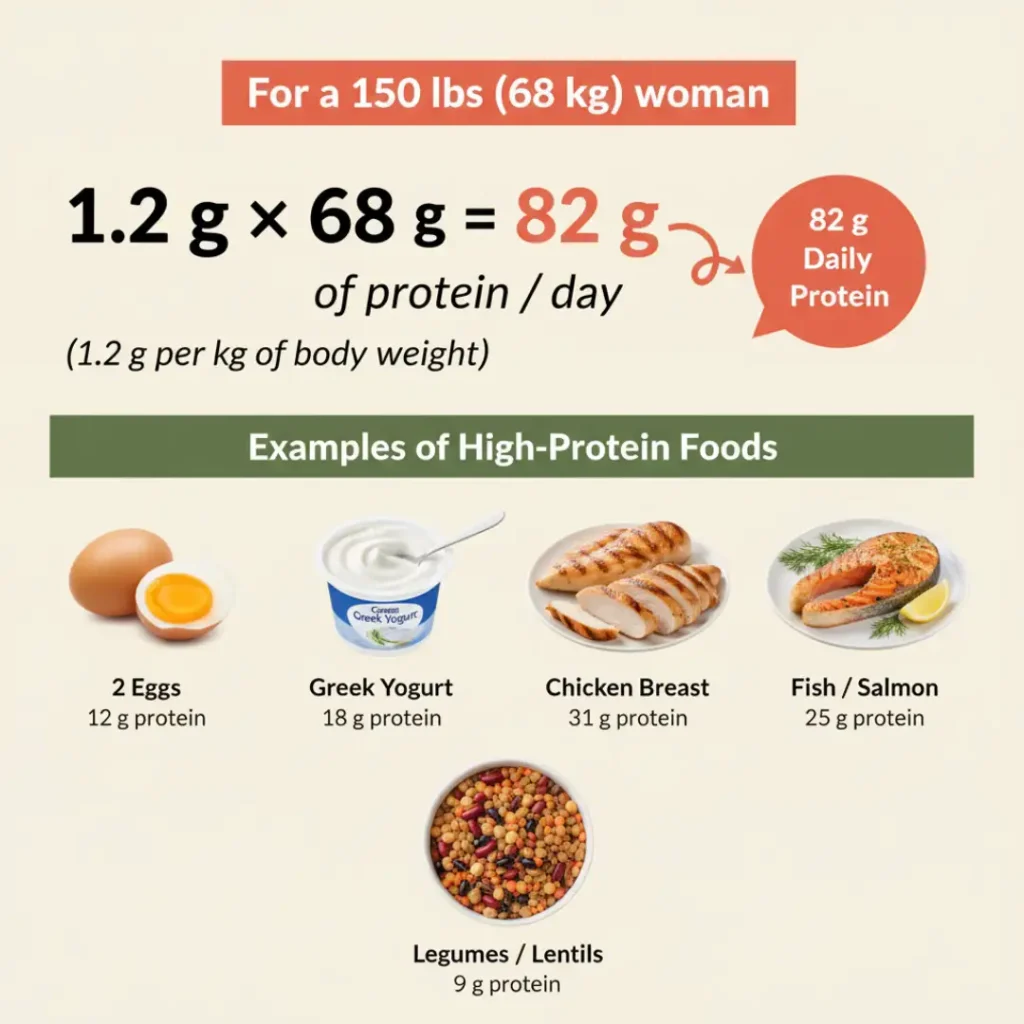
After menopause, women need significantly more protein than they did at 40. The general recommendation is 1.0 to 1.2 grams of protein per kilogram of body weight daily. If you weigh 150 pounds, that’s roughly 68 kilograms, which means you need about 68-81 grams of protein per day.
Research from Stanford shows health benefits of consuming higher amounts of protein as we age, particularly for slowing age-related muscle loss. Dr. Oppezzo recommends between 1.2 to 1.6 grams per kilogram for adults over 50, which is roughly double the federal recommendation.
Why does this matter for walking? Because walking preserves and builds the lean muscle mass that protein supports. When you walk regularly and eat adequate protein, your body maintains muscle while losing fat. Without enough protein, you risk losing muscle along with fat, which slows your metabolism.
The most important amino acid for building muscle is leucine, found in high quantities in whey, milk, eggs, chicken, and fish. Research found that leucine enhanced muscle protein synthesis in women aged 65-75, suggesting older women should ensure leucine is part of their protein intake.
Spread your protein across all meals rather than loading it at dinner. Your muscles use protein more efficiently when it arrives in steady amounts throughout the day. A protein-rich breakfast, lunch with lean protein, and dinner with fish or chicken support the muscle maintenance that walking promotes.
Hydration: The Often-Forgotten Weight Loss Tool
Most women over 60 don’t drink enough water. This silent dehydration sabotages weight loss efforts in ways you might not realize.
About 50% of adults between 51-70 years old fail to meet recommended hydration goals. The reasons include a lack of knowledge about fluid needs, a dislike of water’s taste, and being unaware of hydration’s benefits.
Women in their 50s and beyond should aim for about 2.7-3 liters (11-12 cups) of water daily, especially if you’re active, live in a warm climate, or drink coffee or alcohol. Both caffeine and alcohol are dehydrating, so balance them with an extra glass of water for each serving.
Proper hydration increases metabolism by supporting mitochondrial function, promoting increased calorie burning. Staying hydrated also supports your metabolism, improves energy, and helps your body flush out toxins more efficiently. It aids in nutrient absorption, which means the healthy food you’re eating actually gets used properly.
Many women mistake thirst for hunger, especially as our sense of thirst diminishes with age. Before reaching for a snack, try drinking a glass of water and waiting 10 minutes. Often, the urge to eat decreases.
Hydration also directly affects your walking performance. Even mild dehydration reduces endurance, increases perceived effort, and makes exercise feel harder than it should. When you’re properly hydrated, walking feels easier and more enjoyable, which means you’re more likely to keep doing it.
Creating a Sustainable Walking Routine
Consistency beats intensity every time. A walking routine you can maintain for months matters far more than ambitious plans you abandon after two weeks.
Start Where You Are
If you’re currently sedentary, start with 10 minutes daily. Walk around your neighborhood or on a treadmill at a comfortable pace. Just move. After a week, add five minutes. Keep adding gradually until you reach 30 minutes most days.
There’s no shame in starting small. Every single woman who walks 30 minutes daily now started with her first single step. Build gradually and avoid the trap of doing too much too soon, which leads to burnout or injury.
Make It Enjoyable
Listen to music, podcasts, or audiobooks that you love. Walk with a friend and catch up on life. Explore different routes in your neighborhood to keep it interesting. Notice the seasons changing, gardens blooming, birds singing.
If walking feels like a chore, you won’t sustain it. But when it becomes time you actually look forward to, everything changes. Find what makes walking pleasurable for you specifically.
Walk in the Morning When Possible
Morning walks offer unique benefits. Getting 20-30 minutes of morning light exposure helps regulate your circadian rhythm, which governs sleep quality, metabolism, and hormone release. This morning light can actually help with weight management, independent of the exercise itself.
Morning walks also set a positive tone for your entire day. You’ve already moved your body and gotten outside before the day’s demands pile up. This sense of accomplishment often carries into better food choices throughout the day.
Track Your Progress in Ways That Matter
Don’t just focus on the scale. Notice how your clothes fit. Track your energy levels. Pay attention to how your mood improves. Note how much easier the same walk feels after a few weeks.
Many women find that tracking steps motivates them. A simple pedometer or smartphone can show your daily step count. Aim for gradual increases rather than hitting 10,000 steps immediately. Maybe you average 3,000 steps now. Can you get to 4,000 this week? Build from there.
Add Variety to Challenge Your Body
Once you’ve established a consistent walking habit, add variety. Walk up hills or stairs occasionally. Increase your pace for short intervals. Try walking on different terrains like trails or beaches.
This variety challenges your muscles in new ways and prevents adaptation, where your body becomes so efficient that calorie burn decreases. You don’t need complicated training plans. Just mix things up a bit to keep your body responding.
Frequently Asked Questions
Learning how to lose weight at 60 without fighting your body doesn’t require intense workouts or complicated exercise plans. Walking offers gentle, sustainable movement that supports metabolism, preserves muscle, improves mood, and burns fat without joint stress.
Pair your daily walks with adequate protein and proper hydration for optimal results. These three simple foundations create powerful metabolic changes that support healthy weight loss and vibrant aging. For more guidance on building a complete approach, explore our articles on strength training, emotional eating patterns, and sleep quality. Always consult your healthcare provider before starting any new exercise program.
What’s one small step you’ll take this week to move more? Share in the comments below.