If your usual habits no longer seem to give you the same results after 50, it can be frustrating to decide which exercise advice to trust. The 3 best exercises to lose belly fat after 50 are not magic moves that burn fat from one exact spot. This guide compares three exercise types rather than promising three individual fat-burning moves: resistance training, aerobic activity, and core training. What exercise can do is help you build and preserve muscle, increase your overall activity, improve fitness, and support a sustainable approach to weight management.
Why Belly Fat Can Feel Different After 50
Midlife brings several changes at once. Menopause can influence body composition and where fat tends to be stored, while aging, activity level, sleep, nutrition, medications, health conditions, and changes in muscle mass can also affect weight and waist circumference. Blaming one hormone or one habit does not account for that whole picture.
It is also important to separate two goals that are often confused. Strengthening your abdominal muscles can make your core stronger, but it does not selectively remove the fat covering those muscles. Reducing abdominal fat, when that is an appropriate goal, is part of a broader change in body fat and health habits rather than the result of hundreds of crunches.
1. Resistance Training: Build and Maintain Strength
Strength training is the first place I would look if the goal is to stay strong while working on weight management after 50. Resistance exercise challenges the muscles and can help preserve or improve strength and physical function. It is not a belly-fat shortcut, but maintaining muscle becomes increasingly relevant as we get older.
You do not need to train like a bodybuilder. Squats or sit-to-stands, rows, presses, hinges, and other resistance movements can be adapted to your current ability. Dumbbells, resistance bands, machines, or body weight can all be useful. If you want the broader Lonage approach to resistance exercise, read our strength training guide for women over 50.
The important part is progression that matches your body. More weight is not automatically better, and soreness is not proof that a workout worked. Good form, an appropriate challenge, and enough recovery matter more than chasing exhaustion.
2. Aerobic Activity: Increase Your Overall Movement
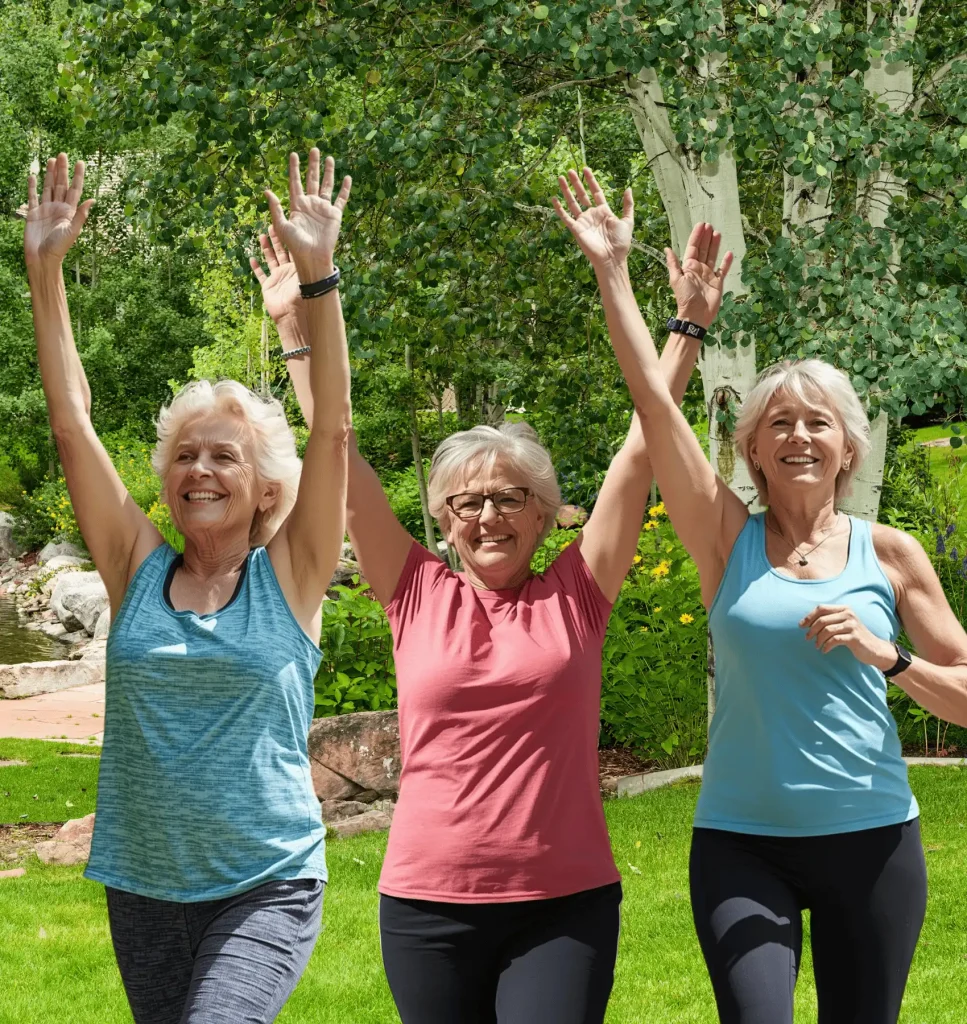
Cardiovascular exercise is the second part of the picture. Walking, cycling, swimming, or another activity you can do consistently can support cardiovascular fitness and overall energy expenditure. Some women enjoy intervals, where periods of easier movement alternate with periods that feel more challenging.
HIIT is often marketed as if it has a special ability to melt belly fat. I would not frame it that way. Interval training can be one useful form of exercise, but it is not required, and it is not appropriate at the same intensity for everyone. A brisk walk you can repeat consistently may be more useful than a punishing workout you dread or cannot recover from.
If you are new to intervals, you can simply vary your walking pace rather than jumping straight into an intense routine. The harder portions should be appropriate for your fitness level, and recovery should allow you to regain control of your breathing. Anyone with significant cardiovascular, balance, joint, or other medical concerns may need individualized guidance before adding vigorous exercise.
3. Core Training: Improve Trunk Control

Core exercises belong on this list for a different reason: they train the muscles that help stabilize and move your trunk. Judge them by better control and an appropriate challenge, rather than expecting them to remove the fat covering those muscles.
Planks are one option, but they are not the only option and they are not suitable for everyone. Seated marches, controlled seated rotations, standing anti-rotation work, and other adapted movements can also challenge the trunk. If getting onto the floor is uncomfortable or balance is a concern, our chair-based exercise guide for women after 50 offers a lower-impact alternative.
Compare the three exercise types at a glance
| Exercise type | Its role | Example | An easier option | What not to expect |
|---|---|---|---|---|
| Resistance training | Train muscle strength and support everyday function. | Controlled sit-to-stand from a stable chair. | Use a higher stable seat or hand support when appropriate. | It cannot choose where fat is lost. |
| Aerobic activity | Build cardiovascular fitness and add overall activity. | A walk at a manageable pace. | Choose a shorter route, slower pace, or breaks. | A fixed walking dose does not guarantee weight loss. |
| Core training | Practice trunk strength and movement control. | Controlled seated marching. | Lift the feet less, move more slowly, or pause between sides. | Stronger abdominal muscles do not automatically mean less abdominal fat. |
Which option should you start with?
Choose according to the obstacle you face today. If you want to learn resistance movements, follow the strength guide. If a repeatable aerobic habit is missing, choose an activity you enjoy and can sustain. If floor core work is inaccessible, use the chair guide for an adapted option. Core work complements the other categories; it is not the main driver of abdominal fat loss.
How to Combine the Three Without Overdoing It
You do not need a rigid seven-day schedule to benefit from exercise. Public-health guidance generally encourages adults to combine aerobic activity with muscle-strengthening work, but your starting point should reflect your current fitness, health, recovery, and mobility.
If you are returning after a long break, a short walk and a few well-controlled strength movements may be enough for the first session. Someone already active may tolerate more. Build gradually rather than assuming that more days, more minutes, or harder intervals automatically produce better results.
The 3 best exercises to lose belly fat after 50 are therefore better understood as three useful categories: resistance training, aerobic movement, and core training. The exact mix is personal. Consistency and an appropriate progression matter more than trying to follow a perfect calendar.
An optional starting example—not a full workout prescription
If walking and getting up from a chair are already comfortable for you, try a small combination: an easy five-minute walk, a few controlled sit-to-stands from a stable chair, and a short period of seated marching. Rest between activities. This is an illustration of how the categories can fit together, not a required duration, repetition count, or weight-loss dose.
Make the example smaller if needed: shorten the walk, choose a higher stable chair, use appropriate support, or leave out a movement that is uncomfortable. If you cannot perform a movement securely, ask for a suitable alternative rather than forcing it. The aim of the first attempt is to find movements you can repeat with control, not to finish exhausted.
Note three things afterward: what you chose, whether your movement and breathing stayed controlled, and how you felt later. When the same amount becomes comfortable and repeatable, change one thing at a time—for example, a slightly longer walk or another controlled repetition. Do not increase pace, duration, and resistance together. Use the linked exercise guides for technique details; this article remains a comparison and decision guide.
Exercise Is Only One Part of Belly Fat and Weight Management
Exercise alone does not determine what happens to your waistline. Eating patterns, sleep, stress, medications, medical conditions, menopause-related changes, and daily activity outside formal workouts can all matter. If weight management during the menopause transition is your broader goal, our guide to sustainable weight management during menopause goes into that bigger picture.
Protein-rich foods can help support muscle as part of an adequate diet, but there is no single food or supplement that selectively burns abdominal fat. Sleep and stress deserve attention too, not because one bad night or stressful day automatically creates belly fat, but because they can influence how well you eat, move, recover, and manage your health over time.
What Progress Should You Look For?
There is no reliable deadline for a change in how your jeans fit or in your waist measurement. Bodies respond differently, and the scale or tape measure is only part of the story.
Early signs of progress may include learning better technique, walking farther or more comfortably, using more resistance with good form, feeling steadier during everyday tasks, or recovering more predictably between sessions. Changes in body weight or waist circumference depend on many factors and may take a different course for every woman.
When to Get Individual Guidance
If you have been inactive for a long time, have significant joint pain, repeated falls, osteoporosis with fracture concerns, heart or lung disease, uncontrolled symptoms, or are recovering from surgery or another major health event, individualized advice can help you choose appropriate exercises and intensity. Stop exercising and seek medical assessment for concerning symptoms such as chest pain, fainting, or severe unexplained shortness of breath.
Frequently Asked Questions
Can exercise specifically burn belly fat after 50?
No exercise can reliably choose where your body loses fat. Strength training, aerobic activity, and other movement can support overall fitness, muscle, energy expenditure, and weight-management goals, while core exercises strengthen the muscles underneath the abdominal area.
What are the 3 best exercises to lose belly fat after 50?
A practical approach combines resistance training, aerobic movement such as walking or cycling, and core training. These exercise categories support different aspects of fitness, but none should be presented as a spot-reduction method for abdominal fat.
Is walking enough to help with weight management after 50?
Walking can be a valuable part of an active lifestyle and can support cardiovascular fitness and overall activity. Whether it is enough for a specific weight-management goal depends on the individual, and adding appropriate strength training can help support muscle and physical function.
Do ab exercises flatten the stomach?
Abdominal exercises can strengthen the core, but they do not selectively remove fat from the stomach. Visible changes around the waist depend on broader changes in body composition as well as individual factors.
Is HIIT necessary for women over 50 who want to lose weight?
No. HIIT is one form of exercise, not a requirement. Walking, cycling, swimming, resistance training, and other activities can all be useful. The best approach is one that matches your health, fitness level, recovery, and preferences and that you can continue consistently.
The Bottom Line
The 3 best exercises to lose belly fat after 50 are not three secret movements that melt fat from your waist. A better strategy is to combine strength training, aerobic movement, and core work in a way that fits your health and ability. That approach supports strength, fitness, function, and broader weight-management goals without promising spot reduction or a fixed timeline.
Your body after 50 does not need punishment. It needs movement you can recover from, enough challenge to keep progressing, and habits you can live with. Start from where you are, adjust when necessary, and measure progress by what your body can do as well as how it looks.