One afternoon, I found myself in my doctor’s office, gripping a stack of test results that finally gave voice to the quiet warnings my body had been sending for years. At 47, I thought I was doing everything right, managing a full schedule, powering through fatigue, eating what I thought were “healthy” meals between meetings. But my body had different plans, and that wake up call changed everything.
During my recovery, a friend handed me a book about Blue Zones, five places on Earth where people live the longest, healthiest lives. As I read about these communities in Okinawa, Sardinia, Nicoya, Ikaria, and especially Loma Linda right here in California, something clicked. These weren’t people obsessing over the latest diet trend or counting every calorie. They were simply living, eating, and thriving in ways that felt natural and joyful.
That discovery became my roadmap. Not to perfection, but to a way of eating that actually makes sense for women like us navigating our 50s, 60s, and beyond, promoting healthy aging
What Are Blue Zones, and Why Should Women Over 50 Care?
Blue Zones are five regions where people consistently live past 100 while remaining active, sharp, and disease-free well into their final years. Researcher Dan Buettner identified these longevity hotspots after studying the common threads in their lifestyles, and what he found was remarkable: these centenarians weren’t taking handfuls of supplements or following complicated meal plans. They were eating simple, whole foods in patterns passed down through generations.
When I discovered that Loma Linda, just a few hours from where many of us live in California, is one of these Blue Zones, I realized this wasn’t some unreachable ideal. Real women, in our own backyard, were proving that food could be medicine, celebration, and community all at once.
The 95% Plant-Forward Principle: Not Vegan, Just Vibrant
Let me be clear right away: Blue Zone nutrition isn’t about becoming vegan or giving up foods you love. It’s about shifting the balance on your plate, so plants become the star, and everything else plays a supporting role.
Why this matters for women 50+:
Plant-forward eating directly addresses our biggest health concerns. The fiber supports gut health and helps regulate blood sugar swings that can worsen during menopause. The antioxidants protect brain cells from oxidative stress that contributes to cognitive decline. The phytoestrogens in foods like flaxseeds and soy help balance hormones naturally. And the anti-inflammatory properties reduce joint pain and chronic disease risk.
I started experimenting in my own kitchen. Instead of chicken as my default protein, I began building meals around white beans, chickpeas, and lentils. Instead of feeling deprived, I felt lighter, more energized, and genuinely satisfied. My digestion improved dramatically. The afternoon energy crashes that had plagued me vanished.
Beans: The Humble Superfood You’ve Been Underestimating
If there’s one food that appears daily in every Blue Zone, it’s beans. Black beans in Nicoya, lentils in Sardinia, soybeans in Okinawa, chickpeas in Ikaria. The variety changes, but the commitment doesn’t waver. At least half a cup of beans daily is non-negotiable in these longevity cultures.
I used to view beans as boring, something to toss into chili when I remembered. Now I understand they’re possibly the most perfect food for women navigating the second half of life.
Beans are protein-rich without the saturated fat that comes with most animal proteins. They’re loaded with fiber that keeps you full, stabilizes blood sugar, and feeds beneficial gut bacteria. They’re packed with minerals like iron, magnesium, and potassium that support bone density and heart health. They’re incredibly affordable and endlessly versatile. And perhaps most importantly for us, they help maintain steady energy without the spikes and crashes that make menopause symptoms worse.
Linda’s Real-Life Bean Swap:
I keep three types of canned beans in my pantry always—black beans, chickpeas, and white beans. (Yes, canned is fine. Rinse them well to reduce sodium, and you’re good to go.) Monday might be white bean and kale soup. Wednesday is chickpea curry over brown rice. Friday is black bean tacos with all the fixings. Sunday is hummus made from scratch, served with vegetables for an easy dinner.
The transformation in how I feel, sustained energy, stable mood, no mid-afternoon crashes, convinced me that our grandmothers’ generations knew something we forgot in our rush toward convenience foods.
Hara Hachi Bu: The 80% Full Philosophy That Changes Everything
One of the most profound Blue Zone principles has nothing to do with what you eat and everything to do with how much. In Okinawa, they practice Hara Hachi Bu—a Confucian teaching that reminds them to stop eating when they’re 80% full rather than stuffed.
This simple practice creates a natural calorie reduction of about 20%, which research shows can significantly extend lifespan and reduce disease risk. But beyond the science, it addresses something many of us struggle with: our complicated relationship with portion sizes and satisfaction.
I grew up in the “clean your plate” generation. Wasting food felt sinful, and fullness became my only signal to stop eating. But fullness and satisfaction aren’t the same thing. Fullness is physical—that uncomfortable, sometimes regretful feeling of having eaten too much. Satisfaction is that peaceful sense of “I’ve had enough, and it was good.”
Why this resonates for women our age:
As our metabolism naturally slows and our activity levels often decrease, we need fewer calories than we did in our 30s and 40s. But restrictive dieting triggers our bodies to hold onto weight even more stubbornly. Hara Hachi Bu offers a middle path eating mindfully, enjoying your food fully, and stopping at satisfaction rather than fullness. No calorie counting, no measuring, no deprivation. Just awareness.
The Whole Food Foundation: Nothing Processed, Nothing Fake
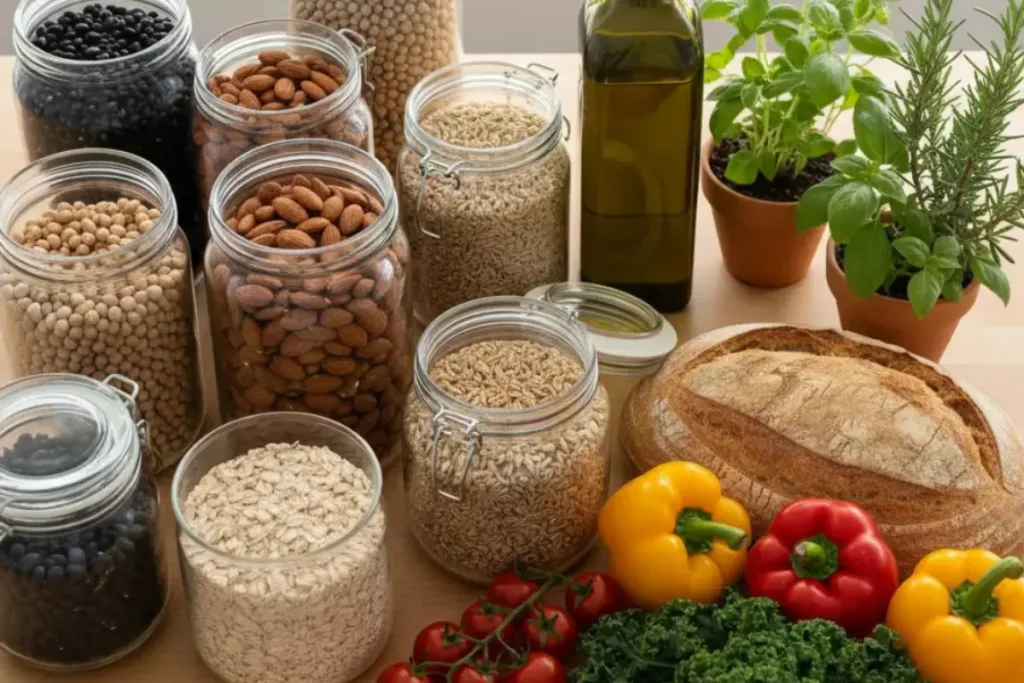
Walk into any home in a Blue Zone and open the pantry. You won’t find brightly colored packages promising weight loss or energy boosts. You won’t find ingredient lists that you need a chemistry degree to understand. You’ll find beans, grains, nuts, olive oil, herbs, and vegetables. Real food, in its natural form, is prepared simply.
When I cleaned out my pantry post-recovery, I was shocked by how much wasn’t actually food. Lowfat cookies with 30 ingredients. “Healthy” granola bars have more sugar than substance. Diet frozen meals with unpronounceable additives.
I replaced them with bulk bins staples: brown rice, quinoa, oats, various beans, raw nuts, dried fruit without added sugar. I stocked my fridge with actual vegetables. I bought olive oil, vinegar, spices, and fresh herbs to make flavor happen naturally.
The Daily Nut Ritual: Small Habit, Massive Impact
Here’s possibly the easiest Blue Zone principle to adopt: eat a handful of nuts daily. Not honey roasted or sugar coated, just raw or dry-roasted nuts in their natural state.
Blue Zone residents who eat nuts regularly outlive those who don’t by an average of two to three years. A handful of nuts (about an ounce, roughly what fits in your cupped palm), five times per week, reduces heart disease risk by half and diabetes risk significantly.
. I keep small containers of mixed nuts everywhere: my car, my purse, my desk, and the kitchen counter. Mid morning or mid-afternoon, when I need a little something, I reach for nuts instead of crackers or sweets.
Why nuts are perfect for women 50+:
They provide protein and healthy fats that keep you satisfied between meals without spiking blood sugar. They’re rich in magnesium, which many of us lack and which is crucial for bone health and quality sleep. They contain omega 3 fatty acids that support brain health and reduce inflammation. And they’re one of the few foods that research consistently shows extends lifespan when eaten regularly.
Bringing Blue Zone Nutrition to Your California Kitchen
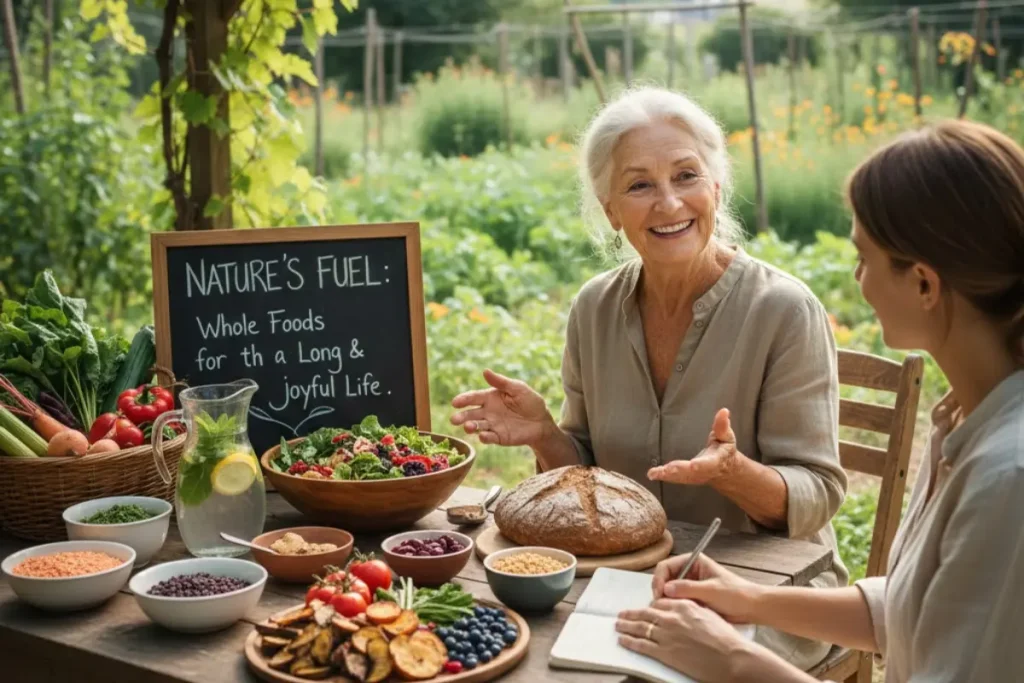
The blueprint for Blue Zone nutrition isn’t complicated, but it does require a shift in thinking. You’re not adding one more restrictive diet to the pile of failed attempts. You’re embracing an eating pattern that cultures worldwide have proven supports vibrant longevity.
Here’s what a Blue Zone-inspired day might look like:
Breakfast:
Steel-cut oats cooked with cinnamon, topped with walnuts, blueberries, and a drizzle of honey. Green tea.
Lunch:
Large salad with mixed greens, chickpeas, cucumber, tomatoes, olives, and a tahini-lemon dressing. Whole-grain sourdough on the side. Water with lemon.
Afternoon snack:
A handful of almonds and an apple.
Dinner:
Lentil and vegetable soup with carrots, celery, kale, and herbs. A small piece of whole grain bread with olive oil for dipping. Roasted Brussels sprouts on the side.
Notice what’s abundant: plants, fiber, variety, color, real food. Notice what’s minimal: processed ingredients, added sugars, and large portions of animal products. Notice what’s completely absent: guilt, restriction, perfection.
The Loma Linda Connection: Blue Zone Living in Your Backyard
Loma Linda, California, right here in our state, is the only Blue Zone in the United States. The Seventh-day Adventist community there lives an average of 10 years longer than other Americans, and they credit their plant-forward diet, active lifestyle, strong community bonds, and faith-based stress management.
What inspires me most about Loma Linda isn’t that it’s exotic or special. It’s that it’s proof these principles work in modern American life. These are people shopping at regular grocery stores, navigating the same food landscape we do, living in the same culture that promotes convenience over quality. Yet they’ve maintained eating patterns that keep them vital, active, and disease-free well into their 90s and beyond.
Frequently Asked Questions
Your Blueprint Starts Now
The women in Okinawa, Sardinia, Ikaria, Nicoya, and Loma Linda aren’t following meal plans or counting points. They’re eating the way their grandmothers did, sharing meals with people they love, and trusting that real food supports real health.
You can start exactly where you are. Maybe this week, you can add beans to two meals. Maybe you swap your usual snack for a handful of nuts. Maybe you can try one new vegetable at the farmers’ market. Small shifts compound over time into profound transformation.
At 54, I have more energy, clearer thinking, and greater vitality than I did a decade ago. Not because I’m special, but because I learned from the world’s longest-lived people that food can be both medicine and joy. Your body is capable of remarkable renewal when you give it what it truly needs.
The blueprint is here. The wisdom is proven. The choice is yours. For more guidance on building strength and vitality through movement, explore our comprehensive approach to strength training for women over 50. If you’re navigating hormonal changes, discover natural strategies in our guide to managing menopause naturally. And to complement your nutrition journey, learn how daily walking habits create the foundation for lasting wellness.
What’s one Blue Zone principle you’ll bring into your kitchen this week?
Share your intentions in the comments, I’d love to hear which changes resonate most with you, and I’ll be here cheering you on.