When I turned 52, I stood in front of the skincare aisle at my local California drugstore and felt completely overwhelmed. My go-to moisturizer suddenly made my skin feel tight, my foundation settled into lines that seemed to appear overnight, and those skincare anti-aging products I’d heard about felt like a confusing maze of promises and scientific jargon. The reality is, our skin goes through real shifts after 50, especially during and after menopause, and what worked in our 40s often doesn’t cut it anymore. But instead of fighting or fearing these changes, we can learn to support our skin with kindness, science-backed choices, and a dose of realistic expectation. Let me walk you through what I’ve learned and what actually makes a difference.
Understanding What’s Really Happening to Your Skin After 50
Ever wonder why your skin suddenly feels different after menopause hits? There’s actual science behind it, and understanding what’s going on can help you make smarter choices.
As estrogen levels decline during perimenopause and menopause, your skin cells, which actually contain estrogen receptors, start behaving differently. Collagen production drops by about 2.1% each year for the first 15 years after menopause, which means you could lose up to 30% of your collagen between ages 50 and 65. That’s why fine lines deepen, skin feels thinner, and that bouncy firmness you remember seems to fade. menopause and thriving wellness after 50:your california inspired guide
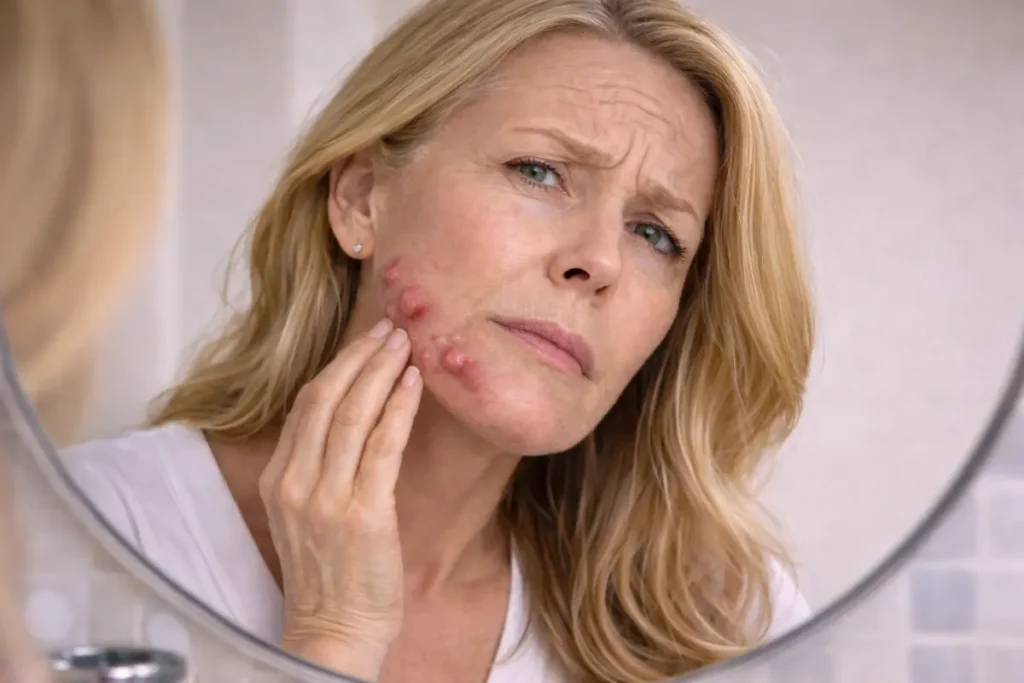
But collagen isn’t the only casualty. Your skin also produces less natural oil, holds less moisture, and becomes more sensitive to products and environmental stressors like sun and wind. If you live in sunny California, as I do, UV exposure accelerates these changes even faster. Hormonal Acne on Mature Skin During Menopause
Here’s the empowering part: when you understand what’s happening, you can respond thoughtfully instead of throwing money at every miracle cream that crosses your path. Your skin isn’t broken, it’s just entering a new phase, and it deserves care that matches this chapter of your life.
The Essential Ingredients That Actually Support Mature Skin
Let’s cut through the noise and talk about what really works. I’m not here to sell you a 15-step routine; I’m here to share what dermatologists and researchers consistently point to as effective ingredients for skin after 50.
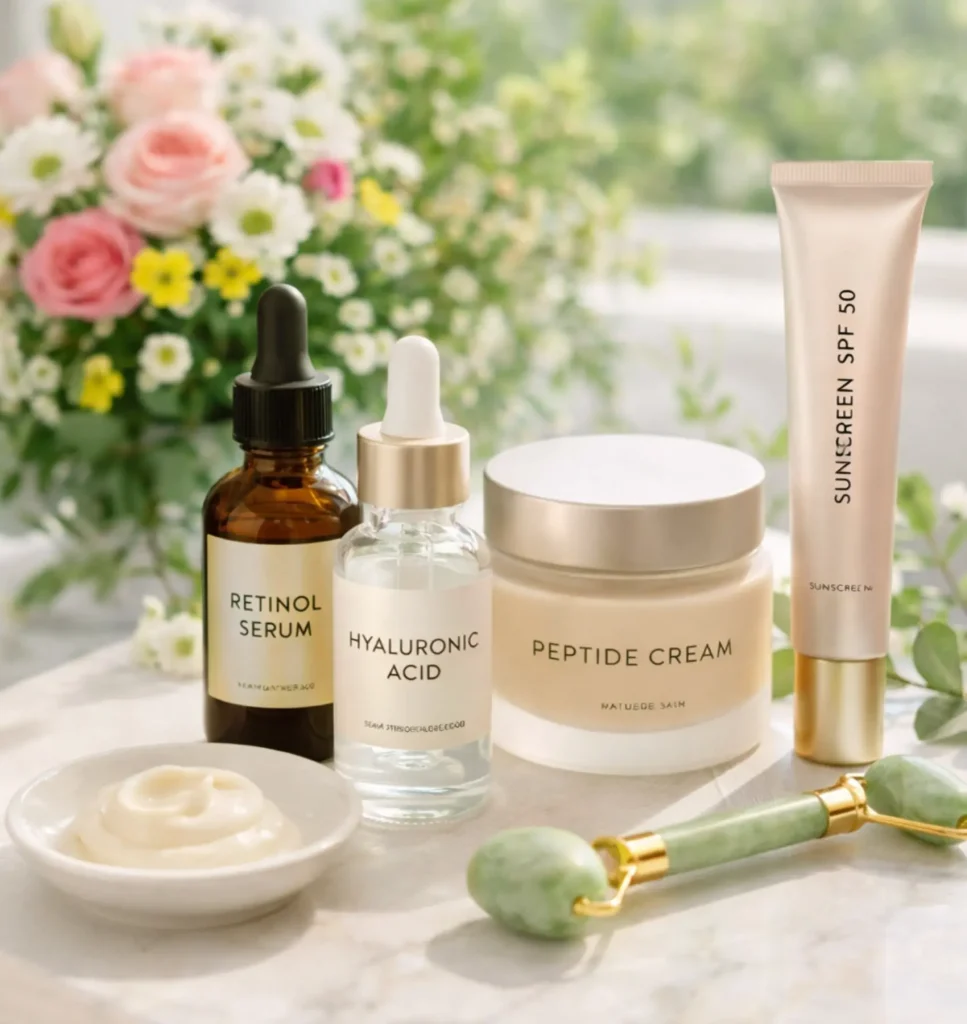
Retinoids (Vitamin A)
If I could pick one ingredient that’s made the biggest visible difference for me, it’s retinol. Retinoids, whether over-the-counter retinol or prescription tretinoin, work by boosting cell turnover and stimulating collagen production. They help soften fine lines, even out skin tone, and improve texture over time.
But here’s the catch: retinoids can be irritating, especially on thinner, post-menopausal skin. Start slowly, maybe twice a week with a pea-sized amount on clean, dry skin, and always follow with a hydrating moisturizer rich in ceramides. Never apply retinol to damp skin, and always wear sunscreen the next morning.
Peptides
Peptides are small chains of amino acids that signal your skin to produce more collagen and support firmness. They’re gentler than retinoids, which makes them a great option if your skin is sensitive or you’re just starting to explore skincare anti-aging products.
What I love about peptides is that they work quietly in the background. You won’t see dramatic overnight changes, but over weeks and months, many women notice their skin feels more resilient and looks smoother.
Niacinamide (Vitamin B3)
Niacinamide is a multitasking superstar for mature skin. It helps strengthen your skin barrier, reduces redness and irritation, improves uneven tone, and even helps regulate oil (yes, some women still deal with breakouts during menopause). It plays well with other ingredients and is generally very well-tolerated.
Hyaluronic Acid
This ingredient acts like a moisture magnet, holding up to 1,000 times its weight in water. As your skin’s natural moisture levels drop with age, hyaluronic acid helps plump and hydrate from the outside. It won’t fill wrinkles permanently, but it temporarily smooths and softens, which can make fine lines less noticeable.
Ceramides
Think of ceramides as the mortar between the bricks of your skin cells. They help repair and maintain your skin’s protective barrier, which becomes more fragile after menopause. Products with ceramides can significantly reduce dryness, irritation, and that uncomfortable tight feeling many women experience.
Building a Realistic Skincare Routine You’ll Actually Follow
I know you’ve seen those elaborate 10-step routines online, and maybe you’ve even tried one. But if you’re like most women I talk to, you want something that fits into real life between work, caring for aging parents, maybe helping with grandkids, and actually getting some sleep. A solid routine only needs four essential steps, and you can build from there.
Morning Routine
Start with a gentle cleanser that doesn’t strip your skin. If your face feels tight or squeaky-clean afterward, it’s too harsh. Many women with dry skin can even skip morning cleansing and just rinse with lukewarm water.
Next, apply a serum with antioxidants like vitamin C to help protect against environmental damage and brighten your complexion. Follow with a moisturizer that contains hyaluronic acid, ceramides, or both to lock in hydration.
The final non-negotiable step? Broad-spectrum sunscreen, SPF 30 or higher. This is hands-down the most effective way to protect your skin from further sun damage, which accelerates collagen breakdown and creates new spots and lines. Even on cloudy days, even if you’re mostly indoors, make sunscreen a habit.
Evening Routine
Start again with your gentle cleanser to remove sunscreen, makeup, and the day’s buildup. Then apply your active treatment. This is where retinol, peptides, or prescription tretinoin comes in. You don’t need to use actives every night; many women find 2-3 times per week is plenty, especially when starting.
Finish with a richer night cream or facial oil to seal in moisture and support your skin barrier while you sleep. Your skin does its repair work overnight, so this step matters more than you might think. Learn more about Why Sleep Problems Increase After Age 50: and What You Can Do
Weekly Extras
Once or twice a week, you might add a gentle exfoliant like a lactic acid product to help with dullness and texture. But skip harsh scrubs, they’re usually too abrasive for mature skin. A hydrating mask when your skin feels especially parched can also be a lovely act of self-care.
Remember: consistency beats complexity every time. It’s better to do a simple routine every day than an elaborate one you abandon after two weeks.
Why “Anti-Aging” Language Doesn’t Serve Us (But Smart Skincare Does)
Let’s talk about the language we use around aging and beauty. I’ve noticed a real shift happening away from the idea that wrinkles are problems to fix and toward the concept that our skin deserves care and support as we age. This matters more than you might think.
When we frame aging as something to fight, erase, or combat, we’re essentially saying that getting older diminishes our worth. But the truth? Our 50s, 60s, and beyond can be some of the most vibrant, purposeful, confident years of our lives. Fine lines carry the memory of big laughs with friends, hard-won wisdom, and yes, even the stress of juggling careers and caregiving.
That’s why I prefer to think of skincare anti-aging products as pro-longevity or skin health tools rather than erasers. The goal isn’t to look 25 again, it’s to feel comfortable, vibrant, and authentically yourself in the skin you’re in now. When your skin feels hydrated, cared for, and protected, you’re more likely to show up fully in your life: whether that’s traveling, starting a new chapter in your career, spending time with grandchildren, or finally tackling that passion project you’ve been putting off.
Many women tell me that when they shift from trying to fix themselves to simply caring for themselves, their whole relationship with aging changes. They walk taller, smile more freely, and worry less about what other people think. And that confidence? It’s more beautiful than any serum in a bottle.
The Lifestyle Habits That Make Your Skincare Work Harder
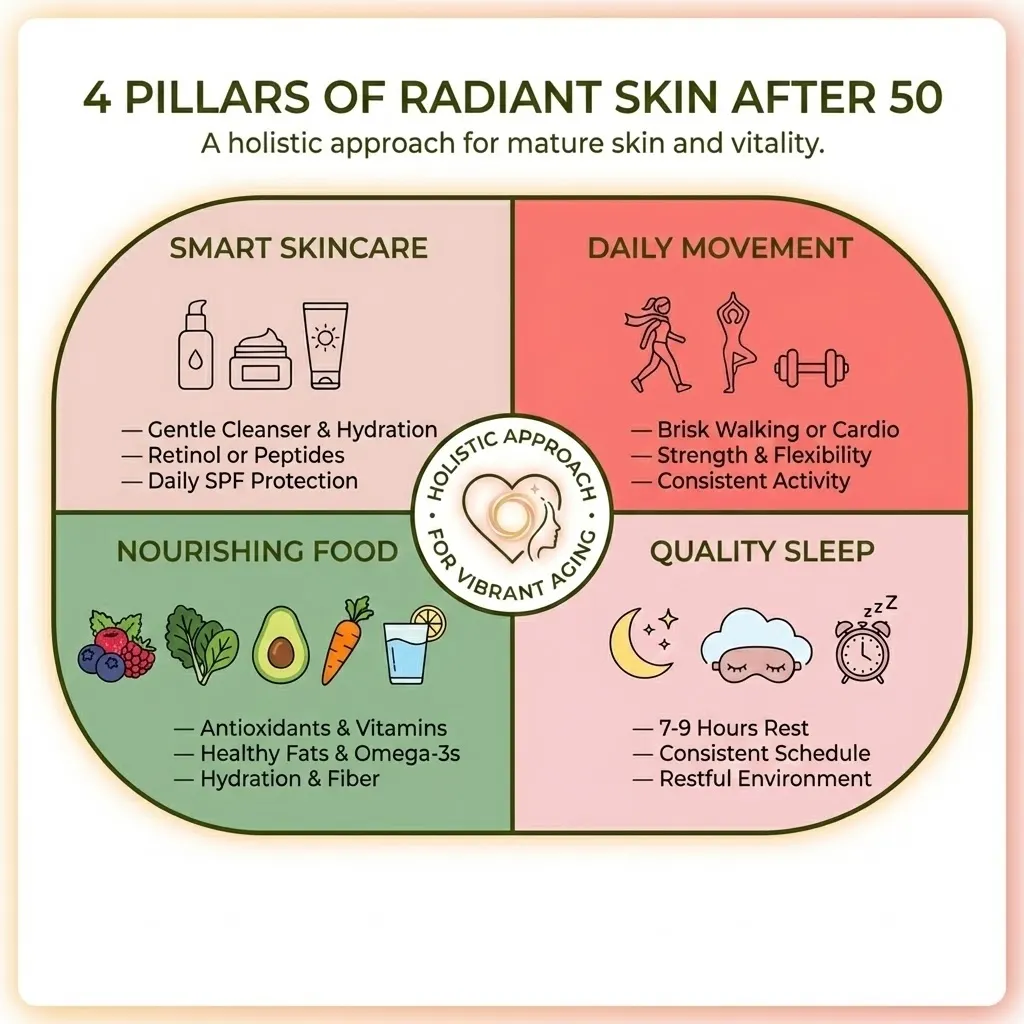
Here’s something I wish I’d understood earlier: no cream or serum can overcome chronic sleep deprivation, dehydration, or unmanaged stress. Your skin is your body’s largest organ, and it reflects what’s happening on the inside.
Movement Matters
Even 20-30 minutes of daily walking has been shown to improve circulation, support cardiovascular health, strengthen bones, and boost mood, all of which show up in how your skin looks and feels. Many women notice that on days when they move their bodies, their complexion looks brighter and more alive. Aim for at least 150 minutes of moderate activity per week, plus simple strength exercises to maintain muscle and bone health as you age.
Eat for Your Skin (and Everything Else)
Research consistently shows that diets rich in colorful fruits and vegetables, healthy fats like olive oil and avocados, and adequate protein support both skin health and overall longevity. Think of food as nourishing your skin from the inside, while your products work from the outside. Hydration matters too; aim for about 8 glasses of water daily, adjusting for activity level and climate.
Prioritize Sleep
Menopause can wreak havoc on sleep with night sweats, restlessness, and insomnia. But prioritizing a calm bedtime routine, a cool room, and consistent sleep and wake times can make a real difference in how you feel and how your skin recovers overnight. A well-rested face almost always looks brighter than an exhausted one, no matter how many serums you own.
Manage Stress (Without Perfection)
Chronic stress shows up on your skin in the form of dullness, breakouts, and flare-ups of conditions like rosacea. It also impacts your overall health and longevity. You don’t need a perfect meditation practice; even five minutes of deep breathing, a short walk outside, or a weekly coffee date with a friend can help buffer stress and keep you feeling grounded.
For many women 50-70, this life stage includes big transitions: retirement, caring for aging parents, navigating an empty nest, or redefining your identity beyond your career. Giving yourself permission to rest, move, and nourish your body isn’t selfish; it’s essential to staying strong, independent, and vibrant for the long haul.
What to Look for and Avoid When Shopping for Products
Walking into a beauty store or scrolling through online reviews can feel completely overwhelming when you’re trying to find the right skincare anti-aging products for your needs. Let me share some practical tips that have helped me cut through the marketing hype.
Look for These Clues
Products labeled for mature skin barrier repair, hydrating, or for sensitive skin are usually gentler and more appropriate for post-menopausal skin than those marketed to younger demographics. Check ingredient lists for the actives we talked about: retinol, niacinamide, peptides, hyaluronic acid, ceramides.
Packaging matters too retinol and vitamin C degrade quickly when exposed to light and air, so look for opaque bottles or airless pumps rather than jar packaging. And don’t be fooled by fancy marketing language, often drugstore brands with solid ingredients work just as well as luxury options.
Red Flags to Watch For
If a product promises instant results, erases wrinkles overnight, or turns back the clock, that’s your cue to walk away. Real skin changes take weeks or months of consistent use; anyone promising otherwise is selling you a fantasy. Also, be cautious with harsh scrubs, alcohol-heavy toners, and products with long lists of fragrance ingredients, all of which can irritate sensitive mature skin.
When to See a Professional
If you have persistent redness, new or changing spots, ongoing irritation, or skin concerns that worry you, please see a dermatologist. They can check for skin cancers (which become more common with age), prescribe stronger treatments like tretinoin if appropriate, and create a customized plan for your specific skin type and concerns. Skincare is important, but professional medical guidance is irreplaceable, especially as we age.
Frequently Asked Questions About Skincare After 50
Your Skin, Your Story, Your Choice
Caring for your skin after 50 isn’t about chasing youth or fixing what’s broken; it’s about comfort, confidence, and honoring the life your skin has carried you through. The right skincare anti-aging products can absolutely support healthier, more resilient skin, but they work best when paired with movement, nourishing food, quality sleep, and a mindset that celebrates aging rather than fears it.
Remember, everything I’ve shared comes from one woman’s experience and research, not medical expertise. Always partner with a qualified dermatologist or doctor for personalized advice, especially if you have specific skin conditions or concerns. Your 50s, 60s, and beyond deserve to be vibrant, purposeful, and full of confidence, and your skin can come along for that journey feeling as cared for as possible. What’s one small skincare step you’ll commit to this week, whether it’s adding daily sunscreen, starting a gentle retinol, or simply drinking more water? Share in the comments below. I’d love to hear what resonates with you