

I remember sitting in my doctor’s office at 47, completely baffled. My periods were all over the place, I’d wake up drenched in sweat, and I couldn’t remember why I’d walked into a room. When I asked if this was menopause, she smiled and said, “Not yet. You’re in perimenopause.” Understanding the difference between perimenopause vs menopause, and postmenopause has been a complete game-changer for me.
What’s Really Happening in Perimenopause
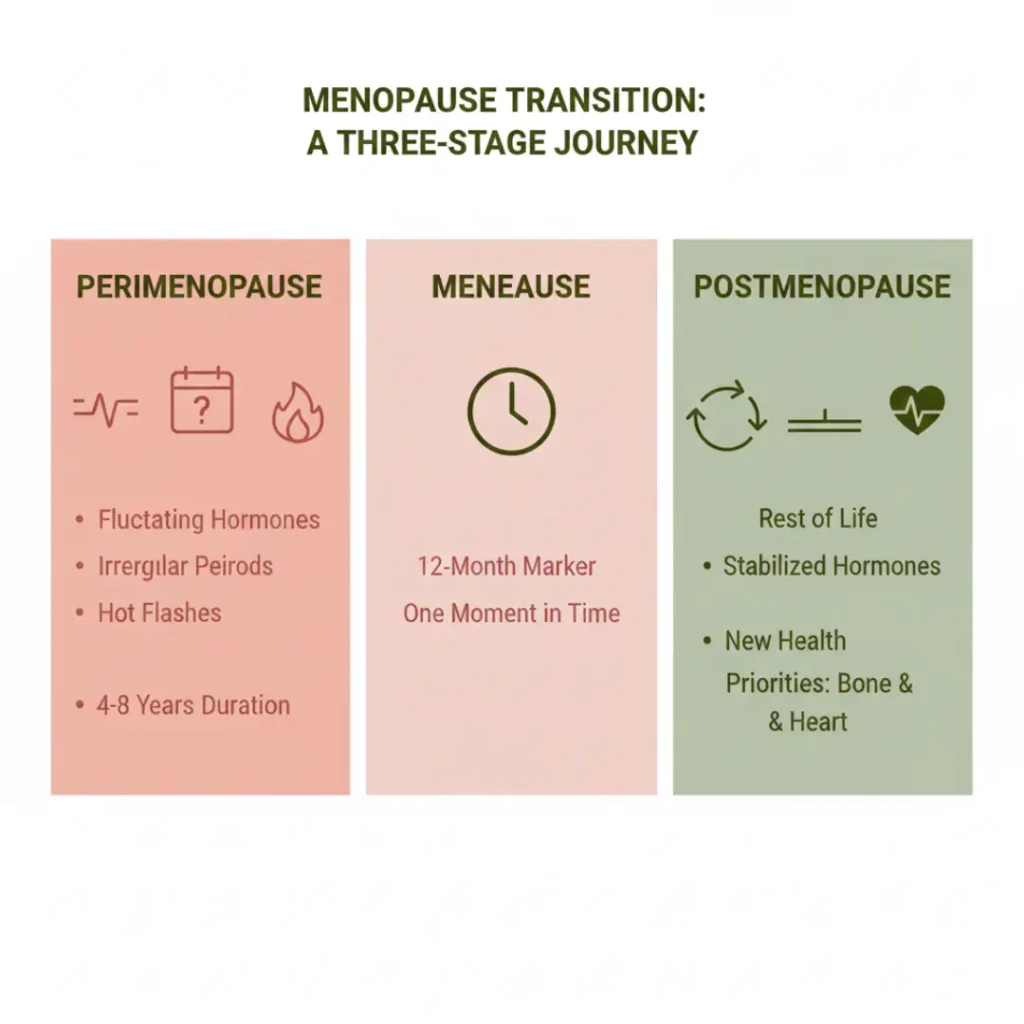
Perimenopause is your body’s dress rehearsal for menopause. It usually begins in your 40s, though some women notice changes earlier. During this time, your ovaries gradually wind down estrogen production, but they’re not done yet. The tricky part? Your hormone levels bounce around like a yo-yo, which is why one month you might have a perfectly normal period, and the next it’s either missing or showing up with a vengeance.
Perimenopause symptoms can be wildly different from person to person. You might experience Hot Flashes During Menopause: What You Need to Know Right Now, mood swings that surprise even you, trouble sleeping, or brain fog. Some women breeze through with barely a symptom, while others feel like their bodies have been hijacked.
The average length is four to eight years, though it can stretch beyond a decade. During this time, you’re still ovulating sporadically, which means pregnancy is still possible even if your cycles are irregular.
The One-Year Milestone: Welcome to Menopause
Here’s where the distinction between perimenopause vs menopause gets crystal clear. Menopause isn’t a stage you live through; it’s a single point in time. You’ve officially reached menopause when you’ve gone 12 consecutive months without a period. The average age in the United States is 51.
Unlike perimenopause, where hormones fluctuate wildly, menopause marks a more consistent decline in estrogen and progesterone. Your ovaries have essentially retired, and your body settles into its new hormonal baseline. Many women find that symptoms like hot flashes peak around this time, though everyone’s experience is unique.
Life in Postmenopause: Your New Normal
Once you’ve crossed that 12-month threshold, you’re in postmenopause for the rest of your life. Here’s the good news: for many women, the most bothersome symptoms start to ease. Those intense hot flashes? They often become less frequent or disappear. The mood swings, brain fog, and night sweats typically settle down over the first few years as your hormones reach their new, lower levels and stabilize.
That said, postmenopause isn’t without its considerations. With lower estrogen levels now permanent, you face increased risks for certain health conditions. Heart disease risk rises significantly, and your bones lose density faster. Some women continue experiencing the 34 Symptoms of Postmenopause: Your Complete Guide to What’s Normal (and What Helps) that need attention.
I’ve learned that postmenopause is about shifting your focus from managing symptoms to preventing long-term health issues. It’s about taking control with calcium and vitamin D, staying active, and maintaining habits that keep you thriving.
The Symptoms Nobody Warned You About
When comparing perimenopause vs menopause and postmenopause, understanding symptom patterns helps you know what to expect.
During perimenopause, irregular periods are your most obvious sign, but there’s so much more. Hot flashes, night sweats, mood swings, sleep troubles, and brain fog are common. Many women also notice vaginal dryness, changes in libido, and urinary issues.
As you move into postmenopause, symptoms often shift. Hot flashes may continue, but generally become less intense. What becomes more noticeable are the effects of sustained low estrogen: vaginal dryness, ongoing sleep disruptions, and changes in your skin and hair. About half of postmenopausal women experience genitourinary syndrome of menopause, which includes vaginal dryness and urinary difficulties. These symptoms are very treatable when you work with your healthcare provider.
Understanding Your Changing Health Risks
One of the most important aspects of understanding perimenopause vs menopause and postmenopause is recognizing how your health priorities shift. In perimenopause, you’re mainly managing symptoms. But in postmenopause, the conversation shifts to prevention.
Your heart health becomes a priority. Before menopause, estrogen helps protect against cardiovascular disease. After menopause, women reach the same risk for heart disease as men of the same age, with stroke risk doubling every decade after 55.
Bone health demands attention. In the years following menopause, women can lose up to 25 percent of their bone density, putting them at higher risk for osteoporosis and fractures.
The good news? These risks are manageable. Turning 50? Time to Focus on Vitamin D and Calcium is foundational. Staying physically active with weight-bearing exercises makes a significant difference. Your healthcare provider may also recommend bone density screenings.
Finding the Right Support for Your Stage
Managing perimenopause vs menopause and postmenopause isn’t about suffering through. There are real, effective treatments for each stage.
Hormone replacement therapy can be highly effective for hot flashes, night sweats, and vaginal dryness. Current research shows it’s safe for most women when used appropriately. Many women also find relief through What are the Best Supplements for Perimenopause and Beyond?
Lifestyle changes make a real difference, too. Regular exercise helps with mood, sleep, and bone density. Managing stress through yoga or meditation supports your well-being. Avoiding triggers like spicy foods and caffeine can reduce hot flashes.
For postmenopause, preventive care becomes essential: bone density tests, cholesterol checks, and cardiovascular health assessments. Working with your healthcare provider ensures you’re addressing what matters most for your long-term health. Always consult your doctor before starting any new treatment or supplement regimen.

Embracing This Chapter With Confidence
Understanding perimenopause vs menopause and postmenopause isn’t just about medical definitions. It’s about recognizing where you are and knowing what to expect next. This phase isn’t about decline, it’s about evolution. Yes, your hormones are changing, but this also brings freedom, wisdom, and a chance to prioritize yourself. Many women find postmenopause to be a time of renewed energy and purpose. If you’re looking for more guidance, remember that you have the power to make this chapter incredible.
What’s one small step you’ll take, Menopause & You: How to Thrive with Energy, Confidence and Vitality at 50+ this week? Whether it’s scheduling a checkup, starting a supplement, or connecting with other women, every action matters. You’ve got this.