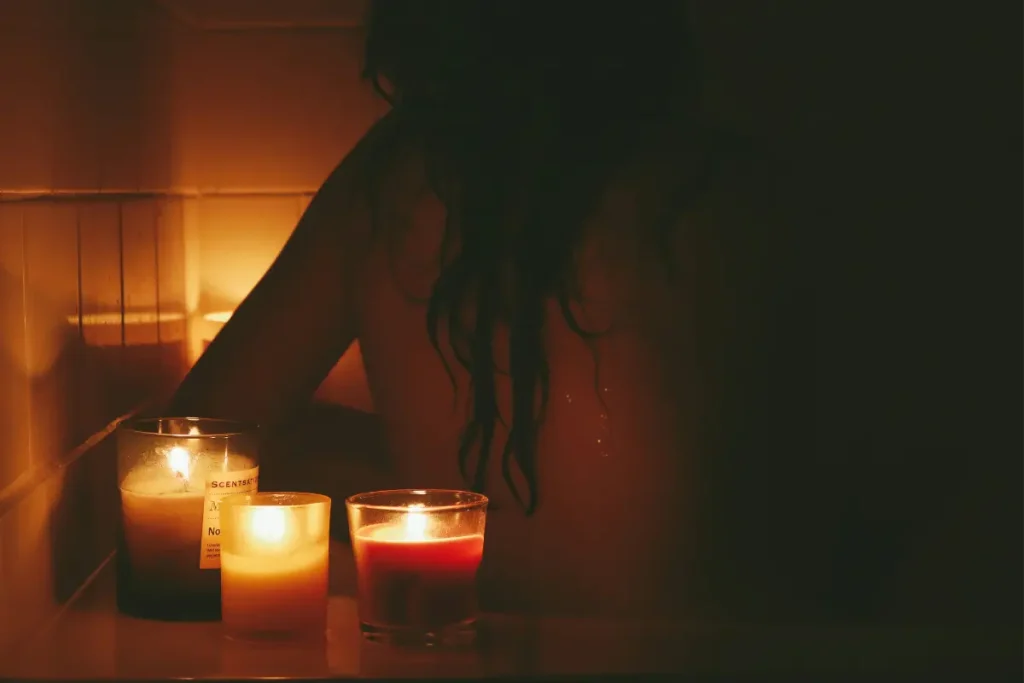
Last week, I stood in my completely dark bathroom at 9 PM, about to try something that sounded absolutely strange: dark showering, no nightlight, no candles, just me and warm water in complete blackness. I’ll be honest, my first thought was “this is ridiculous.” But after months of tossing past midnight and waking exhausted, I was willing to try anything.
What I discovered changed not just my sleep but my entire evening routine. The benefits of dark showering for women, especially those navigating sleep disruptions after 50, were far more powerful than I had imagined.
What dark showering benefits for women over 50 really mean
Dark showering is simple; you shower in complete or near-complete darkness, eliminating artificial light from your evening bathroom routine.
For women over 50, this addresses a real problem; our bodies already deal with hormonal shifts disrupting sleep, and many of us struggle with sleep problems that increase after age 50. Bright bathroom lights right before bed make this worse.
Understanding the benefits of dark showering for women starts with recognizing how light affects sleep hormones, such as melatonin, which responds to darkness; even small amounts of artificial light suppress melatonin production by up to 50 percent. For women in perimenopause or postmenopause, melatonin naturally decreases; we’re already fighting an uphill battle.
When you shower in darkness, you create an environment that supports rather than suppresses natural melatonin; your body gets a clear signal that daytime is over.
Beyond hormones, removing visual input does something profound to your other senses; you notice water temperature, soap scent, and the release of muscle tension, and this sensory awareness naturally quiets the mental chatter keeping us awake.
I used to shower while mentally reviewing tomorrow’s to-do list, in the dark; those thoughts don’t stick, nothing to look at, nothing reminding me of tasks, just water, warmth, and rare complete presence.
The science behind dark showering: why it actually works
When I first heard about dark showering, I wondered if it was just another wellness trend without substance, but the science supporting this practice is surprisingly solid.
Our bodies have photoreceptors not just in our eyes, but throughout our skin. These receptors communicate with our circadian system, the internal clock regulating sleep-wake cycles. When exposed to light in the evening, even through our skin, our bodies receive mixed signals about whether it’s time to rest or remain alert.
The relationship between darkness and cortisol, our stress hormone, is equally important; cortisol naturally decreases in the evening as melatonin rises. However, bright light keeps cortisol elevated, making it harder to transition into a restful state. Dark showering eliminates this interference, allowing your stress hormones to follow their natural rhythm.
Temperature regulation plays a crucial role; your core body temperature naturally drops as you prepare for sleep, the warm water of a shower raises your temperature slightly, and when you step out into a dark, cool environment, the subsequent drop signals your body that sleep time approaches, this temperature fluctuation is more pronounced and effective when you’re not immediately exposing yourself to bright bathroom lights that can disrupt the process
For women experiencing hormonal changes, these mechanisms become even more valuable. When your body is already struggling with temperature regulation and hormone fluctuations, working with your natural rhythms rather than against them makes a measurable difference.
How I made dark showering safe and comfortable
When I mentioned dark showering to my friend Margaret, said, “That sounds dangerous.” I get it; navigating a wet bathroom in darkness raises legitimate safety concerns.
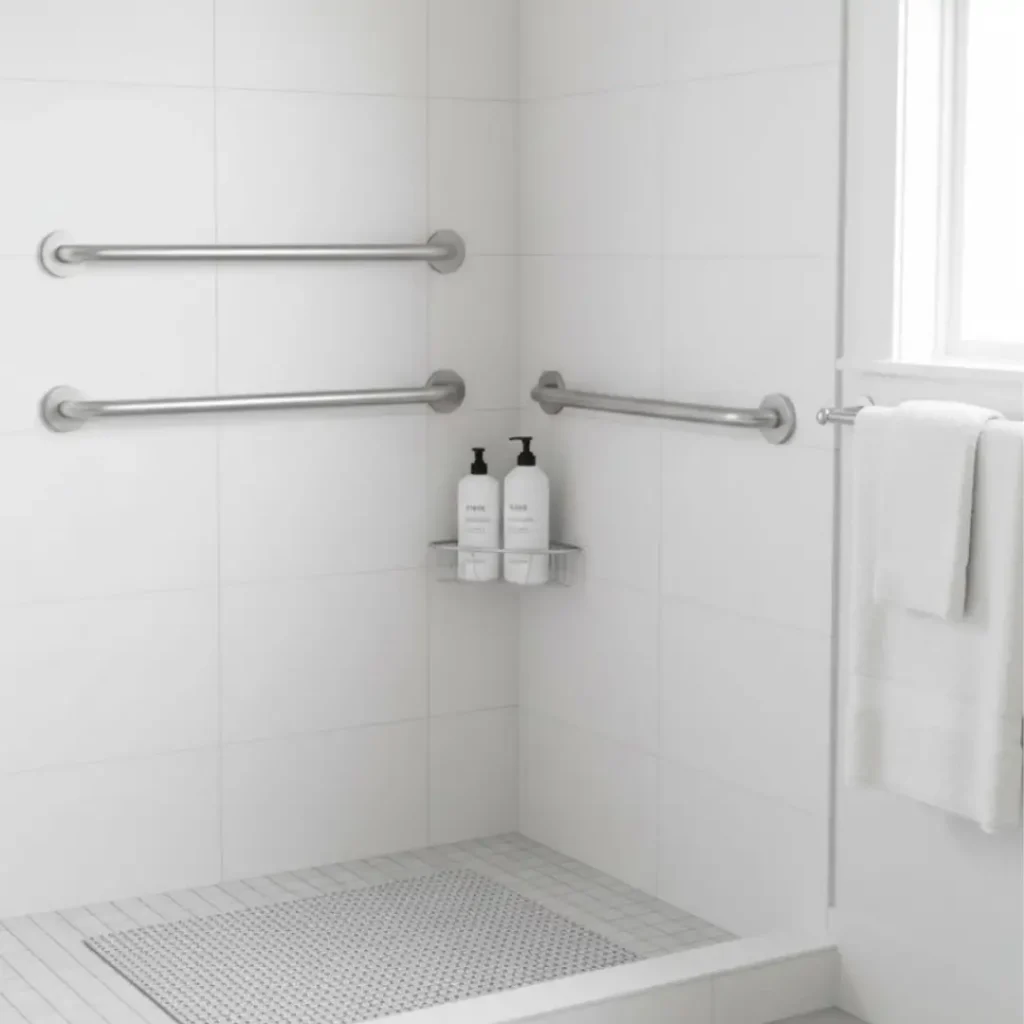
Here’s how I made it work safely: before turning off the lights, I prepare everything, the towel laid exactly where I can reach it, shampoo and body wash in consistent spots so my hands know where to find them. Any potential tripping hazards have been removed.
I installed grab bars, helpful whether showering in light or darkness. A non-slip mat is essential; you don’t need pitch-black if it feels uncomfortable. I started with very dim lighting, gradually decreasing over weeks until I was comfortable in complete darkness.
Some people use a small nightlight in the hallway, providing ambient light for safety while maintaining shower darkness. If you have balance or mobility concerns, talk with your doctor first. Safety always comes first.
What matters is creating an environment feeling calming and safe for you personally, even significantly dimmed lighting creates a different experience than bright overhead lights.
Creating your dark showering evening routine
Dark showering works best as part of a broader evening wind-down. Here’s what I do now.
About an hour before showering, I start dimming lights throughout my home and switch from overhead to softer lamps. Phone goes on “do not disturb.” I resist checking email one more time.
I shower at roughly the same time, usually 9 PM. This consistency helps my body recognize the routine. The dark showering benefits for women become most powerful when you maintain this consistent timing, training your body to expect rest. Warm water raises body temperature slightly, and when you step out, the temperature drops. This signals sleep time.
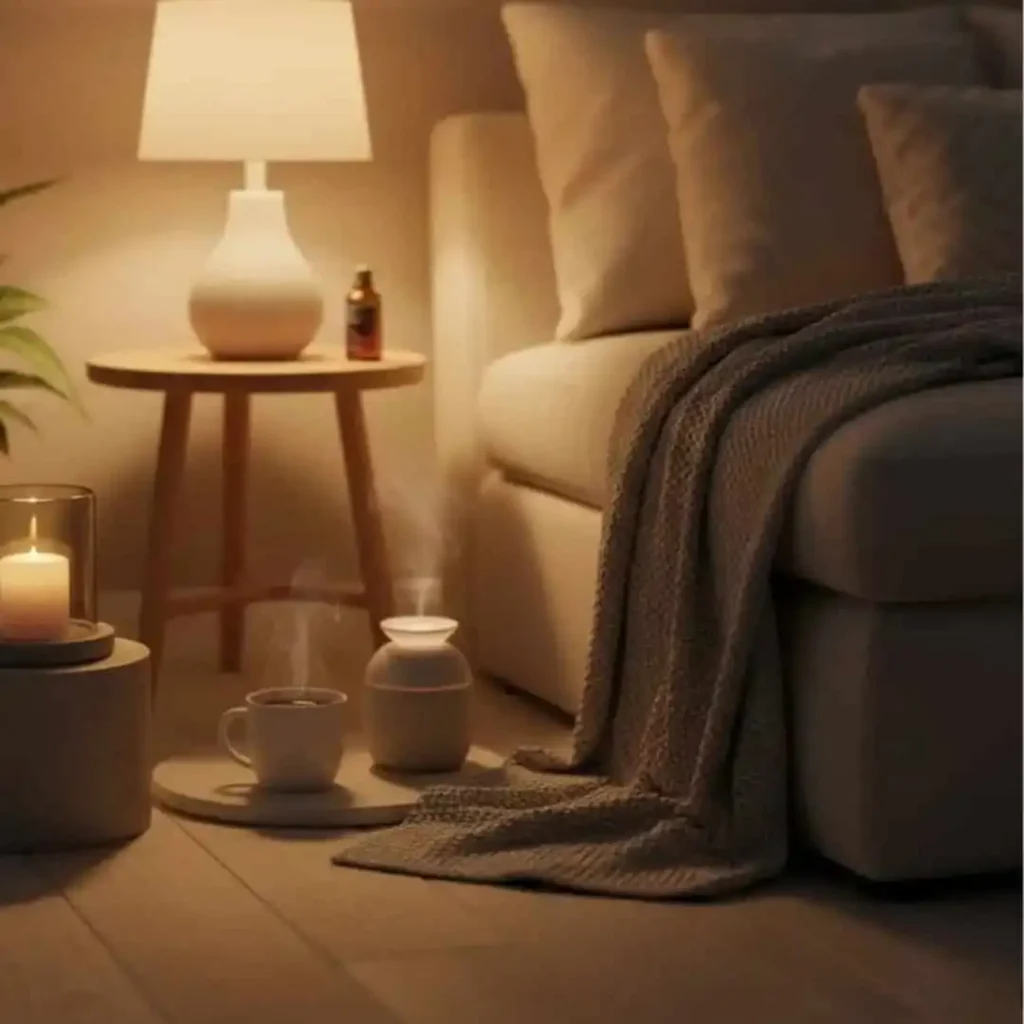
After my dark shower, I keep the lighting low; I might sip herbal tea or do gentle stretching, but I don’t immediately turn on bright lights or grab my phone. The dark shower created calm, and I protect rather than disrupt it.
Some women combine dark showering with aromatherapy, using lavender or chamomile products, enhancing relaxation; for those dealing with hot flashes during menopause, the shower temperature needs adjustment, some evenings, cooler water; others, warmer. Listen to your body.
Dark showering benefits for women: beyond just sleep
The benefits of dark showering for women extend far beyond better sleep; this simple practice brought surprises I didn’t anticipate.
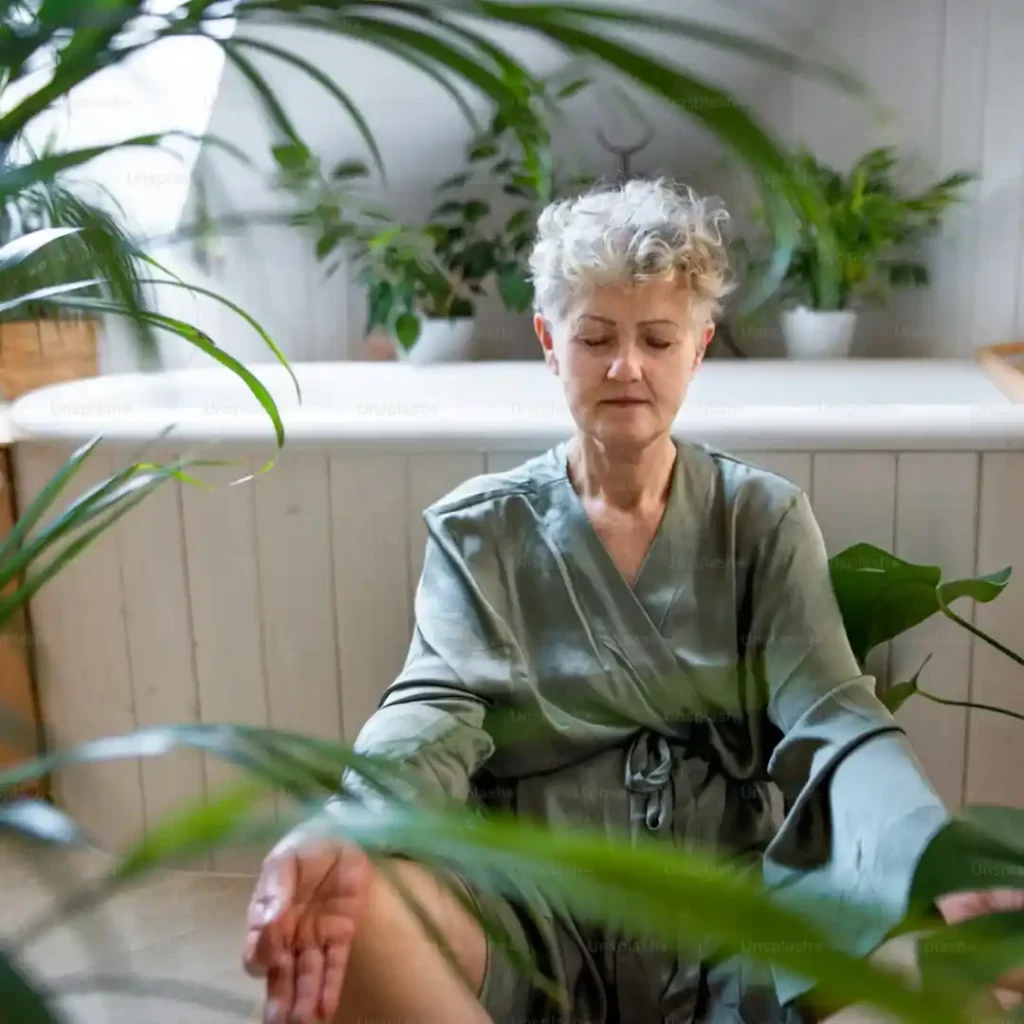
The practice became meditation for me. I struggle to sit still for formal meditation, but in the dark shower, my mind naturally quiets. The combination of sensory input (water, warmth, scent) with visual deprivation creates a unique meditative state that feels effortless.
I’ve noticed changes in my relationship with my body. In darkness, I’m not seeing and judging myself in mirrors, just feeling, experiencing, and being present with physical sensation rather than visual appearance. For women who’ve spent decades being critical of how we look, this is unexpectedly liberating.
My daytime stress levels improved. Knowing this peaceful ritual waits each evening makes daily chaos feel more manageable. This
complements other practices, morning rituals that transform your mindset after 50. Several women mention that dark showering helps with anxiety that intensifies during perimenopause, when dealing with mood swings after 50, having reliable tools to calm your nervous system becomes incredibly valuable.
Better sleep means better cognitive function; the evening meditation-like state helps my brain process and release daily stress, and I wake feeling mentally clearer and more focused, improving my mental clarity after 50 in unexpected ways.
Who should try dark showering (and who should approach with caution)
Dark showering isn’t for everyone, and that’s perfectly okay. Understanding whether this practice suits your needs helps set realistic expectations.
This practice works particularly well for women who struggle with racing thoughts at bedtime, have difficulty transitioning from daytime stress to evening relaxation, or find traditional meditation challenging. If you’re someone who feels overstimulated by the end of the day, constantly surrounded by screens and bright lights, a dark shower offers a genuine respite.
Women dealing with sleep disruptions from menopause or perimenopause often find dark showering helpful. The practice addresses multiple sleep challenges simultaneously: light sensitivity, temperature regulation, and stress management. If you wake during the night or have trouble falling asleep initially, this could be worth exploring.
However, some situations call for caution. If you experience severe claustrophobia or panic in dark enclosed spaces, dark showering might create more stress than relief. Start with very dim lighting rather than complete darkness, or consider that this might not be your ideal practice. That’s completely valid.
Women with balance issues, vertigo, or significant mobility concerns should consult their healthcare provider before trying dark showering. While grab bars and non-slip mats help, navigating any space in darkness requires a certain level of physical confidence and stability. Your safety always takes priority over any wellness trend.
If you have a history of trauma associated with darkness or enclosed spaces, approach this practice gently or skip it entirely. There are many paths to better sleep and reduced stress; this is simply one option among many.
Troubleshooting common dark showering challenges
Not every dark showering experience will be perfect, especially when you’re starting. Here’s how to handle common challenges.
If you feel anxious or uncomfortable in complete darkness, you’re pushing too far too fast; go back to dimmed lighting. There’s no prize for achieving total darkness quickly; some women find their ideal practice is very dim light rather than complete darkness, and that’s perfectly effective. The goal is reduced light stimulation, not suffering through something that makes you uncomfortable.
When dark showering doesn’t improve your sleep after two to three weeks of consistent practice, examine your broader sleep hygiene. Dark showering works best as part of a comprehensive approach. Are you still checking your phone right before bed? Drinking caffeine late in the day? Keeping your bedroom too warm? Sometimes the issue isn’t the dark showering itself, but other factors undermining your sleep.
If you find yourself getting bored or distracted during dark showers, try adding sensory elements, such as different scented products for nights, varying water temperature. Some women listen to calming music or nature sounds during their dark showers. The practice should feel enjoyable, not like a chore you endure.
For women worried about thoroughly cleaning themselves, remember that their sense of touch becomes more acute in the darkness. After the first week or two, most women report feeling more connected to their bodies and more thorough in their cleaning routine, not less. Trust your hands. They know your body better than your eyes do.
If family members or roommates interrupt your dark showering time, communicate your needs clearly. Explain that this is your dedicated wind-down period and ask for that time to be respected. You might need to shower earlier or later than others to ensure uninterrupted practice.
Common questions about dark showering
Your invitation to try dark showering
If you’re struggling with sleep, feeling overwhelmed by constant overstimulation, or curious about trying something new for well-being, I encourage you to experiment with dark showering.
Start gradually. Dim bathroom lights significantly and see how that feels. If comfortable, try darker. Total darkness feels uncomfortable. Stay with dimmed lighting, give yourself at least two weeks of consistent practice before deciding if it’s helpful.
Remember that dark showering is one tool among many for supporting wellbeing during this life stage; it works beautifully alongside practices like self-compassion after 50 and reducing overstimulation, and is a signal to your body that it’s safe to rest, in a life stage when sleep often feels elusive. That’s a gift worth exploring.
As always, if you’re experiencing significant sleep disturbances or health concerns, consult your healthcare provider. Dark showering is a wellness practice meant to complement, not replace, professional medical advice.
What’s one small change you could make to your evening routine this week?