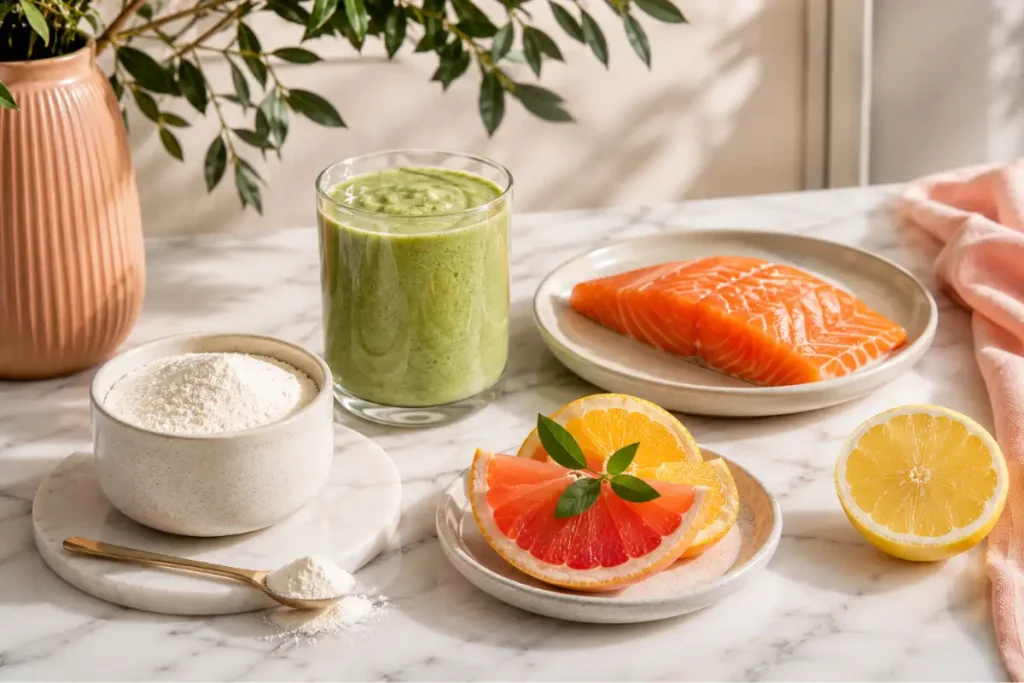

I remember standing in my bathroom last year, tilting my chin under the light, wondering when exactly my skin had started to feel different. That moment sent me down a rabbit hole of labels, powders, and promises, including a phrase that sounds more straightforward than it really is: vegan collagen boosters. If you eat plant-based or simply prefer vegan products, the useful question is not whether a label sounds convincing. It is what the product or food actually contains, what those nutrients do in the body, and what we still do not know.
One distinction makes the whole subject easier to understand: conventional collagen is an animal-derived protein. Plant foods do not contain that collagen. Products sold as vegan collagen boosters generally provide nutrients, amino acids, or other ingredients intended to support the body’s normal collagen-forming processes rather than supplying animal collagen peptides. For the broader picture, our collagen guide for women over 50 explains where food, supplements, skin, joints, and healthy aging fit together.
What are vegan collagen boosters, exactly?
The name can be confusing because “vegan collagen booster” is not one standardized formula. One product might contain vitamin C and minerals. Another may include amino acids, botanical ingredients, or other compounds marketed for skin support. A food-based approach simply focuses on getting adequate protein and nutrients involved in normal collagen formation from plant foods.
That is different from hydrolyzed bovine or marine collagen, which provides collagen-derived peptides. It also means you should not assume that a vegan product and an animal collagen product are nutritionally or clinically equivalent just because both use the word collagen on the label. If you are comparing product types, our guide to choosing collagen supplements after 50 explains the practical differences in a separate supplement-focused context.
Which plant-based nutrients are involved in collagen formation?
Vitamin C has a well-established role in normal collagen formation. Protein also matters because it supplies amino acids used throughout the body, while minerals such as copper and zinc participate in normal connective-tissue and enzymatic processes. The important point is not to turn any one nutrient into a miracle ingredient. Collagen biology depends on adequate overall nutrition, and more is not automatically better.
You may also see silicon, antioxidants, hyaluronic acid-related ingredients, or specialty blends on vegan collagen booster labels. Those ingredients do not all have the same level of evidence, and the presence of a long ingredient list does not prove that a product will improve skin or replace collagen peptides. That is why I would look at the actual formula before the marketing language.
Plant-based foods that provide useful building blocks
A vegan eating pattern can provide protein, vitamin C, zinc, copper, and other nutrients involved in normal tissue maintenance. This section is intentionally simple because this article is not meant to become another meal plan. If you want complete meals and the bone broth recipe alongside other food ideas, see our simple foods for collagen after 50.
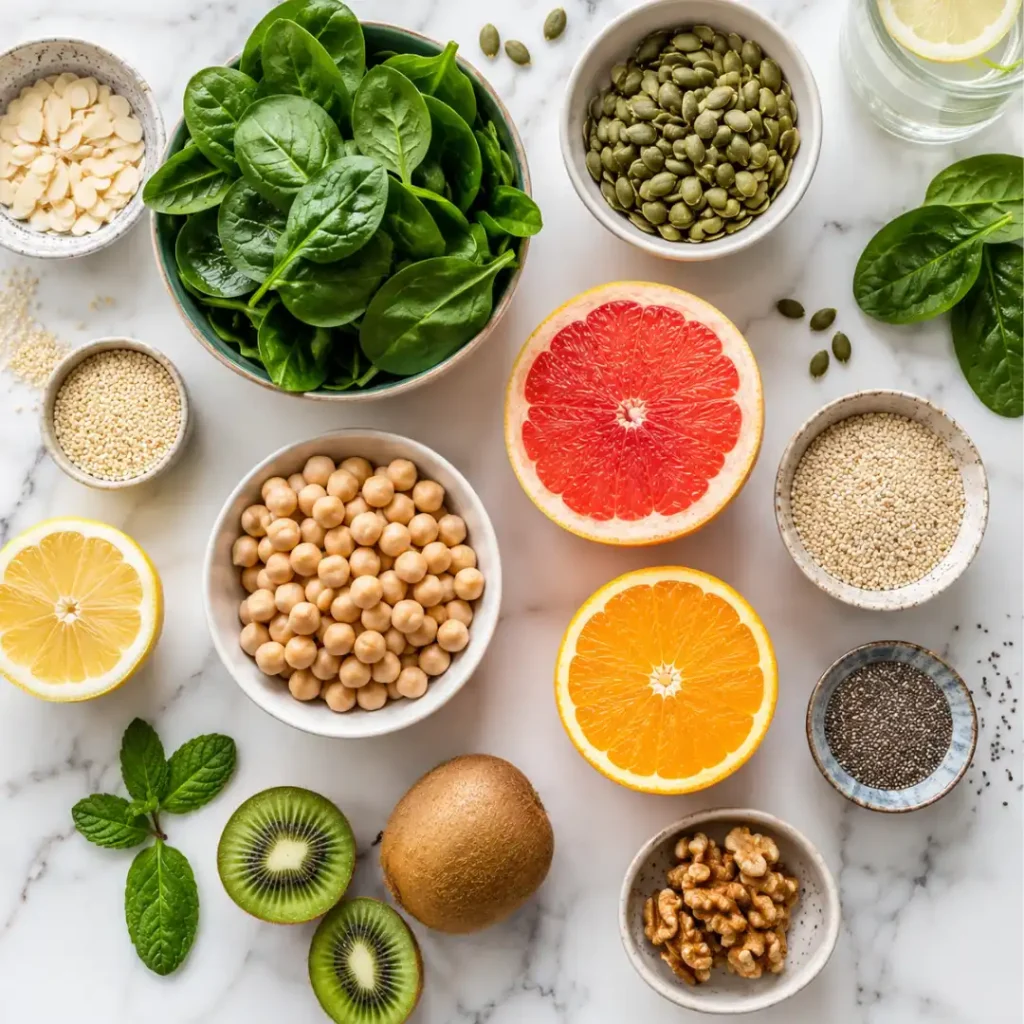
- Plant protein: tofu, tempeh, beans, lentils, chickpeas, soy foods, nuts, and seeds.
- Vitamin C: citrus fruits, berries, kiwi, bell peppers, broccoli, and Brussels sprouts.
- Zinc: legumes, pumpkin seeds, cashews, and other nuts and seeds.
- Copper: seeds, nuts, legumes, mushrooms, and whole grains can contribute to intake.
There is no need to eat every item on this list every day. Variety and adequate overall intake matter more than chasing a single “collagen-boosting” food.
What menopause changes, and what vegan boosters cannot replace
Women often discover vegan collagen boosters while searching for answers about changing skin after menopause. Hormonal changes can affect skin structure, hydration, and collagen-related processes, but that is a different question from whether a plant-based food or supplement works. A vegan booster does not replace estrogen, and it should not be presented as a treatment for menopausal skin changes. For that hormone-specific discussion, read our guide to collagen changes during menopause.
This separation matters because skin changes after 50 have multiple influences, including aging and cumulative sun exposure as well as hormonal changes. Nutrition is one part of the picture, not a way to diagnose the cause of a change in your skin.
How to evaluate a vegan collagen booster supplement
If you are considering a supplement, start with the ingredient list rather than the front of the package. Check what the product actually provides, whether amounts are disclosed, whether it contains ingredients you already get elsewhere, and whether allergens or dietary restrictions matter for you. Be cautious with products that promise to rebuild collagen, reverse aging, or guarantee visible skin changes on a fixed timeline.
A supplement marketed as vegan is not automatically necessary, safer, or more effective. Individual needs can differ, and supplements can matter clinically if you take medications, have a medical condition, are correcting a documented nutrient deficiency, or use several products with overlapping ingredients. In those situations, a clinician or registered dietitian can help you assess the full picture.

What results should you realistically expect?
This is where marketing often gets ahead of the evidence. There is no reliable universal timeline that says a vegan collagen booster will visibly change your skin in eight, ten, or twelve weeks. Results from a specific study on a specific formulation cannot automatically be applied to every powder, capsule, smoothie, or plant-based diet.
If your diet has a genuine nutritional gap, addressing that gap can be important for overall health. But if your diet is already adequate, adding more of a collagen-related nutrient does not guarantee firmer or younger-looking skin. I would treat vegan collagen boosters as a nutrition or product-choice question, not as a promise of transformation.
Frequently asked questions
Do vegan collagen boosters contain collagen?
Most products marketed as vegan collagen boosters do not contain conventional animal-derived collagen. They typically provide nutrients, amino acids, or other ingredients intended to support normal collagen-forming processes. Always check the ingredient list because formulas vary.
Can a plant-based diet support normal collagen formation?
A well-planned plant-based diet can provide protein, vitamin C, zinc, copper, and other nutrients involved in normal tissue maintenance and collagen formation. That does not mean a particular food will directly increase skin collagen or produce a guaranteed cosmetic result.
Are vegan collagen boosters equivalent to marine or bovine collagen?
No. Conventional marine and bovine collagen products provide animal-derived collagen peptides, while most vegan boosters provide nutrients or other ingredients intended to support the body’s own processes. Research cannot assume that the two categories have identical effects.
Which nutrients are involved in normal collagen formation?
Vitamin C has an established role in normal collagen formation. Adequate protein supplies amino acids, and minerals including copper and zinc participate in normal connective-tissue and enzymatic functions. More of these nutrients is not automatically better when intake is already adequate.
How do I evaluate a vegan collagen booster supplement?
Look beyond the word collagen on the label. Check the actual ingredients and amounts, consider allergens and overlapping supplements, and be cautious with guaranteed skin claims or fixed timelines. If you take medications, have a health condition, or are treating a nutrient deficiency, discuss the product with a qualified health professional.
The useful truth about vegan collagen boosters is less dramatic than the marketing. Plant-based foods can provide nutrients involved in normal collagen formation, and vegan supplements may package some of those nutrients conveniently, but neither category should be treated as a guaranteed way to restore youthful skin. I would rather know what is in the product, what it can reasonably do, and where the evidence stops.
If you are considering a new supplement, especially alongside medications or an existing health condition, discuss it with a qualified health professional before adding it to your routine.