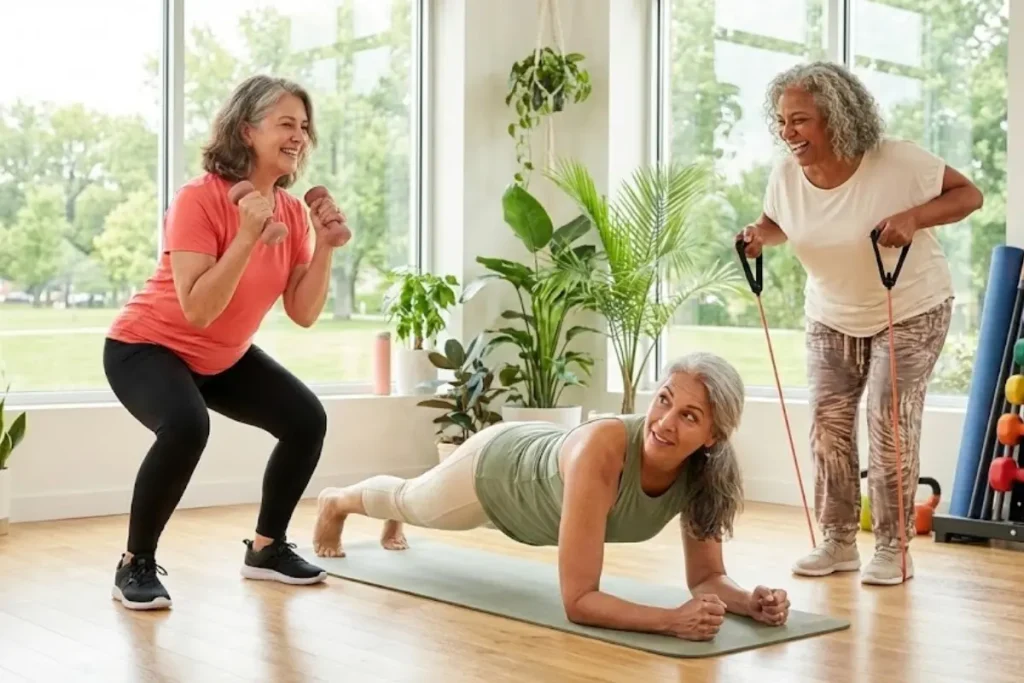
Travel after 50 can feel like a fresh chapter, not a limitation. The starting point is choosing a trip that fits your interests, budget, preferred company and everyday energy. This guide helps you compare travel formats, check the practical details before booking and plan for comfort without turning your vacation into a fitness project.
If you have ever arrived at a hotel tired before the sightseeing even began, you know that the journey matters as much as the destination. A realistic arrival day, a well-located room and room to change your plans can make a trip more manageable. Start with the decisions below, then use the specialist guides for the details.
Choose the travel format that fits you
| If you want | Start here | Check before booking |
|---|---|---|
| Company with independent time | a group that matches your social style | Group mix, optional activities and room-sharing rules |
| An organized route and guide | how to evaluate a guided tour | Walking demands, transfers, inclusions and cancellation terms |
| One base with optional company | what makes a resort genuinely solo-friendly | Solo room cost, dining and the actual activity schedule |
| More service and fewer logistics | when premium travel is worth the extra cost | Exactly which services are included |
| A U.S. coastal stay | compare seven beach escapes | Beach access, local transport and conditions for your dates |
| More flexibility on timing | weigh quieter-season benefits against the trade-offs | Weather, opening hours and total cost |
| Your own route and pace | plan a manageable solo road journey | Rest stops, daylight arrival and a backup plan |
Before booking: five details worth confirming
Set a total budget that includes your own room, transfers, meals, insurance and optional activities. Ask about walking distances, steps and luggage handling rather than relying on a vague activity label. Confirm transport for your arrival time, read cancellation conditions and leave space for a slower day. If you have health concerns, discuss your itinerary and medicines with your healthcare professional; a travel-health appointment may be needed well before an international departure.
Why travel after 50 feels different physically
Understanding how your body responds to travel after 50 allows you to prepare more effectively and enjoy every trip with greater confidence. Travel can feel different in your 50s and beyond because your body requires a little more planning than it did in your 30s. You may notice that a long flight leaves you more tired, that stairs feel steeper, or that a day of walking feels more tiring than it used to. That does not mean travel is off limits. It means your body benefits from support, rhythm, and a little extra intention.
Many women over 50 are balancing work, caregiving, sleep changes, and the natural shifts that come with healthy aging. Add airport security, hotel stairs, time zone changes, and long days in the sun, and it is easy to feel worn down. The good news is that the right habits can make a real difference. Small choices around water, shoes, posture, and movement can help you feel more capable from the first morning to the last one.
Travel is also a great reminder that fitness is not just about workouts. It is about how well you move through the day. When you are walking through a museum, climbing a hill in San Francisco, or standing in line for a ferry, your body is doing real work. The more you prepare for that work, the more confidence you carry into every part of the trip.
For women who love a lifestyle that feels active and independent, the idea of luxury solo vacations for women over 50 fits naturally. The point is not to “push through.” It is to travel in a way that supports energy, strength, and comfort, so you can enjoy each moment instead of recovering from it.
How to prepare your body before a trip
Keep up the movement you already tolerate, and consider how the trip differs from an ordinary day at home. If it involves longer walks or uneven ground, allow time to prepare gradually rather than expecting a week of exercise to change your stamina. Ask your clinician or physiotherapist about adaptations if pain, balance or mobility concerns affect your plans.
Start with gentle walking. If you usually walk for twenty minutes several times a week, try to keep that rhythm going right up to your departure. Your schedule is busy; short walks after meals count. They help circulation and can reduce the stiffness that often occurs after long periods of sitting. Add a few standing calf raises, heel-to-toe balance work, and sit-to-stand repetitions from a chair to support your legs and hips.
Mobility matters just as much as strength; a simple routine that includes ankle circles, hip openers, shoulder rolls, and gentle spinal twists can help you feel looser when carrying luggage or reach for overhead items. If your trip involves walking tours, sightseeing, or a long road, this type of preparation gives you more resilience. It also helps your body adapt to new rhythms and soreness.
For road-trip lovers, planning a solo road trip after 50 starts with the same principle: move a little, pack smart, and build in rest. A few travel-ready habits can make a difference, especially when driving for several hours or navigating unfamiliar hotel check-ins and parking lots. The goal is to arrive feeling capable, not depleted.
Staying active during travel
Short, comfortable movement breaks can help interrupt long periods of sitting. You do not need a full gym session every day. You need enough movement to keep your joints warm and your energy from crashing. A comfortable morning walk, five minutes of stretching before dinner, or a few shoulder and hip stretches after a flight can make a noticeable difference.
Walking is one of the best forms of travel fitness. If relaxing by the ocean sounds more appealing, travel after 50 can also be about slowing down and recharging. Our guide to Solo Beach Vacation in the USA: 7 Best Escapes for Women Over 50 highlights peaceful coastal destinations where you can enjoy scenic walks, gentle movement, fresh air, and the kind of restorative travel that supports both physical and mental well-being.
When you are stuck in transit, take a movement break when it is safe and practical. Stand, stretch your calves, roll your shoulders, and do gentle seated knee lifts. Even a minute or two of movement helps your legs and back feel less stiff. If you are staying in a hotel, try a simple routine with chair squats, wall push-ups, side leg lifts, and a few easy stretches before bed. This keeps your body from turning every travel day into one long static event.
Many women also enjoy the social side of movement. If you are drawn to group experiences, single travel groups over 50 can offer both support and structure, especially for those who prefer a built-in plan and an easy way to stay active without going it alone. The main point is to find a travel style that encourages movement, confidence, and connection rather than exhaustion.
Managing energy, fatigue, and recovery
One of the biggest secrets to successful travel after 50 is respecting your body’s recovery needs instead of pushing through fatigue. Energy and travel after 50 are closely connected to recovery. You may feel fine in the morning and suddenly hit a wall by late afternoon if you skip water, eat too lightly, or stay up too late. That is why the smartest travel routines are usually the least glamorous ones: a full water bottle, a balanced snack, and a consistent sleep window can be more powerful than any “wellness hack.”
Hydration matters more than many women expect. Dehydration can cause sluggishness and stiffness. Keep a refillable bottle with you, especially on flights, in warm climates, and during long sightseeing days. If your trip is in California or another sunny region, it is easy to underestimate how much water your body needs when walking, changing time zones, or spending time outdoors.
Sleep is the quiet hero of travel. A new hotel, noisy street, or late-night dinner can interrupt rest, but even a small routine, such as keeping your bedtime consistent, dimming the lights before sleep, and reducing screen time before bed, may make it easier to wind down. A simple wind-down with stretching or a quick breathing reset can help your body settle in faster.
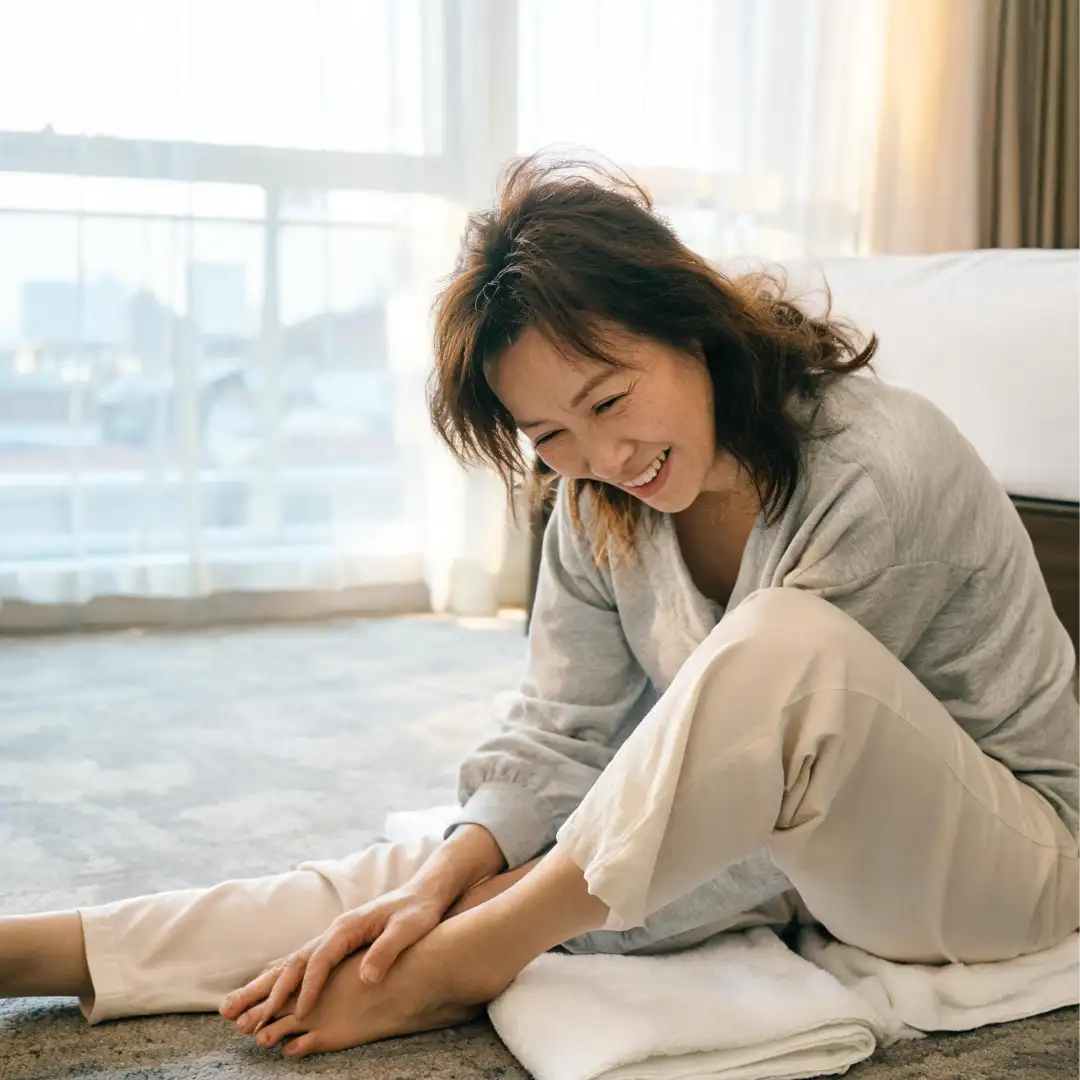
Recovery also means managing the little aches that build over time. If your feet are tired, elevate them for ten minutes. If your lower back feels tight, try gentle hip stretches. If you are carrying a bag all day, choose a lighter bag you can carry comfortably. These details may seem minor, but they are what create a trip that feels energizing instead of draining.

Joint-friendly travel habits
Comfortable movement is one of the most enjoyable aspects of travel after 50, especially during longer vacations. Long trips can be rough on your knees, hips, ankles, and lower back. The best way to protect joints is to make small choices before stress builds up. Start with footwear. Shoes that feel supportive, cushioned, and stable are worth the extra, especially if you spend long days walking or standing. If your feet are already sensitive, a lightweight pair with good arch support can make a huge difference.
Pack lighter whenever possible; a heavy bag can affect your posture, strain your shoulders, and make simple airport transfers feel harder than they should. Use a rolling suitcase, a small day bag, and a travel pouch for essentials, so you move more freely. If you are trying to stay active, small things like carrying your own bag or walking to the train platform can help, but only if it feels comfortable.
Seating matters too. On flights, choose a seat where you have room to stretch your legs when possible, and leave your seat only when the seat-belt sign is off and the crew says it is safe. On trains and road trips, your seat supports your lower back. Use a cushion or a folded scarf for comfort. If your joints are sensitive, a little planning around where you sit and how long you stay seated goes a long way.
Bone health and wellness also matter during travel after 50. If you are trying to adopt healthy aging habits, consider how your travel routine supports calcium and vitamin D. It does not mean you have to turn the trip into a wellness project. It means paying attention to the basics that help your body stay strong and steady, especially when you are traveling more often.
A quieter travel window may suit you, but it can also mean reduced services or less predictable weather. Before choosing dates, check what you gain—and give up—outside the busiest season.
Mental wellness through active travel
For many women, travel after 50 becomes an opportunity to rediscover confidence, independence, and personal freedom. Travel is not only about physical comfort. It is also about confidence, mood, and the way you feel in your own skin. For many women over 50, travel becomes a powerful reminder that independence is not something you lose with age. It is something you strengthen with every trip you take, every new place you explore, and every time you trust yourself to handle a little uncertainty.
Active travel can be especially supportive for mental wellness because movement naturally improves mood, circulation, and stress response. A morning walk can help you feel more grounded before the day gets busy. A comfortable pause after a flight can give you time to settle into the day. Even a stroll through a local neighborhood can reset your head and help you feel present. It is not about perfection; it is about giving yourself the chance to feel well in a place you have chosen for yourself.
You also do not have to travel alone to benefit; a trip can be a social connection, a purposeful movement, and a stronger sense of identity. If you enjoy meeting new people, choosing a destination with walkable streets, wellness-friendly hotels, or easy group activities can make the whole experience feel more vibrant; the best travel plans are the ones that feel aligned with your personal energy, not the ones that look impressive on paper.
And if you love the idea of being social without feeling rushed, singles resorts for women over 50 can be a smart starting point for finding community, comfort, and a travel style that fits your season of life. The key is to choose experiences that make you feel more like yourself, not less.
Simple travel fitness habits you can use right away
These simple routines make travel after 50 easier, healthier, and much more enjoyable wherever your journey takes you. Here is the most useful part: you do not need a complicated plan. You need a few dependable habits you can repeat. Pack a small routine in your phone or notebook. Walk for ten minutes after breakfast. Stretch gently if that is comfortable for you. Keep a water bottle within reach. Choose supportive shoes. Move your ankles while seated, and follow the crew’s instructions about leaving your seat. These habits are simple, practical, and easy to repeat on every trip.
That is how travel after 50 becomes less about surviving a schedule and more about enjoying your own pace. The goal is not to prove anything. It is to feel steady, capable, and comfortable in your body while you explore the places you love. That is a form of healthy aging that feels real, grounded, and worth building into every trip.
Frequently asked questions
How do I choose a travel style after 50?
Start with your preferred company, budget, daily pace and how much planning you want to handle. Compare those needs with the room arrangements, transport and ordinary day of the trip before choosing a format.
What should I confirm before booking?
Confirm the full price for one guest, room type, arrival transport, walking demands, included services and cancellation terms. Ask for written answers when an important detail is unclear.
How can I plan a manageable arrival day?
Allow time for transfers, check-in, food and rest. Avoid committing to a demanding activity immediately after a long journey, and keep a backup if your arrival is delayed.
How can I reduce travel fatigue after 50?
Leave room for rest and familiar meals, follow your individual fluid guidance and choose comfortable movement when practical. Persistent or unusual fatigue needs individual advice rather than simply a busier travel routine.
How can I protect my joints during long trips?
Wear comfortable footwear, keep your luggage light and manageable, and use seating support if it helps. Take comfortable movement breaks when safe; on a flight, follow the seat-belt sign and crew instructions.
Travel after 50 works best when you treat your body like an ally, not an obstacle. With a little preparation, more mindful movement, and a few steady recovery habits, you can make every trip feel more energetic, more comfortable, and more fun. The secret is not to schedule your whole vacation around fitness. It is to build small, repeatable habits that help you show up for the experience you are actually there to enjoy.
If you are looking for a travel after 50 style that feels optimistic, active, and empowering, this guide can help you start with confidence. Remember to consult with a healthcare professional about any personal health concerns before making changes to your travel routine. Travel after 50 is unique, but staying active, hydrated, and prepared can make a journey more manageable. What’s one small fitness habit you’ll try on your next trip? Share it in the comments below.