The morning I stopped recognizing myself in the mirror was not really about wrinkles or gray hair. It was about how tired my skin looked and how complicated I had made caring for it.
Over time, I learned that natural anti-aging is most useful when it means something practical: protecting mature skin from avoidable damage, supporting the skin barrier, choosing gentle products that suit you, and keeping expectations realistic. It is not a promise to reverse time, and “natural” does not automatically mean safer or more effective.
This guide focuses specifically on natural and minimalist approaches for skin after 50. For the broader framework covering routines, ingredients, common concerns, and professional options, use our complete skin care guide for women over 50.
What Natural Anti-Aging Really Means After 50
I no longer think of anti-aging as trying to look 25. For me, it means helping skin stay comfortable, protected, and cared for as it changes. After 50, dryness, sensitivity, uneven tone, texture changes, and reduced elasticity can have several causes. Menopause may contribute, but sun exposure, genetics, health conditions, medicines, smoking, environment, and the products you use also matter.
That distinction matters because a jar of plant oil cannot solve every skin concern. Before changing several products, it helps to understand how age, hormones, and diet affect your skin after 50 and identify the problem you actually want to address.
Nutrition Can Support Skin, but It Is Not a Skin Treatment

Skin needs adequate energy, protein, essential fats, vitamins, minerals, and fluids for normal maintenance. A varied eating pattern that includes fruits, vegetables, protein foods, whole grains, and suitable sources of healthy fats supports overall health and gives the body the nutrients it needs.
What I would not do is treat berries, salmon, dark chocolate, collagen foods, or extra water as a cosmetic prescription. No single food has been shown to erase wrinkles, rebuild a younger face, or replace sun protection and treatment for a skin condition. If a deficiency is suspected, it deserves appropriate assessment rather than guessing from the appearance of your skin.
Natural Skincare: Where Simple Can Be Useful
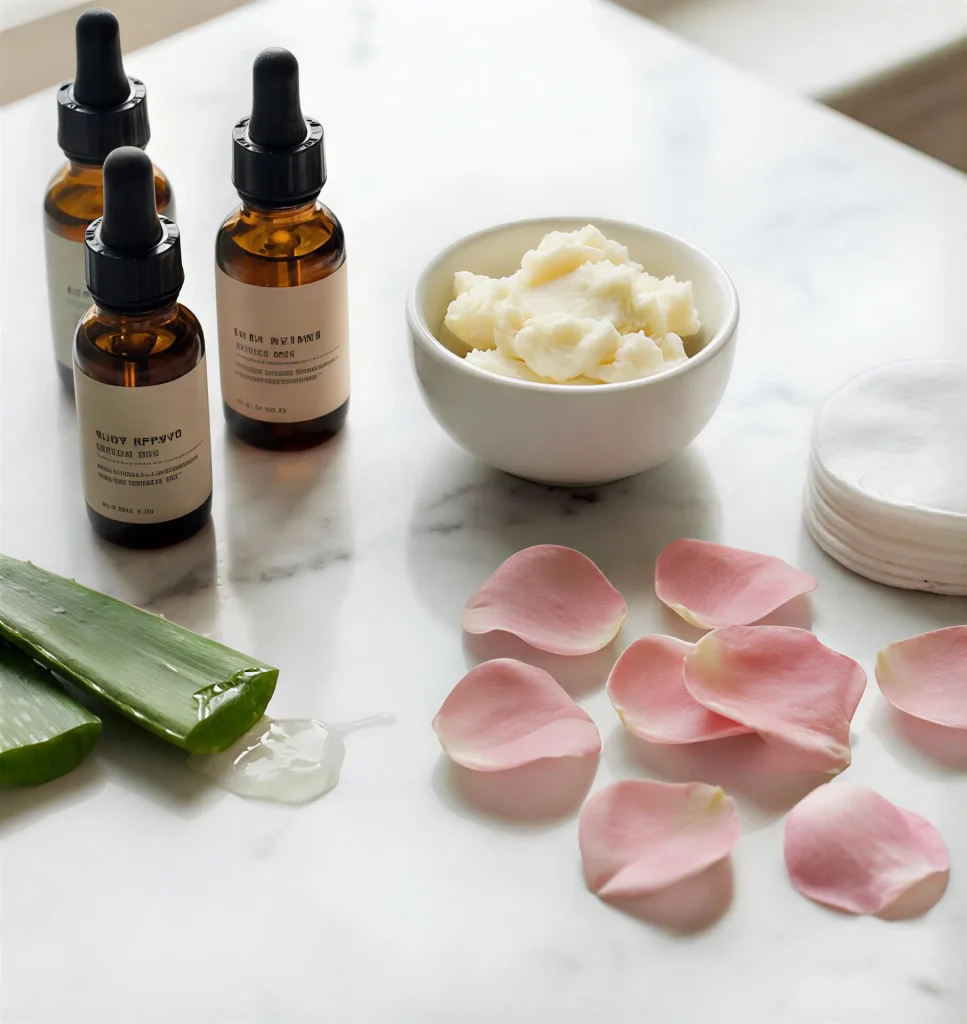
Simplifying my routine helped because I could finally tell what my skin tolerated. The lesson was not that every natural ingredient works better than conventional skincare. It was that fewer, well-chosen products made irritation easier to recognize and consistency easier to maintain.
Gentle cleansing
Choose a cleanser that removes what you need it to remove without leaving the skin persistently tight or irritated. Lukewarm water is usually more comfortable than very hot water. Some women with dry skin do not need the same cleansing frequency as someone with oily or acne-prone skin. If you want to turn these principles into a consistent morning and evening sequence, use our skin care routine for women over 50.
Plant oils
Argan, jojoba, rosehip, and other plant oils can function mainly as emollients or occlusive components for some skin types. They may make dry skin feel softer, but they should not be presented as proven replacements for retinoids, sunscreen, prescription treatment, or procedures. Patch test when you are reactive, and stop if an oil causes persistent redness, itching, or breakouts.
Aloe vera
Aloe-containing products may feel soothing or hydrating for some people, but fresh plant material is not automatically sterile or irritation-free. A formulated product with a clear ingredient list may be easier to evaluate than applying a cut leaf directly to compromised skin.
Shea butter
Shea butter can be a useful rich emollient when skin is dry and tolerates it. It is not necessary for everyone, and a heavy texture may not suit every face. The practical question is whether the product improves comfort without causing irritation or congestion.
Gentle exfoliation
Mature skin does not need to be scrubbed into smoothness. Frequent physical scrubs can worsen irritation. If exfoliation is useful for your concern, choose a well-formulated product, introduce it gradually, and avoid stacking it with several other irritating actives.
Sun Protection Is More Important Than Whether a Product Is Natural
Cumulative ultraviolet exposure contributes substantially to visible skin aging and pigment change. Broad-spectrum sunscreen, shade, protective clothing, and sensible sun habits therefore have more practical anti-aging value than trying to make every product in your routine plant-based.
Mineral sunscreens containing zinc oxide or titanium dioxide are useful options for some women, but they are not automatically better for every skin type. The best sunscreen is one that provides appropriate broad-spectrum protection, suits your skin, and is used correctly and consistently.
Natural Does Not Automatically Mean Gentle
Essential oils, botanical extracts, fragrances, citrus ingredients, and homemade mixtures can all irritate or trigger allergy. “Chemical-free” is not a meaningful safety standard because every ingredient is made of chemicals, including water and plant extracts.
If your skin is reactive, judge a product by its complete formula, directions, packaging, and your own tolerance rather than by whether the front label says natural, clean, organic, or non-toxic.
A Practical Natural Anti-Aging Decision Guide
| If your main concern is… | A sensible first step | Do not rely on… | Consider professional advice when… |
|---|---|---|---|
| Dryness or tightness | Gentle cleansing and a well-tolerated moisturizer or emollient | Drinking excessive water or layering many oils | Skin cracks, bleeds, itches severely, or does not improve |
| Uneven tone or sun spots | Daily sun protection and one suitable tone-supporting product | Lemon juice, harsh acids, or treating an unidentified lesion | A spot changes, bleeds, grows, or looks different from the others |
| Fine lines or texture | Sunscreen, moisturizer, and realistic expectations | Claims that an oil can rebuild lost facial structure | You want prescription or procedure options |
| Sensitivity | Fewer products and fragrance-free basics | Essential oils or pushing through burning | Redness, swelling, rash, pain, or eye symptoms persist |
When Natural Methods Have Reached Their Limit
Home care can support comfort, barrier function, and prevention, but it cannot diagnose a changing lesion, treat every inflammatory skin disease, or reproduce the effects of prescription medicines and professional procedures. Seek appropriate evaluation for a new or changing mole or spot, a sore that does not heal, unexplained bleeding, persistent rash, infection, significant swelling, or severe ongoing irritation.
If you are deciding between a natural minimalist approach and more targeted skincare, the key is not choosing a side. It is matching the intervention to the problem, your tolerance, and the evidence.
Frequently Asked Questions
What does natural anti-aging mean for skin after 50?
A useful definition is a gentle, prevention-focused approach that may include simple skincare, plant-derived emollients, sun protection, and supportive lifestyle habits. It should not imply that natural ingredients can reverse aging or replace medical treatment.
Are natural skincare products safer for mature skin?
Not automatically. Botanical extracts, fragrances, essential oils, and homemade mixtures can irritate or trigger allergy. The complete formula and your skin’s tolerance matter more than the natural label.
Can plant oils remove wrinkles?
Plant oils can soften and reduce the feeling of dryness for some people, which may temporarily make fine surface lines less noticeable. They do not restore lost facial volume or erase established wrinkles.
Is aloe vera good for aging skin?
Aloe-containing products may feel soothing or hydrating for some people, but results depend on the formulation and individual tolerance. Fresh aloe is not automatically sterile or irritation-free.
When should I stop trying home remedies?
Seek professional evaluation for a changing lesion, persistent rash, bleeding, infection, significant swelling, severe irritation, or a concern that does not improve with a simple well-tolerated routine.
The Bottom Line
Natural anti-aging works best as a realistic skin-care philosophy, not a promise to turn back time. Protect your skin from avoidable damage, keep the barrier comfortable, use simple ingredients when they genuinely suit you, and know when a targeted product or professional assessment is the better tool.