
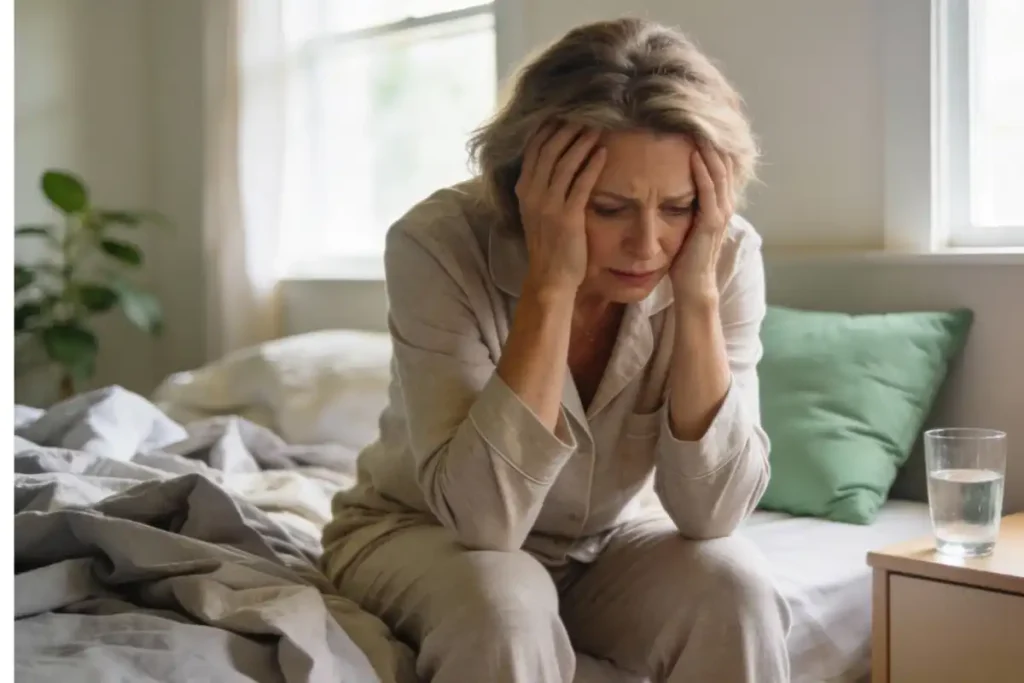
I screamed at my coffee maker. Like, actually screamed at an appliance. That’s the moment I knew something had shifted. This wasn’t just a bad morning. I was standing in my kitchen at 6:47 AM, rage-crying because my coffee maker was taking thirty seconds too long to brew.
Two hours later, I was sobbing over a Subaru commercial where a golden retriever puppy found its forever home. By lunchtime, I felt fine. Cheerful, even. My husband approached me like I was a live grenade. I didn’t blame him.
Nobody had prepared me for how emotionally unfamiliar perimenopause could feel. The meltdown in Target’s aisle seven should have been my first clue: a stranger’s cart gently bumped mine, just a tap, yet I felt rage flood my body so quickly it scared me. I abandoned my cart and sat in my car shaking, asking the question so many women quietly ask: what is happening to me?
Mood changes can occur during the menopause transition, but hormones are not the only possible explanation for every emotional change. Sleep loss, stress, medications, thyroid problems, depression, anxiety, major life changes, and other health factors can overlap. For the broader transition, start with our Menopause after 50 guide.
Understanding Mood Swings After 50: The Crying Jags Nobody Mentions
Let’s talk about the tears first because they were the most confusing part for me. I cried at insurance commercials, a beautiful sunset, and a random “love you, mom” text. Not gentle misty eyes. Full-body sobs that seemed to arrive from nowhere and disappear just as quickly.
One friend described it as estrogen “taking serotonin hostage.” It was memorable, but the biology is more complicated than that. Estrogen interacts with brain systems involved in mood and neurotransmission, and hormonal fluctuations may contribute to mood symptoms for some women. That does not mean every tear, angry moment, or anxious thought can be reduced to one hormone.
That distinction helped me. I could take the change seriously without deciding that my brain was broken or that every emotion was “just hormones.”
The Rage That Surprised Me Most
The tears I could explain away as sentimentality. The rage shocked me. I’ve always been patient, slow to anger, the person who mediates conflicts. Suddenly, my husband was chewing too loudly, traffic felt personal, my inbox offended me, and “just checking in” for the third time that day could send me over the edge.
Small irritations felt monumental. I’d snap at someone I loved, feel guilty for overreacting, then get angry at myself for feeling guilty. Emotional whiplash is exhausting.
I described it to my doctor like this: imagine every nerve ending exposed, with no buffer between stimulus and reaction. That conversation mattered because irritability can be part of the menopause transition, but severe or persistent changes still deserve a proper assessment rather than an automatic hormone label.
The Anxiety That Seemed to Come From Nowhere
I’ve never thought of myself as an anxious person. Then, at 51, I developed Sunday-night dread about work I’d done successfully for years. Racing thoughts at 3 AM. A pounding heart. Tightness in my chest. The physical sensations were frightening.
Hormonal changes, poor sleep, hot flashes, stress, and life circumstances can all interact with anxiety. But chest pain, fainting, severe shortness of breath, or a new or concerning heartbeat should not be self-diagnosed as menopause or panic. Those symptoms can need urgent medical assessment.
Understanding that overlap helped me stop piling fear on top of fear. It also taught me that “this could be menopause” and “this deserves medical attention” can both be true thoughts at the same time.
What Actually Helped Me: The Honest Version
I’m going to tell you what helped me, not pretend that my personal response is a prescription for every woman.
Sleep became non-negotiable
Night sweats were destroying my sleep and making every emotion harder to carry the next day. I got ruthless about protecting rest: a cooler bedroom, blackout curtains, a predictable bedtime, and fewer commitments that pushed sleep aside.
I felt steadier when I slept better. That was my pattern, not a guaranteed two-week treatment result. If sleeplessness is becoming its own problem, our Menopause Insomnia guide goes deeper without turning this mood article into a sleep article.
Movement became a pressure-release valve
I started walking in the morning, not for calories or steps, but because moving helped me feel less wound up. Some days it was twenty minutes; some days it was just around the block. Yoga helped too, especially the unglamorous lie-on-the-floor-and-breathe kind.
I stopped pretending alcohol was helping
That nightly wine felt relaxing in the moment, but I began noticing that my sleep and next-day anxiety were worse after drinking. Cutting back helped me see the pattern more clearly. Again, that’s my experience, not a universal rule about what every woman will feel.
Therapy gave me space between feeling and reacting
I resisted therapy for months because I thought I should be able to handle everything alone. Eventually I reached a point where crying in bathroom stalls at work was interfering with my life.
My therapist helped me create a little distance between an emotional impulse and what I did next. That skill did not erase menopause, but it gave me room to respond rather than react.
Medical help was an option, not a failure
After months of lifestyle changes that helped but did not feel sufficient, I discussed hormone therapy with my doctor. I personally felt more emotionally stable after starting treatment. I no longer turn that personal response into a percentage or timeline that another woman should expect.
Hormone therapy is not appropriate or necessary for everyone, and mood symptoms may sometimes call for other treatment, including psychotherapy or medication. The right decision depends on symptoms, risks, health history, and personal preferences.
If mood changes are arriving with forgetfulness or concentration problems, keep that separate from this article’s emotional focus and use our Perimenopause Brain Fog guide.
The Support I Didn’t Know I Needed
The isolation was brutal until I started talking about what was happening. I confessed to three close friends over dinner, “I think I’m losing my mind.” All three immediately said some version of, “Me too.” We’d been struggling separately, each thinking we were alone.
We created a group text: simple check-ins, bad-day warnings, permission to be real instead of fine. That safety net did not treat a medical condition. It made a difficult season less lonely.
If your circle has changed after 50, Finding Your Tribe After 50 is the better place for the relationship and community side of this conversation.

When Mood Changes Need More Than Self-Care
Please don’t force every emotional change into a menopause box. Talk with a qualified clinician when symptoms are persistent, worsening, difficult to manage, or interfering with work, sleep, relationships, or daily functioning. Seek urgent help for thoughts of self-harm, feeling unsafe, severe panic with concerning physical symptoms, or a sudden major change in mental state.
The Perspective Shift That Helped Most
Here’s what finally clicked for me: the emotions I was experiencing did not define who I was becoming. Menopause was one possible contributor in a much bigger picture that included sleep, stress, relationships, and health.
I’m on the other side of the most chaotic period now, and I feel steadier. I won’t promise every woman that symptoms disappear on the same schedule. I will say this: you deserve to have emotional changes taken seriously without being dismissed as “just hormones” and without being told you’re simply not coping well enough.
Frequently Asked Questions
Is it normal to feel emotionally different during perimenopause?
Mood changes can occur during the menopause transition, but they vary widely and are not always caused by hormones alone. Sleep, stress, medications, thyroid problems, depression, anxiety, and other factors can overlap. Persistent or disruptive symptoms deserve assessment.
Can stress alone cause mood swings after 50?
Stress can contribute substantially to irritability, anxiety, low mood, and sleep disruption. Hormonal changes may overlap for some women, so it is often more useful to consider the whole picture than to assume one cause.
Can antidepressants help during perimenopause?
Antidepressants may be appropriate for some women depending on the symptoms and diagnosis, but benefits and side effects vary. Medication decisions should be made with a qualified clinician rather than based on a menopause symptom list alone.
What if a hormone test is normal but I still have symptoms?
Hormone levels can fluctuate during perimenopause, and a single result does not always explain symptoms. A clinician can interpret testing in the context of age, menstrual history, symptoms, medications, and other possible causes.