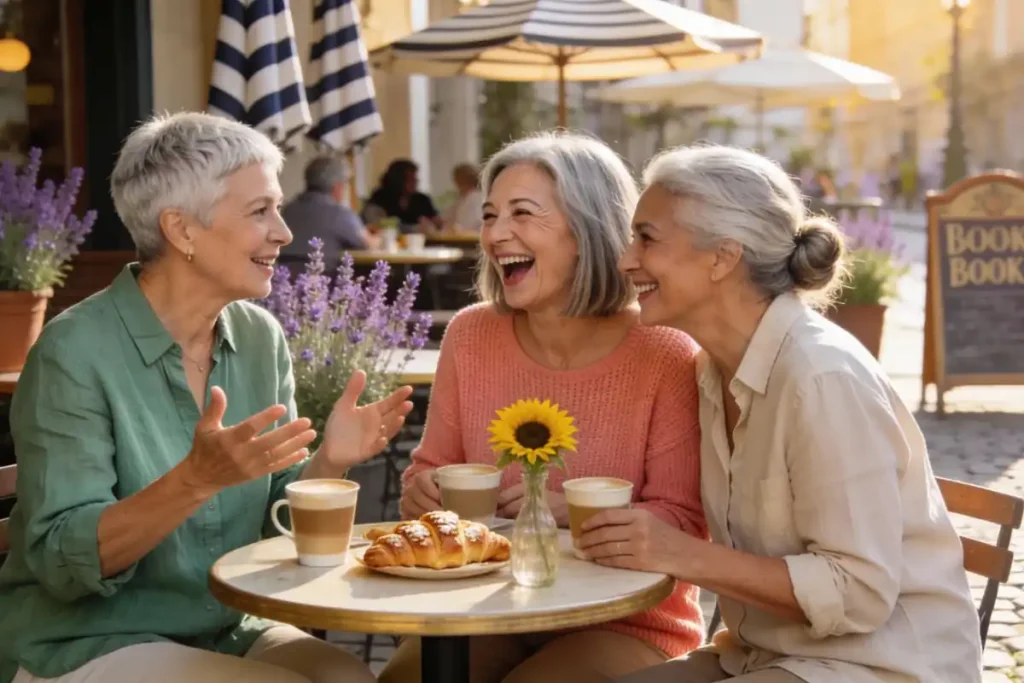
I sat alone at a corner table in my favorite coffee shop last month, watching a group of four women my age laugh so hard they were wiping tears from their eyes. I felt a pang of longing so sharp it surprised me. When did making friends become something I had to actively work at? When did my circle become so small that Saturday nights meant me, my partner, and Netflix? Again.
Here’s what I’ve learned about making friends after 50: it doesn’t happen the way it used to. There’s no carpool where you bond with other moms, no office where proximity creates connection, no kids’ activities bringing you together with women going through the same phase. At this stage, if you want meaningful friendships with women who understand this life chapter, you have to be intentional about seeking them out.
Why friendship feels harder now
Let’s be honest about what makes building friendships after 50 more challenging than it was at 25 or even 40.
The built-in friend factories of earlier life are gone; you’re not sharing a dorm room, navigating pregnancy together, or sitting in the same office for eight hours a day. Those environments created natural proximity and shared experiences that made friendship almost effortless. You saw the same people repeatedly, you had automatic conversation starters, and you bonded over common challenges.
Now? You might work from home or be retired. Your kids don’t need you at practices and games; you’ve perhaps moved to a new city or stayed in one where friends have left, and the automatic friend-making infrastructure doesn’t exist anymore.
Research confirms what many of us feel: forming new friendships requires about 50 hours of interaction to reach casual friend status and more than 200 hours for close friendship. That’s a significant time investment when you’re busy, tired, and already managing existing relationships and responsibilities.
Add to this the reality that many women over 50 are dealing with life transitions that affect social connections. Empty nest, retirement, divorce, widowhood, caring for aging parents, these major life changes often coincide with the loss of the social structures that previously supported friendships.
I went through a period where I genuinely believed I was fine without close local friends. I had my long-distance friends from earlier life chapters, my family, and my work, but humans are wired for in-person connections with people who understand our current reality. Video calls with friends from college are wonderful, but they don’t replace having someone you can text on a Wednesday to meet for coffee in an hour.
The good news? Once you understand why friendship feels harder now, you can stop wondering what’s wrong with you and start taking intentional action to build the connections you’re craving.
where women actually meet their tribes
The advice “just put yourself out there” is useless without specifics. Here’s where women over 50 are actually connecting and forming real friendships.
Fitness and Movement Communities
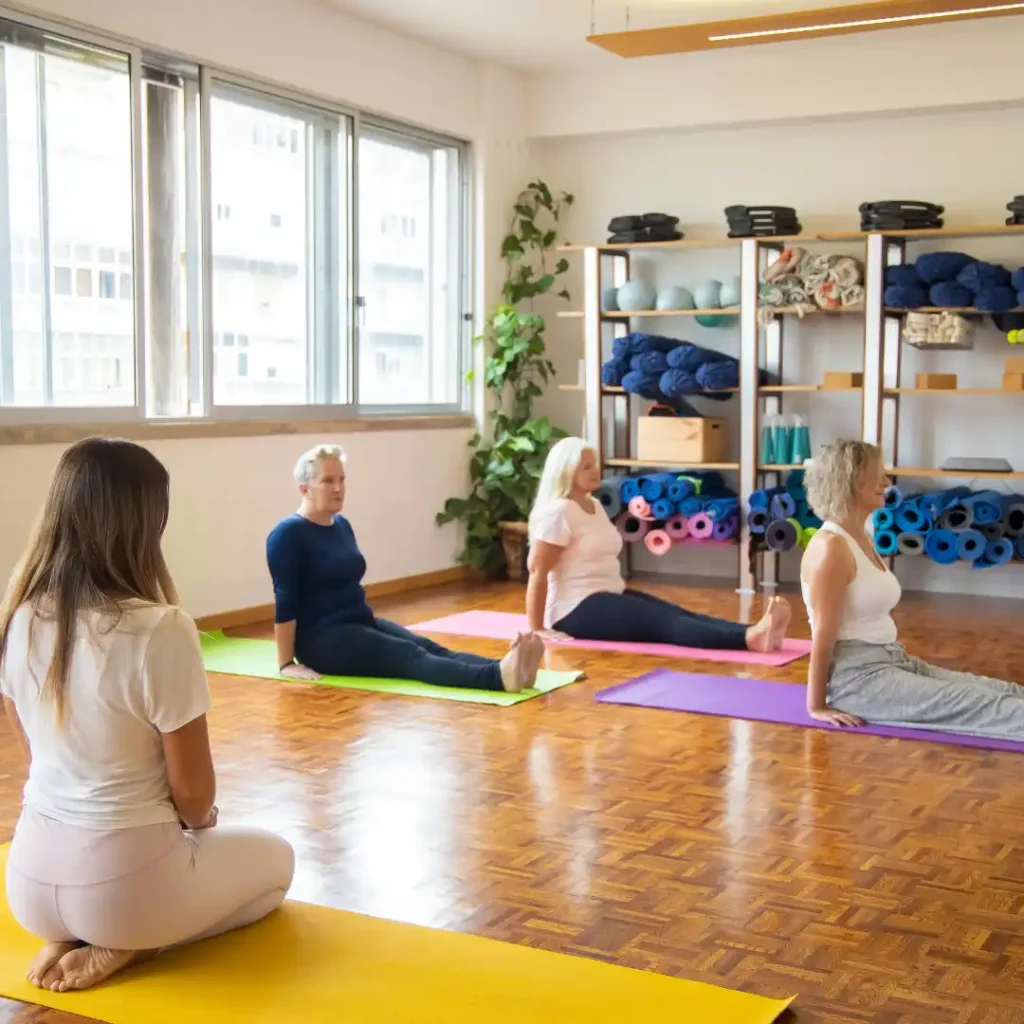
This has been one of the most reliable friendship sources for women I know: walking groups, yoga classes, pickleball leagues, swimming groups, dance classes, hiking clubs. These activities provide natural repeated exposure; you see the same people consistently, which research shows is essential for friendship formation.
I joined a gentle yoga class primarily for my back issues. Within three months, a group of us started meeting for coffee after class. We’d stretched and breathed together twice a week, making small talk before and after. That consistency created the foundation for a real connection. Now we meet outside of class too, and these women have become genuine friends. If you’re looking to establish healthier daily habits that support both physical and mental well-being, creating consistent morning routines can help you feel more energized for social activities.
The key is choosing activities you actually enjoy. Don’t force yourself to do high-intensity workouts if you hate them; find movement that feels good so you’ll show up consistently, which is what builds friendships.
Volunteer Organizations
Women who volunteer regularly report higher levels of social connection and life satisfaction, and choose causes that genuinely matter to them, such as animal shelters, food banks, literacy programs, environmental organizations, and political campaigns. Shared values create powerful bonds.
I started volunteering at a community garden and met women who cared about the same things I did: sustainability, growing food, and being outdoors. We had immediate common ground beyond just our age. Working side by side on a shared project created natural conversation and connection.
Book clubs and learning groups
If you love reading, book clubs offer built-in structure for regular meetings and conversation starters; many libraries, bookstores, and community centers host book clubs specifically for women over 50. You can also start your own, focused on genres or themes you love.
Beyond books, consider taking classes to learn something new, such as writing workshops, art classes, cooking courses, language learning, or history lectures. Educational environments attract curious, engaged people and learning together.
Online communities that lead to real meetups
Meetup.com remains one of the best resources for finding local women with similar interests. Search for “women over 50” or specific activities you enjoy. Many areas have dining clubs, hiking groups, movie clubs, and social gatherings specifically for our age group.
Facebook groups for women in your geographic area can lead to real-world connections. Look for local groups focused on your interests or life stage. Some of my friends have met wonderful women through neighborhood Facebook groups by simply posting, Anyone want to start a walking group?”
The key with online platforms is treating them as a bridge to in-person connection, not the destination itself.
Faith and spiritual communities
Churches, temples, meditation centers, and spiritual groups offer regular gatherings and have specific programs for midlife women. Even if you’re not traditionally religious, many spiritual communities welcome seekers and offer fellowship opportunities.
The structure of regular attendance means repeated exposure to the same people, plus shared values and worldview, creates strong foundations for friendship.
Creative and hobby groups
Knitting circles, painting classes, photography clubs, gardening groups, bird watching societies, whatever your creative or recreational interest, there’s likely a group for it. Creative activities give you something to focus on together, and the awkwardness of getting to know new people.
I know women who’ve formed close friendships through quilting guilds, pottery classes, and writers’ groups. The hobby brings you together initially, but the friendships that form often extend far beyond the activity itself.

From acquaintance to actual friend
Showing up to activities is step one; turning those repeated encounters into real friendships requires additional effort that can feel vulnerable or awkward, especially if you’re naturally introverted.
Here’s what actually works based on my experience and research on adult friendship.
Take the Initiative
This is the hardest part for many women. After a few pleasant interactions at yoga class or book club, someone has to make the move from “nice to see you here” to “would you like to grab coffee sometime?” That someone needs to be you more often than not.
I’ve learned to push through the fear of rejection and ask, “I’d love to continue this conversation over coffee. Would you be free next Tuesday?” Worst case, they say no. Best case, you’ve just started a friendship. Most women are thrilled to be asked and likely wish someone would take that initiative.
Be consistent and reliable.
Friendships deepen through regular contact. If you meet someone you click with, follow through. If you say you’ll text about getting together, actually text. If you make plans, keep them. Show up consistently to the activities where you see potential friends.
I made the mistake early on of meeting women I liked, having great conversations, and then never following up. Months later, I’d think “I should text her,” but by then, momentum was lost; friendship at this age requires more deliberate maintenance than it did when proximity did the work for you.
Practice vulnerability
Surface-level pleasantries don’t build close friendships; at some point, someone has to share something real: a challenge you’re facing, a fear, a hope, something that shows who you actually are beyond the polished exterior.
I bonded deeply with a woman in my hiking group when we were both honest about struggling with the empty nest. That vulnerability opened the door to real conversation and mutual support. Sharing authentic experiences creates intimacy far faster than months of cheerful small talk.
Create regular rituals
Once you’ve connected with women you enjoy, establish regular meet-ups, monthly dinners, and a standing date for walks. Consistency builds friendship in a way that sporadic contact doesn’t.
My closest local friends are the ones I see predictably and regularly, not because we schedule each time, but because we have established rhythms. Tuesday yoga, Thursday coffee, and the first Saturday of the month book club. These rituals sustain and deepen our connections.

Navigating the awkward parts
Let’s acknowledge what makes friendship-building at this age feel uncomfortable.
Taking initiative feels vulnerable when you’re used to friendships forming more organically. You’re putting yourself out there with no guarantee the other person wants the same level of connection. That potential rejection stings, especially when friendship used to be easier.
I’ve had women politely decline my invitations for coffee or not follow through after saying they’d love to get together. It felt personal at first; something was wrong with me. But I’ve learned that most of the time, it’s not about me. People are busy, they’re juggling complicated lives, and they might already feel maxed out on relationships.
The key is not that it’s personally a few non-starters that stop you from continuing to reach out to other potential friends.
Time constraints are real; we’re busy, we have partners, adult children who still need us, aging parents, work or volunteer commitments, and health to maintain. Adding new friendships to already full lives requires intentional time allocation.
I had to get honest with myself about whether I actually wanted more friends or just the idea of them. Once I acknowledged that I genuinely craved more local connection, I had to decide what I’d make space for. That meant saying no to some things so I could say yes to friendship and activities.
Different friendship styles and expectations can create awkwardness. Some women want deep, share-everything friendships. Others prefer activity-based friendships with less emotional intimacy. Some want daily contact, others monthly. These mismatches aren’t failures; they’re just incompatibilities.
When I notice I’m wanting more frequent contact than a friend seems comfortable with, I adjust my expectations or look for additional friendships to meet those needs. Not every friendship has to be everything.
What makes friendships stick at this age
The friendships that thrive after 50 share certain characteristics that differ somewhat from earlier life friendships.
Shared values matter more than shared circumstances. You don’t need to be at the same life stage, retired vs working, partnered vs single, or with kids vs no kids. What matters is that you share core values, how you see the world, what you care about, and how you treat people. These deeper alignments create lasting connections.
Authenticity trumps perfection. Women at this stage are tired of performing. The friendships that feel best are ones where you can show up as your actual self: sometimes tired, sometimes struggling, sometimes uncertain. Pretending everything is fine creates distance, not connection.
Mutual support without judgment matters deeply. Life after 50 includes challenges: health issues, aging parents, adult children’s struggles, financial concerns, and relationship changes. Friends who can hold space for these realities without trying to fix everything or offer unsolicited advice are treasures.
Laughter and lightness balance the serious stuff. While depth and authenticity are crucial, so is fun. The friends I cherish most are the ones who make me laugh until I cry, who can be silly with me, who remember that joy matters as much as processing pain.
Respect for boundaries and different needs. Good friends at this age understand that everyone’s capacity fluctuates. Sometimes you can be fully present, sometimes you need space. Friends who can ebb and flow without taking it personally, who understand that friendship doesn’t mean constant availability, these are keepers.
When friendships don’t work out
Not every potential friendship will develop into what you hope. Some women you meet will remain pleasant acquaintances. Some will drift after an initial connection. Some might end up not being good fits after all.
I’ve had experiences where I thought I was building a real friendship,
only to realize the other person saw it differently. They were happy to chat when we ran into each other, but didn’t want to meet outside that context. It felt like rejection, like I’d misread the situation or wanted too much.
What I’ve learned is that these experiences aren’t failures; they’re information. They tell you who’s available for the kind of connection you’re seeking and who isn’t. That’s valuable knowledge that saves you from investing energy in directions that won’t develop.
Sometimes friendships that start well don’t last. Life changes, interests diverge, and personalities clash in ways that weren’t initially apparent. Friendship endings at this age can hurt as much as romantic breakups, sometimes more, because we expect friendships to be permanent.
I’ve had to let go of a few friendships that became more draining than nourishing. That’s okay. Not every relationship is meant to last forever. Making space by releasing friendships that no longer serve you creates room for connections that will.
The goal isn’t to have dozens of friends. It’s to have a few genuine connections with women who understand you, support you, make you laugh, and enrich your life. Quality far outweighs quantity.
Building your support system
Your tribe doesn’t have to look one specific way. Some women thrive with a large circle of friends. Others do best with two or three close connections. Some want friends they see multiple times a week. Others prefer monthly contact.
What matters is building a support system that meets your actual needs, not what you think it should look like.
I used to feel inadequate because I didn’t have a friend group like some women seem to. Then I realized I’m genuinely happiest with a few deep friendships and a larger circle of friendly acquaintances. That’s my natural friendship style, and there’s nothing wrong with it.
Take the quiz: what’s your friendship style?
Not sure which approach to friendship building suits you best? Take our quick quiz below to discover your natural friendship style and get personalized strategies for finding your tribe. Understanding whether you’re a Soul Seeker, Activity Partner, Balanced Connector, or Community Builder will help you focus your energy on the approaches most likely to work for you.
[QUIZ PLACEMENT HERE]
Consider what you actually want from friendship at this stage:
- Companionship for activities you enjoy?
- Deep emotional support and processing?
- Fun and laughter to balance life’s challenges?
- Intellectual stimulation and interesting conversations?
- Practical help and mutual support?
Different friends might meet different needs. Your hiking friend might not be your share-everything friend, and that’s perfectly fine. Building a friendship ecosystem with variety can be healthier than expecting one or two people to be everything.
Frequently asked questions
Real stories: how women found their tribe after 50
Before I share my final thoughts, I want you to hear from real women who’ve successfully built meaningful friendships after 50. Their stories show that it’s absolutely possible, and each took a slightly different path.
Margaret, 58: “I Found My People at a Pottery Class.”
After my divorce at 56, I realized most of my friendships had been couple friendships that didn’t survive the split. I was lonely but didn’t know where to start. I’d always wanted to try pottery, so I signed up for a beginner’s class at the community center. Three other women in the class were also going through major life transitions. We started getting coffee after class, then dinners, then weekend art gallery trips. Two years later, we’re planning a girls’ trip to New Mexico.
“I almost didn’t sign up because I thought I’d be awkward and bad at pottery. Turns out, being beginners together created this beautiful bond. We laughed at our mistakes and cheered each other’s wins. The pottery was just the excuse to show up consistently.”
Susan, 62: “Volunteering Changed Everything.”
I retired early and suddenly had all this time, but no one to spend it with. My kids live across the country, and my work friends were still working. I started volunteering at the local animal shelter because I love dogs. Within a month, I’d connected with three other women volunteers whom I saw every Tuesday and Thursday. We bonded over the dogs at first, but then started meeting for walks with our own dogs on weekends. Now we’re planning to foster dogs together, and we text daily.
“What surprised me was how quickly we went from talking about dogs to talking about everything, our fears about aging, our health concerns, our hopes for this chapter. Shared values about caring for animals translated into shared values about life.”
Linda, 59: “I Started a Walking Group and Changed My Life.”
I moved to a new city for my husband’s job at 57 and knew absolutely no one. I felt invisible and isolated. Finally, I posted in our neighborhood Facebook group: “Anyone want to start a morning walking group? Tuesdays and Thursdays, 7 AM at the park?” Four women responded. That was 18 months ago. Now we’re up to 12 regular walkers, and a core group of six of us have become genuinely close friends. We support each other through everything, health scares, adult children drama, career changes, and aging parents.
“Taking that initiative felt so vulnerable. What if no one responded? What if people showed up once and never came back? But I realized my loneliness was worse than the risk of rejection. Starting that walking group was the bravest and best thing I’ve done in years.”
Carol, 55: “Book Club Became My Lifeline.”
I’ve always been an introvert, and the idea of putting myself out there to make friends felt exhausting. But I missed having people who understood what I was going through with perimenopause, career uncertainty, all of it. I joined a book club at my library specifically for women over 50. It took about four months before I felt comfortable enough to say more than a few words. But the structure of discussing books gave me something to talk about, and gradually I started sharing more personal thoughts. Now, three of the women from that book club are my closest friends.
“Being an introvert doesn’t mean you don’t need friends; it just means you need to find the right environment. Book club worked for me because we had a built-in conversation topic, and I could listen more than talk until I felt ready to open up. For introverts, structured settings are gold.”
You’re not too late
Hearing these stories, you can see there’s no one right way to find your tribe. Margaret found hers through creativity, Susan through service, Linda through bold initiative, and Carol through quiet consistency.
That feeling was important information. It told me I needed more friendship in my life, that video calls with distant friends weren’t enough, that I was craving regular in-person connection with women navigating similar life stages.
Acting on that information required vulnerability, effort, and time. I had to try different activities until I found ones where I met compatible people. I had to push through awkwardness and take initiative. I had to show up consistently, even when it would have been easier to stay home.
Finding your tribe after 50 doesn’t happen by accident. It requires intentionality, patience, and willingness to be brave. But the women who’ve put in that effort consistently say it’s worth it.
Your tribe is out there. They’re women who will understand the complicated realities of this life stage, who will make you laugh, who will show up when things are hard, who will celebrate your wins. They’re probably looking for you, too, wishing someone would take the first step.
That someone can be you.
If you’re working on building friendships but struggling with self-doubt or negative self-talk along the way, understanding What Women Over 50 Need to Know About Aging can make the process feel less daunting and more empowering.
What’s one step you’ll take this week toward finding your tribe? I’d love to hear where you’re starting.