

Changes in body weight and shape after 60 can feel confusing, especially when familiar routines no longer seem to have the same effect. Hormones are part of the picture, but they are not the whole explanation. Aging, changes in muscle mass, sleep, activity, medications, health conditions, and eating patterns can all influence weight over time.
For women after menopause, lower estrogen levels may influence where body fat is stored and how body composition changes. Understanding that relationship can make it easier to separate realistic, evidence-based guidance from claims that promise to “balance hormones” or fix weight gain through one hormone alone. For a broader overview of this stage of life, see our menopause guidance for women after 50.
What happens to hormones after menopause?
During the menopause transition, ovarian production of estrogen and progesterone declines. By the postmenopausal years, those hormone levels are substantially lower than they were during the reproductive years. The transition is different for every woman, and its effects cannot be reduced to a single hormone or symptom.
Research has linked menopause with changes in body composition and a tendency toward greater central, or abdominal, fat accumulation. Aging itself also matters. Muscle mass and energy needs can change with age, while activity, sleep, diet, health conditions, and medications may influence weight as well.
That distinction is important: lower estrogen may contribute to changes in fat distribution, but hormones do not explain every pound gained after 60. Weight is influenced by multiple biological and lifestyle factors working together.
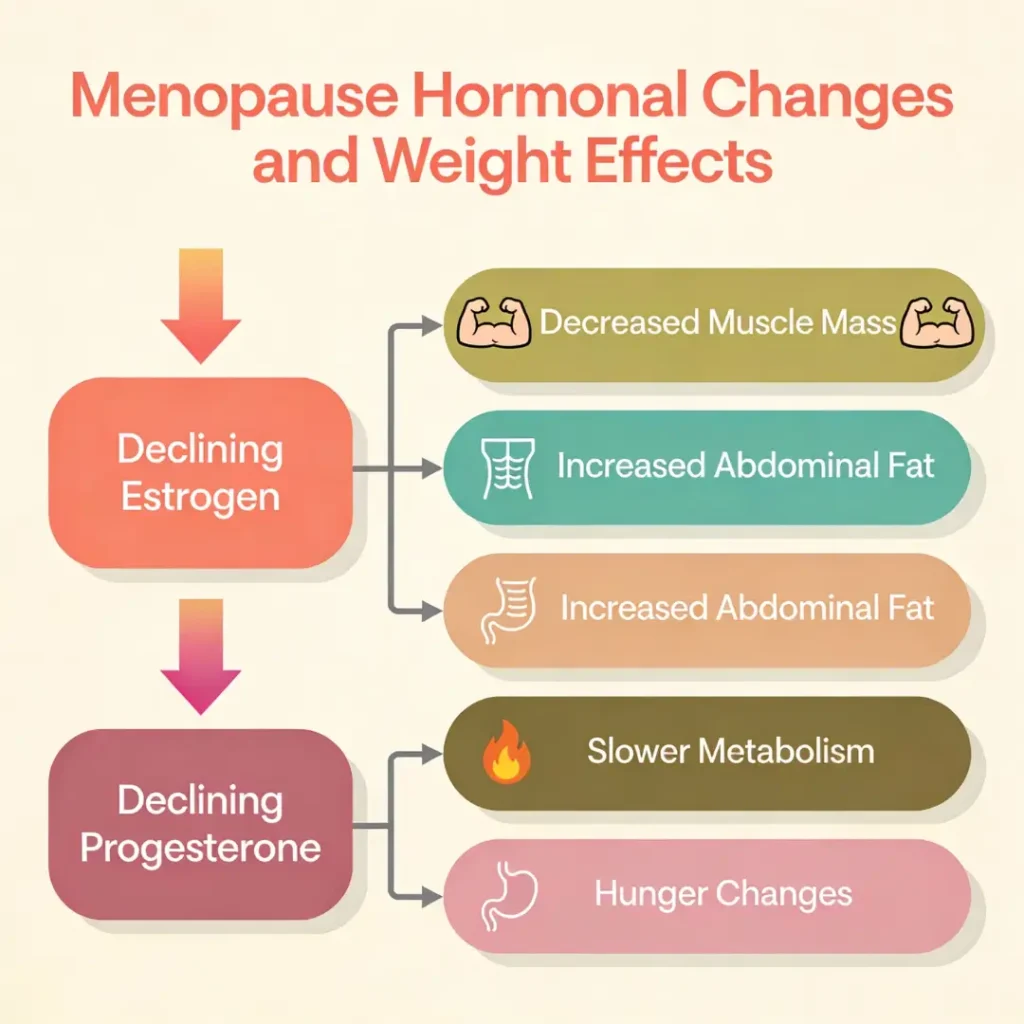
How hormones can influence weight and body composition after 60
Estrogen has effects in tissues throughout the body, and the decline that accompanies menopause may contribute to a shift in fat distribution toward the abdomen. At the same time, age-related changes in muscle mass can affect overall energy needs and physical function.
Sleep can also complicate the picture. Menopausal symptoms, stress, pain, or other health issues may disrupt sleep, and poor sleep can make appetite regulation and healthy routines harder for some people. These relationships are complex, so it is more accurate to think of hormones as one part of a larger weight-management picture rather than as a switch that turns weight gain on or off.
If your main goal is losing or managing weight rather than understanding the hormonal side specifically, our weight loss after 60 guide covers the broader nutrition, movement, sleep, and habit strategies in more detail.
What metabolism has to do with the changes you notice
It is common to blame hormones for a “slower metabolism,” but the reality is more nuanced. Changes in muscle mass, body size, movement, diet, and aging can all affect how much energy the body uses. Hormonal changes may interact with these factors, but they should not be treated as the only cause.
That is why preserving muscle and staying active become especially valuable with age. For a deeper explanation of this part of the picture, see metabolism changes after 60.
Does menopause hormone therapy help with weight?
Menopause hormone therapy, sometimes called hormone replacement therapy, is not a weight-loss treatment. Its primary role is to treat appropriate menopausal symptoms in women for whom the benefits and risks have been individually assessed.
Some research suggests that hormone therapy may have modest effects on body composition or abdominal fat distribution in some postmenopausal women. It may also improve symptoms such as hot flashes or sleep disruption for appropriate candidates, which can make everyday health habits easier to maintain. That is different from saying that hormone therapy causes meaningful weight loss.
Whether hormone therapy is appropriate depends on factors such as symptoms, age, time since menopause, whether the uterus is present, medical history, and individual risk factors. It should not be started, stopped, or selected primarily as a weight-loss strategy without medical guidance.
What progesterone does — and what it does not mean for weight
Progesterone is often discussed online as if it can “balance estrogen,” remove water weight, or unlock weight loss. Those claims oversimplify how menopausal hormone therapy works.
Progesterone is not a weight-loss treatment. In menopausal hormone therapy, a progestogen may be prescribed with systemic estrogen for women who have a uterus because it helps protect the uterine lining. The appropriate regimen depends on the individual and should be determined by a qualified healthcare professional.
Changes in weight, appetite, bloating, or fluid retention can have many causes, so they should not automatically be attributed to a “progesterone imbalance” or “estrogen dominance.” If progesterone and weight are your specific concern, read our guide to progesterone and weight gain in menopause.
Lifestyle habits that support weight management after 60
No food, supplement, workout, or daily ritual can simply “rebalance” postmenopausal hormones. Lifestyle habits still matter, however, because they support muscle, cardiovascular health, sleep, mobility, and sustainable weight management.
Protect muscle with regular movement
Resistance exercise can help maintain or improve strength and muscle function as you age. Walking and other aerobic activities can complement strength work and support overall health. The right amount and intensity depend on your current fitness, health conditions, mobility, and recovery.
If you want an age-specific starting point, see our strength training guide for women over 60.
Build meals around overall nutrition quality
A sustainable eating pattern that includes adequate protein, vegetables and fruit, fiber-rich foods, and sources of healthy fats can support health and weight management. There is no need to eat frequent small meals or use specific “hormone-balancing” foods unless that approach genuinely suits your needs and preferences.
Take sleep and stress seriously without blaming cortisol for everything
Sleep disruption and chronic stress can make healthy routines, appetite management, and recovery more difficult. Improving sleep habits and finding realistic ways to manage stress can support overall wellbeing, but abdominal weight gain should not automatically be blamed on cortisol alone.
Track patterns that are useful to you
If symptoms are affecting your quality of life, a simple record of sleep, hot flashes, mood changes, appetite, medications, activity, and weight changes can make a conversation with your healthcare provider more specific. The goal is not to diagnose a hormone problem yourself, but to provide useful context.

When weight changes deserve medical attention
Not every change in weight after 60 is hormonal. Consider speaking with a healthcare professional if weight changes are rapid or unexplained, or if they occur alongside symptoms such as persistent fatigue, swelling, major changes in appetite, new digestive symptoms, or other changes that concern you.
A clinician can decide whether your symptoms and medical history suggest a need for further evaluation, which may include reviewing medications or considering thyroid, metabolic, or other testing. Testing should be based on the individual situation rather than treated as a standard hormone panel for every woman with weight concerns.
Frequently Asked Questions
Hormones matter after menopause, but they do not act in isolation. Understanding their role can help you make sense of changes in body composition without assuming that every change is caused by estrogen, progesterone, insulin, or cortisol.
The most useful approach is to separate two questions: whether menopausal symptoms need medical treatment, and which sustainable habits support your health and weight over time. If symptoms are significant or weight changes are unexplained, a healthcare professional can help you evaluate the broader picture and discuss whether hormone therapy is appropriate for your individual circumstances.