Product shelves make mature skincare look more complicated than it is. The useful skill is not memorizing every ingredient. It is matching one product category to one concern, checking whether the formula is tolerable, and avoiding duplicate actives.
This guide covers skincare anti aging products and how to evaluate them. For the order of application, use the Skin Care Routine for Women Over 50.
Start with the concern, not the marketing label
| Primary concern | Product category to consider | What success looks like |
|---|---|---|
| Dryness or tightness | Gentle cleanser plus richer moisturizer | Less tightness, flaking, and discomfort |
| Uneven tone | Sunscreen plus one suitable brightening active | Gradual, even improvement without irritation |
| Fine lines or texture | Retinol or another evidence-aligned active if appropriate | Modest change over time, not instant lifting |
| Sensitivity | Fragrance-free simplified routine | Fewer reactions and better tolerance |
| Adult breakouts | Non-comedogenic moisturizer plus one acne active | Fewer lesions without damaging the barrier |
The foundation products
A gentle cleanser
A cleanser should remove sweat, makeup, sunscreen, and buildup without leaving the skin tight. Cream, lotion, gel, and balm formats can all work. Choose by skin feel and what you need to remove, not by an age label.
A barrier-supporting moisturizer
Look for humectants that attract water, emollients that smooth the surface, and occlusives that reduce water loss. Glycerin, ceramides, petrolatum, squalane, and hyaluronic acid are common examples. The complete formula matters more than one highlighted ingredient.
Broad-spectrum sunscreen
Sun protection helps limit further ultraviolet damage and supports any plan for pigment or texture. Choose a format you can apply consistently and follow the label for amount and reapplication. Tinted mineral options may suit some pigment concerns, but comfort and adequate use matter most.
Treatment ingredients by goal
Retinol and prescription retinoids
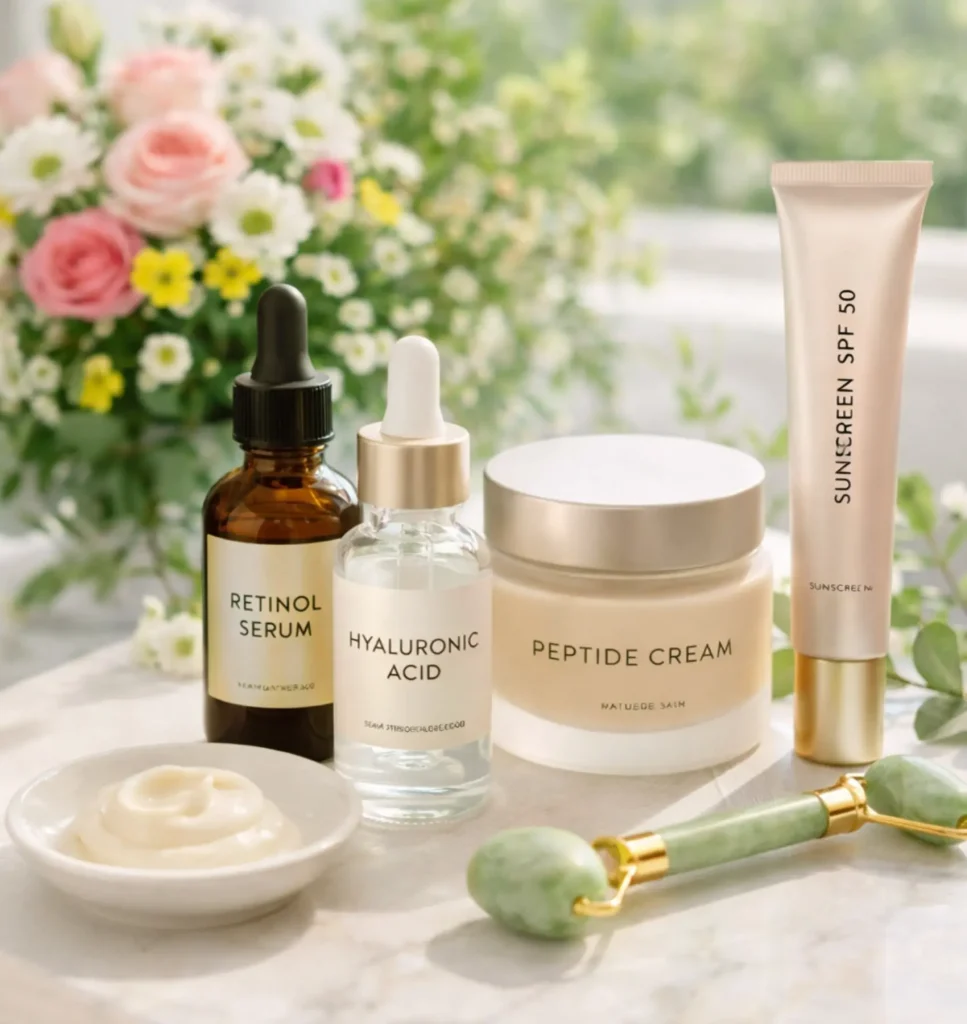
Over-the-counter retinol can support gradual improvement in texture and fine lines for some people. Prescription retinoids are medicines and should not be treated as stronger versions of the same shopping choice. Both can irritate. Introduce an over-the-counter product slowly, moisturize, and avoid stacking it immediately with several acids or scrubs.
Vitamin C
Vitamin C products vary in form, concentration, packaging, stability, and irritation potential. Opaque or air-restrictive packaging may help protect unstable formulas. Discard a product when its color, smell, or texture changes markedly according to manufacturer guidance.
Niacinamide
Niacinamide can support barrier function and may suit uneven tone or redness, but higher concentration is not automatically better. Choose a simple formula and stop if it causes persistent irritation.
Azelaic acid
Azelaic acid may be useful for some acne, redness, and uneven tone concerns. Sensitive skin may need gradual introduction. Persistent redness, flushing, or bumps should be diagnosed rather than repeatedly treated as ordinary acne.
Peptides
Peptide products can be pleasant moisturizers, but broad promises to replace lost collagen or lift the face exceed what a cosmetic cream can guarantee. Judge the whole formula, price, and tolerability rather than the peptide count.
Products that deserve extra caution
- Strong peels intended for professional use.
- Multiple exfoliating acids in one routine.
- Essential oils or fragranced products on reactive skin.
- High-strength actives sold without clear directions.
- Products promising hormone balance, instant tightening, or permanent collagen rebuilding.
- Unlabeled marketplace products with unclear ingredients or sellers.
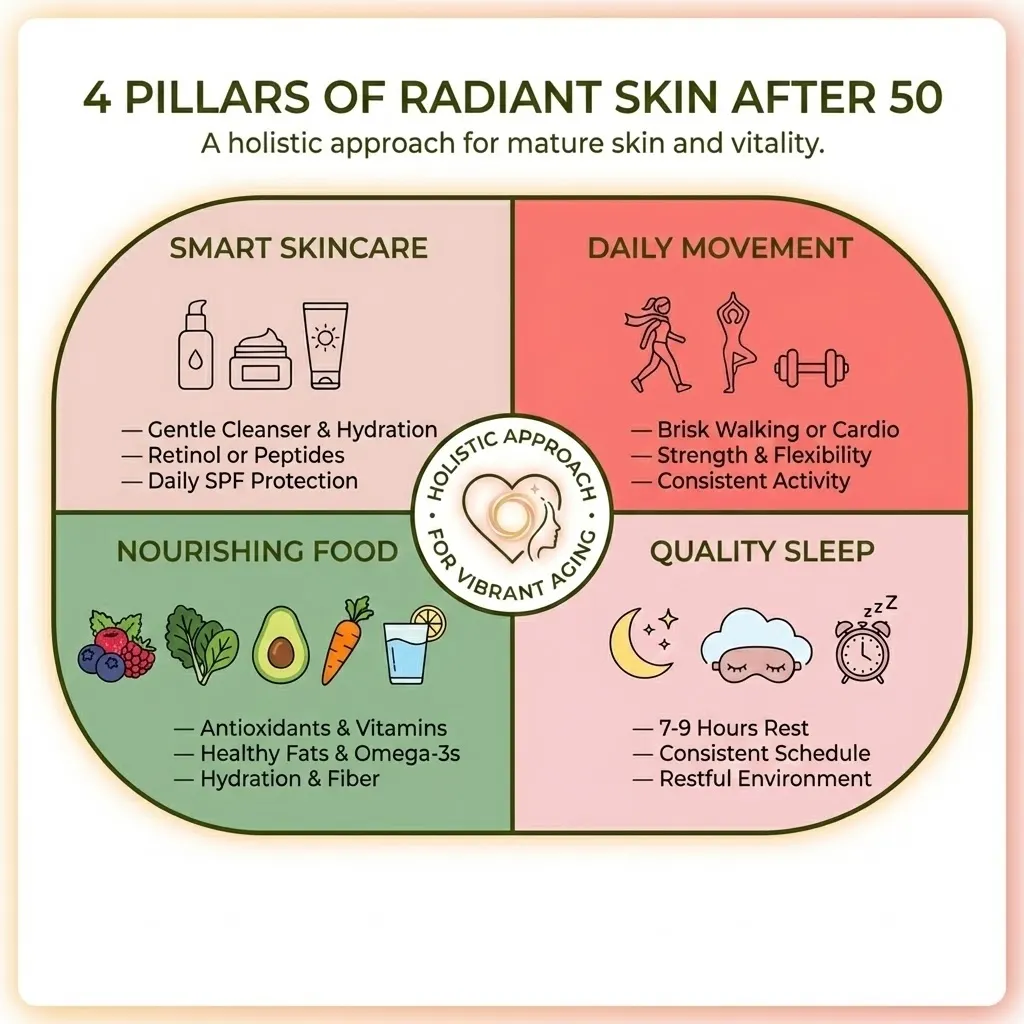
How to read a product before buying
- Confirm the product category and the problem it is designed to address.
- Read the full ingredient list and directions, not only the front label.
- Check packaging and expiration or period-after-opening guidance.
- Look for fragrance and known personal irritants.
- Compare active ingredients with products you already own to avoid duplication.
- Prefer a return policy when trying an expensive formula.
Build a small product wardrobe
Most routines need a cleanser, moisturizer, sunscreen, and at most one main treatment active. Add a separate acne or pigment product only when the concern and tolerance justify it. A stable four-product routine is more informative than rotating twelve products.
If dryness and barrier discomfort are your main concern, use Dry Skin After Menopause. For professional devices, peels, and procedures, use Anti Aging Facial Treatments After 50.
When product shopping should become a consultation
Seek professional advice for persistent rash, pain, swelling, blistering, eye involvement, infection, severe acne, a changing lesion, or a reaction that continues after stopping the product. A dermatologist can also help when prescription treatment, rosacea, eczema, pigment disorders, or procedure planning is involved.
Frequently asked questions
What skincare products do women over 50 actually need?
Most people need a suitable cleanser, moisturizer, and broad-spectrum sunscreen. Add one treatment product for a defined concern if the skin tolerates it.
Is retinol necessary after 50?
No. It is one option for texture and fine-line concerns, but irritation, skin conditions, procedures, preferences, and prescription treatments may make another plan more suitable.
Are expensive products better?
Price does not guarantee a better formula. Compare ingredients, packaging, directions, tolerability, and whether the product solves your main concern.
Can I use several anti-aging serums together?
Layering several actives can increase irritation and make results difficult to interpret. Introduce one at a time and avoid duplicating similar ingredients.
The bottom line
Effective skincare anti aging products solve a defined problem and fit a routine you can sustain. Buy by function, introduce products gradually, and send medical conditions or procedure questions to the right professional. For the biological context, use How Age Hormones and Diet Affect Your Skin. For the complete structure, visit the Skin Care Guide for Women Over 50.