Last Tuesday at 11:47 PM, I caught myself doing it again: phone in hand, tired enough to go to bed but still scrolling. I did not need another dramatic sleep overhaul. I needed a realistic way to make evening screens and lighting less disruptive without pretending I would never use a device after dinner.
That is the useful role of blue light blocking strategies for better sleep after 50. Evening light can influence circadian timing and alertness, but blue light is not the sole cause of insomnia, and glasses or device settings are not guaranteed sleep treatments. The practical goal is to reduce unnecessary evening light and stimulation while keeping the routine realistic.
Quick Answer: What Should You Change About Evening Screens?
Start with the easiest sources of unnecessary stimulation: lower screen brightness, use warmer display settings if you like them, dim bright room lighting, silence non-urgent notifications, and create a short screen-free transition before bed when practical. You do not need to ban technology completely. Consistency and reduced stimulation are more useful than an all-or-nothing rule you will abandon after two nights.
Why Evening Light Can Matter
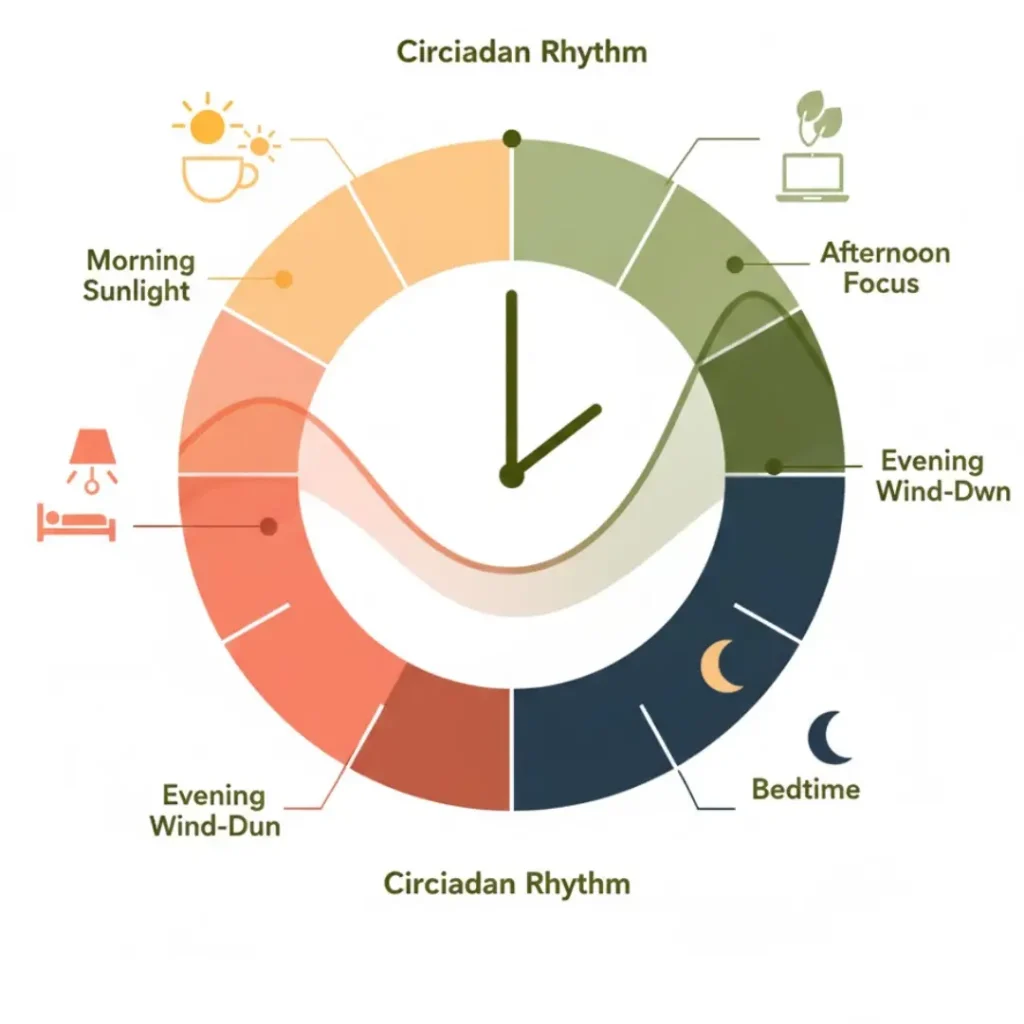
Light is one of the signals involved in regulating the sleep-wake cycle. Bright light in the evening can delay the biological signals associated with nighttime, and short-wavelength blue-enriched light can be particularly relevant. But real-life screen use involves more than wavelength: brightness, duration, timing, engaging content, notifications, and the habit of staying online longer than intended can all matter.
Sometimes the problem is not only the blue light. It is what the screen is asking your brain to do. Changing the color of a display does not change the content on it. A warmer screen can still deliver a stressful work email, upsetting news, a family problem, or an endlessly refreshing social feed. For me, that distinction was more useful than treating every evening screen as equally disruptive.
1. Reduce Brightness Before You Buy Anything
The simplest first step is often reducing overall brightness. Turn down screens to a comfortable level, avoid staring at a bright device in an otherwise dark room, and replace harsh overhead lighting with softer task lighting when you are winding down.
Built-in night modes can make screens feel warmer and more comfortable. Treat them as one tool, not permission to scroll indefinitely. A warmer screen at midnight can still keep you awake if it encourages another hour of stimulating content.
2. Create a Screen Cutoff You Can Actually Keep
You do not need a universal two- or three-hour ban. Try a practical buffer that fits your life. For some women that may be 30 minutes; for others, an hour. If work or caregiving requires later device use, focus on reducing non-essential use rather than creating a rule that is impossible to follow.
Test the change for several nights and ask a simple question: does the shorter, quieter transition make it easier to stop scrolling and settle for bed? If not, adjust the routine rather than assuming you failed.
3. Control Notifications, Not Just Screen Color
A dim phone can still be mentally loud. Use Do Not Disturb, mute non-essential group chats, remove social-media alerts from the lock screen, or charge the phone slightly out of reach if automatic checking is the problem. Keep emergency contacts able to reach you if that matters for your family situation.
4. Replace the Last Scroll With a Lower-Stimulation Option
Removing a habit is easier when you replace it. A physical book, quiet music, an audio program with the screen off, gentle stretching, or a few minutes preparing for tomorrow can provide a transition without demanding constant visual attention.
The replacement does not need to be “perfect sleep hygiene.” It only needs to be calmer than the activity that was keeping you online longer than intended.
5. Treat Blue-Light-Blocking Glasses as Optional
Amber or blue-light-filtering glasses are popular, but they are not mandatory for a good evening routine and should not be presented as a guaranteed insomnia solution. If you choose to try them, comfort, fit, lens quality, and how they affect your vision matter. Product claims about exact blocking percentages or guaranteed sleep improvements should be treated cautiously unless independently verified.
A 5-Night Screen Experiment
I stopped treating evening technology as an all-or-nothing decision. Instead, I use a simple progression. The first level is to keep the device but make it less intrusive: lower unnecessary brightness, use a warmer display if it feels comfortable, and silence alerts that do not need my attention tonight.
The second level is to change what I am doing on the screen. A necessary family message or an audio program is not the same experience as work email, breaking news, or endless social scrolling. When I cannot put the phone away, I can still choose a less activating use.
The third level is to step away when the device keeps pulling me back in. That might mean putting the phone out of immediate reach, switching to paper reading, listening with the screen off, or simply ending the evening online a little earlier.
Over five nights, change only one part of that progression at a time. Notice whether bedtime drifts later, whether you reach for the phone automatically, and whether the final part of the evening feels quieter. You are looking for a repeatable pattern, not trying to prove that one setting “fixed” your sleep.
When Screens Are Probably Not the Whole Problem
If you have already reduced evening screen stimulation but your sleep remains persistently poor, do not keep blaming the phone. Sleep disruption that also occurs on low-screen evenings, or that comes with marked daytime sleepiness, loud snoring, witnessed breathing pauses, gasping, persistent pain, significant mood changes, or a major unexplained change in your sleep pattern, deserves a broader assessment.
Blue-light strategies are best viewed as one environmental adjustment. They do not diagnose or treat sleep apnea, menopause-related symptoms, medication effects, mood disorders, or other medical causes of disrupted sleep.
For the complete sleep plan beyond screens and lighting, use Lonage’s practical ways to improve sleep naturally after 50.
Frequently Asked Questions
Do blue light blocking strategies really improve sleep after 50?
Reducing evening light and screen stimulation may support a more sleep-friendly routine, but results vary and blue light is not the only factor involved in screen-related sleep disruption. Timing, brightness, content, notifications, and total screen use also matter.
Is night mode enough before bed?
Night mode can make a display warmer and may be a useful part of your routine, but it does not address how long you use the device, how bright it is, or whether the content keeps you mentally engaged. Use it as one tool rather than a complete solution.
How long before bed should I stop using screens?
There is no single cutoff that fits everyone. Choose a realistic screen-free buffer, such as 30 to 60 minutes if that fits your life, and observe whether it makes bedtime easier. Consistency is more useful than an extreme rule you cannot maintain.
Do I need blue-light-blocking glasses?
No. They are optional. Many people can first improve their evening environment by reducing brightness, using warmer lighting, limiting unnecessary screen time, and managing notifications. Glasses should not be treated as a guaranteed treatment for insomnia.
When should I seek help for poor sleep instead of changing my screen routine?
Seek professional assessment when sleep problems are persistent, worsening, substantially different from your previous pattern, or accompanied by marked daytime sleepiness, loud snoring, breathing pauses, gasping, significant mood changes, persistent pain, or other concerning symptoms.
The Bottom Line
You do not need to fear every screen or buy special equipment to make evenings more sleep-friendly. Reduce unnecessary brightness, control notifications, create a realistic stopping point, and replace the final scroll with something calmer. Keep what genuinely helps and remember that persistent sleep problems deserve a broader assessment than a blue-light filter can provide.
This article is for general education and does not replace individualized medical advice, diagnosis, or treatment.