

For a long time, I thought healthy aging required a complete lifestyle overhaul. The more I paid attention to what I could actually sustain, the more useful the opposite approach became: a few simple habits, repeated often enough to support everyday function.
After 50, the goal is not to follow a perfect routine or prove that age does not affect us. It is to protect the things that make daily life feel like our own: strength, mobility, steady energy, restorative sleep, confidence, and connection. These four habits give me a practical framework without turning healthy aging into another full-time job.
Habit 1: Move in Ways That Protect Everyday Function

I used to think movement only counted when it looked like a workout. Now I pay more attention to what movement helps me keep doing: carrying groceries, getting up from a chair comfortably, climbing stairs, walking with friends, reaching overhead, and feeling steady on my feet.
A useful routine can include ordinary walking, resistance exercises, balance practice, and movement spread through the day. The right amount and intensity are individual. Your current fitness, joint health, medical conditions, medications, previous injuries, and confidence all matter.
A minimum starting action: choose one form of movement you can repeat reliably. That might be a short walk, a few sit-to-stand repetitions from a stable chair, or another activity that is appropriate for you. Once it feels established, build gradually rather than trying to compensate for years of inactivity in one week.
If the habit keeps failing: make it smaller or attach it to something you already do. A ten-minute walk you repeat is more useful than an ambitious plan you abandon.
New chest pain, fainting, severe shortness of breath, sudden weakness, or significant pain during activity deserves medical attention rather than a harder workout. If you have a condition that affects exercise safety, ask an appropriate healthcare professional what type of activity fits your situation.
Habit 2: Give Sleep a Consistent Place in Your Day
Sleep after 50 can become more complicated. Menopause symptoms, pain, medications, stress, breathing problems, nighttime urination, changing schedules, and the sleep environment can all play a role. That is why I no longer treat every restless night as a problem that can be solved by simply going to bed earlier.
What I can control is consistency. I try to keep my sleep and wake schedule reasonably steady, notice when late caffeine or an overstimulating evening affects me, and make the bedroom comfortable enough for sleep. If you need a fuller plan, Lonage’s guide to improving sleep naturally after 50 separates the practical steps from the possible causes of poor sleep.
A minimum starting action: choose one repeatable evening cue, such as dimming the lights, putting work away, or beginning your bedtime routine at a similar time.
If the habit keeps failing: look for the obstacle instead of blaming your discipline. A hot bedroom, pain, caregiving responsibilities, anxiety, or a schedule that does not fit your life may need a different solution.
Persistent insomnia, loud snoring, witnessed breathing pauses, gasping during sleep, marked daytime sleepiness, or a major change in your usual sleep pattern deserves proper assessment. A lifestyle routine should not delay evaluation of a possible sleep or medical disorder.
Habit 3: Build Meals Around Nourishment, Not Punishment
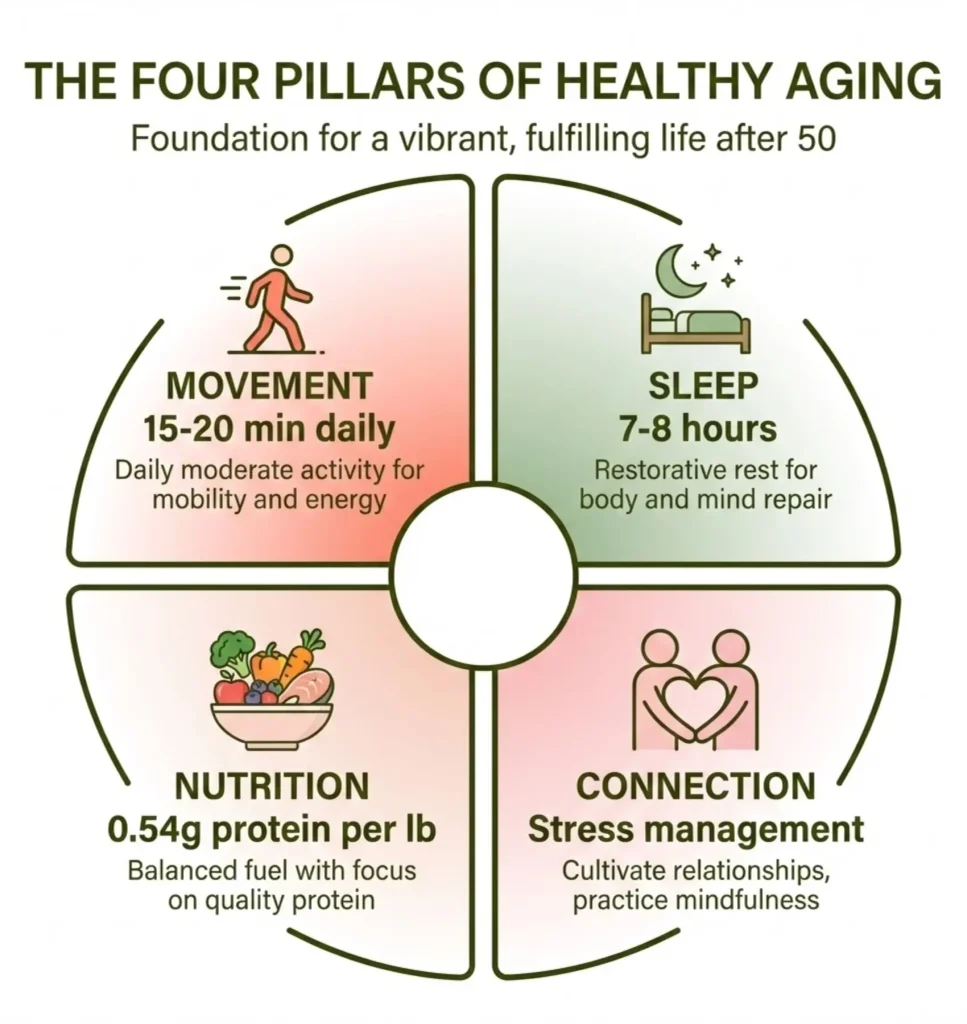
My relationship with food became easier when I stopped asking which foods I had to eliminate and started asking what a meal needed to support me. After 50, nutrition has to do more than fit a weight-loss rule. It supports muscle, bone, energy, digestion, and overall health.
A practical meal can include a protein source, vegetables or fruit, a source of carbohydrate that suits your needs, and fats that make the meal satisfying. There is no single protein target or eating pattern that is right for every woman. Body size, activity, kidney function, appetite, health conditions, medications, and dietary preferences can change what is appropriate.
A minimum starting action: improve one meal you already eat. Add a useful protein source, include produce, or replace a meal that routinely leaves you hungry with something more balanced.
If the habit keeps failing: reduce the preparation burden. Frozen vegetables, canned beans, yogurt, eggs, prewashed greens, tinned fish, or other convenient foods can still be part of a nourishing pattern.
If you have kidney disease, diabetes, significant digestive symptoms, unexplained weight change, difficulty eating, or another condition affected by diet, individualized guidance may be more appropriate than a generic meal rule.
Habit 4: Protect Recovery and Meaningful Connection
I used to treat stress management as something extra to do after everything important was finished. That rarely worked. Now I think of recovery and connection as part of the structure of the week, not a reward for surviving it.
For me, that can mean calling someone instead of scrolling, taking a quiet walk, leaving a little space between commitments, or noticing when I have said yes too many times. Someone else may find recovery through faith, time outdoors, volunteering, a hobby, a class, family, or a supportive community. The useful habit is the one that genuinely reduces overload or strengthens connection rather than becoming another obligation.
A minimum starting action: protect one small period this week for something restorative or socially meaningful. Put it on the calendar if that makes it more likely to happen.
If the habit keeps failing: ask whether the activity is actually restorative for you. A crowded social calendar is not the same as feeling connected, and a wellness practice that creates pressure is not serving its purpose.
Persistent low mood, anxiety, grief, loneliness, or changes in memory or daily functioning deserve attention. They should not automatically be dismissed as a normal part of aging.
How the Four Habits Work Together
The useful part of these habits is not that one of them is the secret to longevity. It is that they reinforce everyday function. Moving can make daily tasks easier. Better sleep can make movement and meal planning feel more manageable. Nourishing meals can support activity and recovery. Connection can make healthy routines easier to sustain.
| Habit | Start small | Adjust when |
|---|---|---|
| Movement | Choose a short, repeatable activity | Pain, balance, fitness, or health conditions change what is safe |
| Sleep | Use one consistent evening cue | The real barrier is symptoms, schedule, stress, or the sleep environment |
| Meals | Improve one meal you already eat | Your health, appetite, activity, or dietary needs require something different |
| Recovery and connection | Protect one small restorative or social period | The activity adds pressure instead of reducing it |
A One-Week Way to Begin
Do not try to perfect all four habits at once. Pick the one that would make daily life noticeably easier right now. Define the smallest version you can realistically repeat this week, notice what gets in the way, and adjust the habit rather than abandoning the goal.
At the end of the week, ask a practical question: did this make it easier to move, sleep, eat, recover, or participate in the life I want? That is a more useful measure than whether you followed a routine perfectly.
Frequently Asked Questions
What are four simple habits that support healthier aging after 50?
A practical foundation is regular movement, a consistent approach to sleep, balanced meals that support your individual needs, and time for recovery and meaningful connection. The right version of each habit depends on your health, abilities, schedule, and goals.
Do I need to change all four habits at once?
No. Starting with one small, repeatable change can make it easier to learn what fits your life. Once that habit feels established, you can build on it rather than trying to overhaul everything at once.
Is walking enough for healthy aging after 50?
Walking can be a useful form of regular movement, but healthy aging also involves strength, balance, mobility, sleep, nutrition, preventive care, and other individual needs. Your activity plan should reflect your abilities and health circumstances.
How do I make healthy habits easier to maintain?
Make the starting action small, attach it to an existing routine when useful, reduce unnecessary preparation, and adjust the plan when pain, symptoms, schedule, caregiving, or other barriers make the original version unrealistic.
When should I get professional advice before changing my routine?
Professional guidance can be useful when a health condition, medication, significant symptom, injury, dietary restriction, sleep disorder, or mental health concern affects what is safe or appropriate for you. New or concerning symptoms should not be managed only as a lifestyle problem.
The Bottom Line
Healthy aging is not built from one dramatic intervention. It is shaped by repeatable choices that protect function and make daily life easier to participate in. Start with the habit that matters most to your life now, keep the first version realistic, and adjust as your needs change.
For the broader framework, including preventive care, bone and heart health, energy, independence, and how these pieces fit together, use our healthy aging guide for women over 50. This article is for general education and does not replace individualized medical advice, diagnosis, or treatment.