
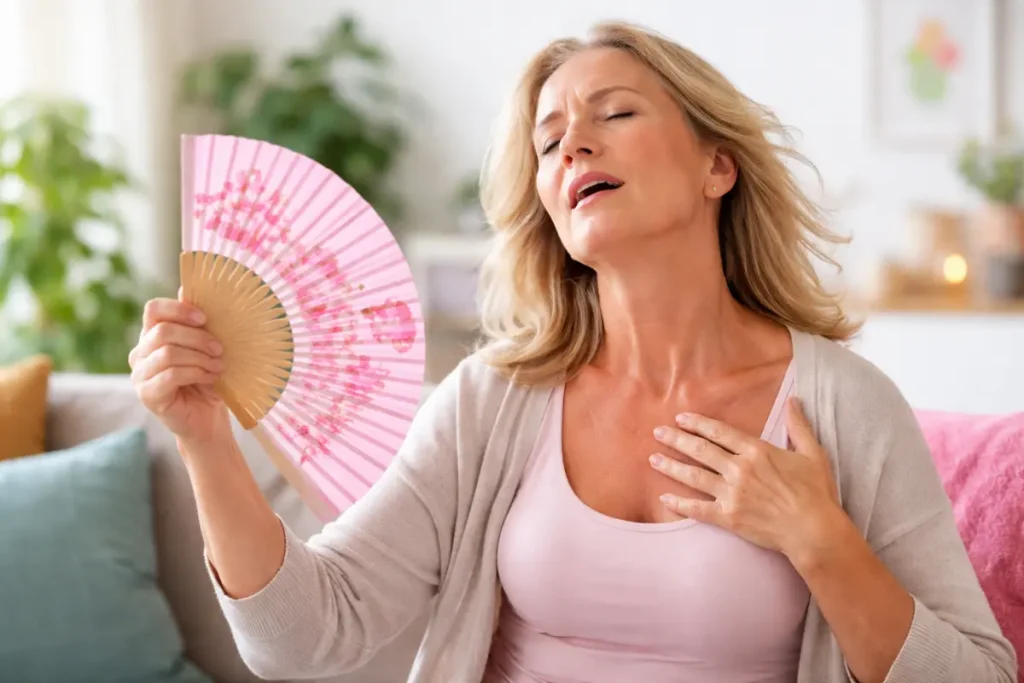
Hot flashes during menopause became real for me when I woke up at 3:47 a.m., drenched in sweat, with my pajamas soaked as if I had just finished a long workout. That experience was unsettling, but it also taught me that a personal story can start a conversation, not explain every woman’s symptoms.
A hot flash can feel like a sudden wave of warmth, flushing, sweating, and sometimes chills afterward. The pattern differs from one woman to another. For the wider transition, see the Menopause after 50 guide.
What Hot Flashes During Menopause Can Feel Like
For me, the heat often started in my chest and climbed toward my neck and face. Other women describe sweating, flushing, a racing sensation, or feeling chilled when the episode passes. Hot flashes are common during the menopause transition, but a new episode of sweating, flushing, or palpitations should not automatically be assumed to be menopause if the pattern is unusual or concerning.
Hormonal changes are thought to influence the brain’s temperature-regulation system and narrow the range in which the body feels comfortable. I like the thermostat analogy because it makes the experience easier to picture, but the biology is more complicated than estrogen simply making your thermostat “trigger-happy.”
How Long Do Hot Flashes Last?
There is no useful countdown clock. Some women have symptoms for a relatively short period; others experience vasomotor symptoms for years. Timing can vary with when symptoms begin and individual health and demographic factors. What matters most day to day is whether the episodes are becoming more frequent, more disruptive, or harder to distinguish from another health problem.
Find Your Own Hot-Flash Triggers
Keeping a simple hot-flash journal changed my experience because it made the episodes feel less random. My afternoon coffee seemed to be one of my personal triggers. Yours may be completely different.
Commonly reported triggers include warm rooms, hot drinks, alcohol, spicy food, caffeine, smoking, stress, and tight or heat-trapping clothing. Instead of eliminating everything at once, track the time, what happened beforehand, the room temperature, food or drink, stress, and how intense the episode felt. A pattern is more useful than a generic list.
Practical Ways to Make a Hot Flash Less Disruptive
I dress in light layers because being able to remove one quickly is more practical than trying to predict the next heat surge. A small fan, cool water, breathable sleepwear, and a cooler room can also make an episode easier to ride out. These are comfort strategies, not treatments for the underlying cause.

What about exercise?
I still exercise because walking and strength work make me feel better overall. I no longer describe a daily 30-minute walk as one of the “most effective” treatments for hot flashes or promise a fixed reduction in episodes. Exercise is valuable for cardiovascular health, muscle, bone, mood, and function; its effect on hot-flash frequency varies.
What about stress?
Stress can make symptoms feel harder to manage, and some women notice more episodes during stressful periods. Slow breathing, meditation, or a short pause may reduce distress during an episode. I would not promise that ten minutes of meditation reduces hot flashes by a specific percentage.
Night Sweats: When Hot Flashes Start Stealing Sleep
Night sweats deserve special attention because repeated awakenings can leave you exhausted the next day. I keep the bedroom cool, use layers I can adjust, and keep a change of sleepwear nearby. Those small details make a rough night less disruptive.
When the bigger problem becomes falling asleep, returning to sleep, or chronic insomnia, move to the Menopause Insomnia guide. That keeps this page focused on vasomotor symptoms instead of duplicating the sleep cluster.
Food, Drinks, and “Natural” Remedies
Soy foods and flaxseed contain phytoestrogens, and some women are interested in them for menopausal symptoms. Research is mixed and response varies, so I would not promise that flaxseed cuts hot flashes by 30% or that any food “balances” hormones. A nutritious eating pattern still has value even when it does not eliminate a hot flash.
If you want to explore complementary options in more depth, use 7 Natural Menopause Treatments. This page should not duplicate its supplement and herb sections.
When to Talk With a Clinician
Talk with a healthcare professional when hot flashes or night sweats are disrupting sleep, work, relationships, or quality of life. You do not need to wait months to “prove” lifestyle changes failed before asking for help.
Hormone therapy is an effective treatment for vasomotor symptoms for appropriate candidates, and nonhormonal prescription options are also available. Which option fits depends on your health history, medications, risks, preferences, and symptom severity. I am deliberately not attaching universal percentages to individual medicines here because treatment decisions deserve more context than a listicle can provide.
Seek prompt medical assessment for chest pain, fainting, severe shortness of breath, a new concerning heartbeat, severe headache with neurological symptoms, fever, or drenching sweats that do not fit your usual pattern.
Frequently Asked Questions
How can I cool down during a hot flash?
Removing a layer, using a fan, moving to a cooler space, sipping a cool drink, or placing a cool cloth on the skin may make an episode more comfortable. These strategies do not guarantee that a hot flash will stop immediately.
What is the best treatment for hot flashes during menopause?
There is no single best choice for every woman. Menopausal hormone therapy is an effective option for appropriate candidates, and several nonhormonal prescription treatments are also available. The best choice depends on health history, risks, medicines, preferences, and symptom severity.
Can I prevent hot flashes by avoiding triggers?
Avoiding a personal trigger may reduce episodes for some women, but hot flashes cannot always be prevented. Tracking your own pattern is more useful than eliminating every commonly reported trigger.
Can stress make hot flashes feel worse?
Stress may make symptoms feel more difficult to manage and some women notice more episodes during stressful periods. Relaxation practices may help with coping, but they are not guaranteed to reduce hot-flash frequency.
Embracing This Chapter With Confidence
Hot flashes are frustrating, but they do not get to define this chapter of your life. I’ve learned to keep a fan nearby, laugh about the occasional winter meeting where I’m the only person overheating, and ask for help when symptoms cross the line from inconvenient to disruptive.
Make your comfort non-negotiable. Track what is useful, ignore miracle promises, and remember that effective medical options exist if self-management is not enough.