

I remember a conversation with a close friend shortly after her 52nd birthday. She called me breathless after noticing that her cholesterol and blood pressure had changed at a routine checkup. Her doctor told her that her heart deserved attention. Her experience stayed with me, but it is one person’s story not proof that every cardiovascular change is caused by menopause.
Heart health is one of the long-term priorities that deserves a place in life beyond menopause, alongside movement, sleep, nutrition, and preventive care.
Menopause and heart health deserve attention because cardiovascular risk can change during midlife. Age, blood pressure, cholesterol, diabetes risk, smoking, activity, sleep, family history, and hormonal changes may all matter. Menopause is one part of that broader picture, not the sole explanation for every change.
This is an opportunity to understand your risk factors and build habits that fit your health, preferences, and medical history.
How Menopause Can Change Cardiovascular Risk
Cardiovascular risk factors may begin changing during the menopause transition, but the timing and degree differ from one woman to another. Lipid levels, blood pressure, body composition, sleep, activity, and existing conditions should be considered together rather than reduced to one hormone or one laboratory result.
Hormonal changes can occur alongside shifts in how the body stores fat and processes lipids, yet age and other health factors also influence these measures. A clinician can help interpret blood pressure, cholesterol, glucose, and other results in the context of your personal risk.

Understanding these possible changes can be useful, but it should lead to informed questions—not fear or a conclusion that menopause alone explains a new symptom.
Heart racing or fluttering can have many possible causes, including stress, medicines, anemia, thyroid conditions, rhythm problems, or hormonal changes. Recurrent palpitations, or palpitations with chest discomfort, severe shortness of breath, fainting, or marked dizziness, need prompt medical assessment. Our article on heart palpitations and fatigue provides additional context.
Heart Attack Warning Signs That Need Urgent Attention
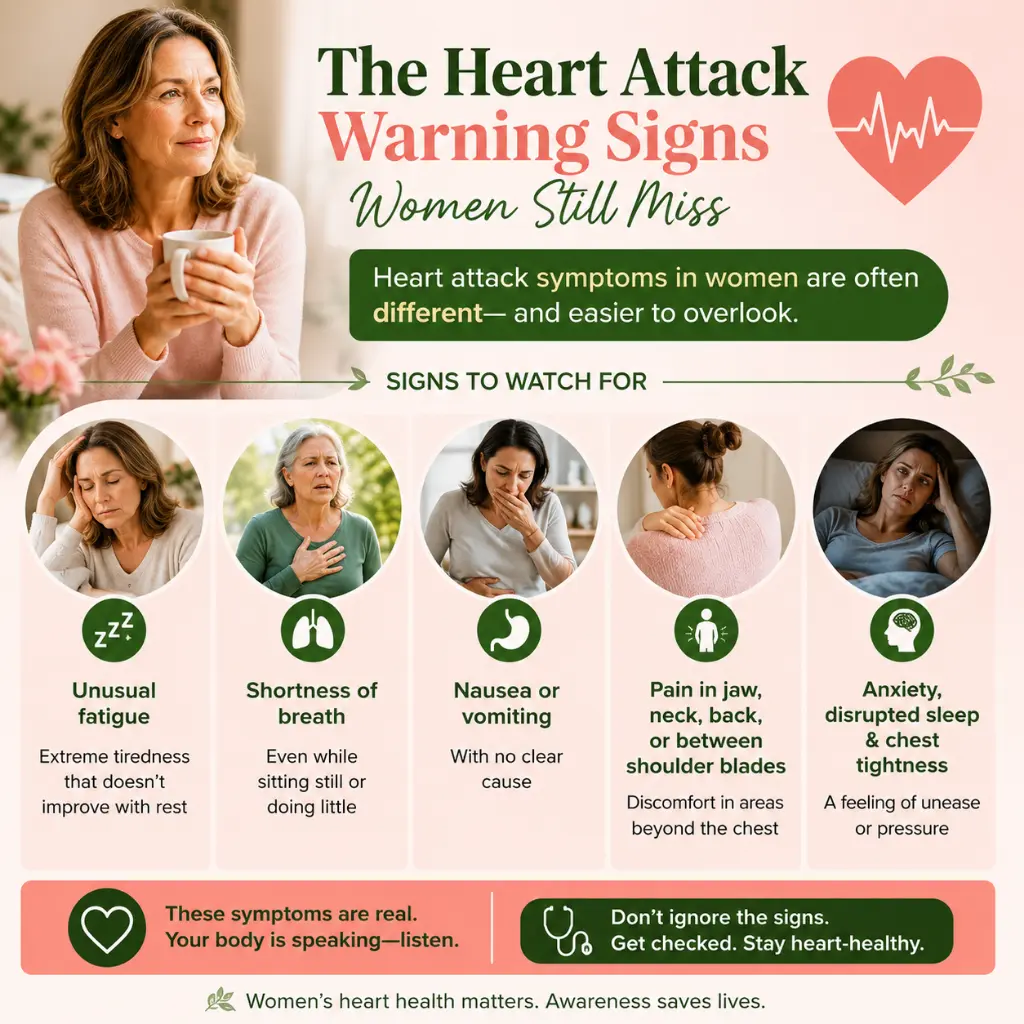
Some heart problems do not begin with dramatic chest pain. Unusual symptoms should not automatically be called menopause, especially when they are new, severe, persistent, or occur together.
Possible warning signs can include pressure or discomfort in the chest, shortness of breath, unusual fatigue, nausea, sweating, or discomfort in the jaw, back, neck, or arms. The combination, severity, and suddenness matter. When symptoms suggest an emergency, seek urgent medical help rather than waiting to see whether they pass.
The symptoms to watch for specifically include:
- Unusual fatigue that doesn’t improve with rest
- Shortness of breath, even while sitting still
- Nausea or vomiting with no clear cause
- Discomfort between the shoulder blades or in the jaw, neck, or back
- Anxiety and disrupted sleep paired with chest tightness
Persistent or unexplained fatigue can have many causes. When it is new, severe, worsening, or accompanied by chest discomfort, shortness of breath, fainting, or other concerning symptoms, it deserves medical assessment rather than being assumed to be menopause.
Do not automatically attribute new or concerning symptoms to menopause. Seek appropriate medical assessment, especially when symptoms are severe, sudden, persistent, or occur together.
When to Discuss Cardiovascular Risk With a Clinician
The menopause transition is a useful time to review cardiovascular risk factors such as blood pressure, cholesterol, glucose, smoking, activity, sleep, and family history. Decisions about hormone therapy are individualized and should be discussed with a qualified clinician; it should not be presented as a general strategy for preventing cardiovascular disease.
Risk assessment should be personal rather than based on a single study, age cut-off, scan, or medication. Ask a clinician which tests are appropriate for your history and risk profile.
The perimenopause and postmenopause years can be useful times to review cardiovascular habits and measurements, without treating them as a universal “window” or deadline.
What to eat (and what to skip) for a stronger heart
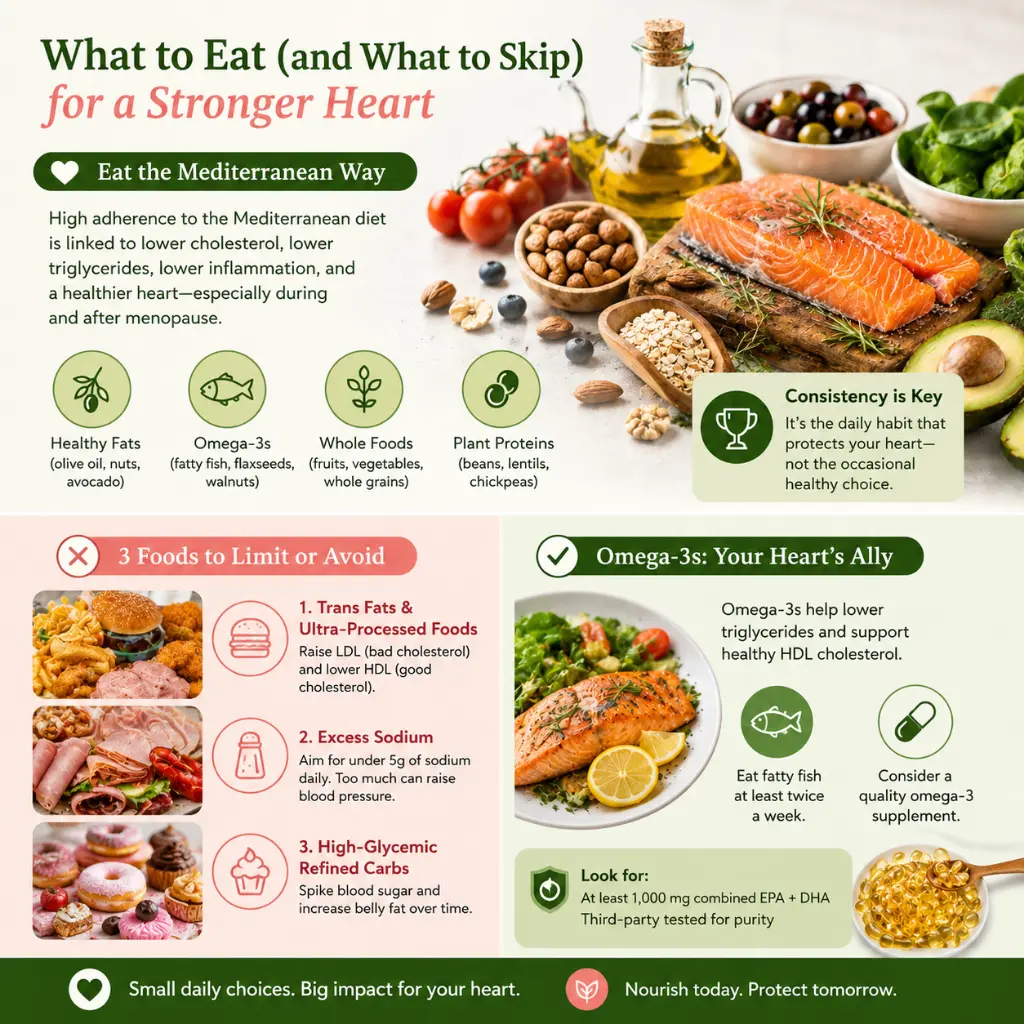
A Mediterranean-style eating pattern can be a practical way to include vegetables, fruit, beans, whole grains, nuts, fish, and unsaturated fats. It is a flexible pattern rather than a promise that one diet will produce the same result for every woman.
The three foods cardiologists consistently flag
Rather than treating three foods as universally forbidden, focus on the overall eating pattern. Limiting foods high in trans fat, excess sodium, added sugars, and highly refined carbohydrates can fit within a heart-supportive diet, while vegetables, fruit, beans, whole grains, nuts, fish, and unsaturated fats can form the foundation.
Fish can be one useful source of omega-3 fatty acids within a balanced eating pattern. Supplements are not automatically necessary, and the appropriate product or dose depends on diet, medicines, health conditions, and individual cardiovascular risk. Discuss supplementation with a clinician or pharmacist.
Daily Habits That Support Cardiovascular Health
Consistent habits can support cardiovascular health, but they complement rather than replace medical care. Choose realistic changes that address movement, sleep, nutrition, stress, smoking, and known risk factors.
What I’ve noticed, both personally and through the Lonage community, is that the women who thrive cardiovascularly aren’t doing extreme things. They’re doing consistent things.
- Walk 30 minutes daily at a brisk pace. The British Heart Foundation notes this is one of the most accessible and evidence-backed interventions for postmenopausal cardiovascular risk reduction.
- Prioritize regular sleep. Sleep quality and duration can influence overall health and daytime function. If sleep problems are persistent, discuss them with a clinician rather than treating one sleep target as a universal prescription.
- Manage stress with something measurable. Depressive symptoms during the menopausal transition are independently linked to increased cardiovascular risk. Yoga, journaling, breathwork, or therapy all count.
- Know your cardiovascular risk factors. Ask your clinician how often blood pressure, cholesterol, glucose, and other measurements should be checked based on your history. Additional testing, including coronary artery calcium scoring, is appropriate only for selected people after individualized assessment.
- Eat fish twice a week. Simple, pleasurable, and backed by decades of Mediterranean diet research.
If fatigue makes daily habits difficult, look for the cause rather than blaming willpower. Persistent or unexplained fatigue deserves a professional assessment.
These are doable. Not perfect. Doable. And honestly, that’s the whole point.
Top questions women frequently ask
How do I protect my heart during menopause?
Focus on the overall cardiovascular picture: regular movement, a balanced eating pattern, not smoking, adequate sleep, and management of blood pressure, cholesterol, glucose, and other personal risk factors. Ask a clinician which measurements and follow-up schedule are appropriate for your medical history.
What are the first signs of heart disease in a woman?
Possible warning signs can include chest pressure or discomfort, shortness of breath, unusual fatigue, nausea, sweating, dizziness, or discomfort in the jaw, back, neck, or arms. Symptoms vary, so new, severe, sudden, or persistent symptoms should not automatically be attributed to menopause. Seek urgent medical help when symptoms suggest an emergency.
What foods should I limit for heart health during menopause?
Rather than banning three specific foods, focus on the overall pattern. It can be reasonable to limit foods high in trans fat, excess sodium, added sugars, and highly refined carbohydrates while emphasizing vegetables, fruit, beans, whole grains, nuts, fish, and unsaturated fats.
How many stages of menopause are there?
The menopause transition is commonly discussed as perimenopause, menopause, and postmenopause. Perimenopause is the transition leading up to menopause; menopause is identified after 12 consecutive months without a menstrual period when there is no other cause; postmenopause refers to the years afterward.
Does premature menopause affect cardiovascular risk?
Menopause before age 40 is associated with higher long-term cardiovascular risk in observational research. Individual risk still depends on many factors, including blood pressure, cholesterol, diabetes, smoking, family history, and other medical conditions, so personal assessment with a clinician is important.
The bigger picture for your heart
Menopause and heart health are connected, but cardiovascular risk is shaped by many factors. Midlife is a practical time to review those factors, strengthen sustainable habits, and discuss personal risk with a qualified clinician.
The women I see thriving in their 50s and 60s are not the ones who panicked or overhauled their lives overnight. They’re the ones who added one small thing, then another, then another. They know their numbers. They eat fish on Wednesdays. They walk in the morning before the day takes over. And when something feels off, whether it’s a racing heart at 2am or a fatigue that no amount of sleep seems to touch, they pay attention. They read, they ask questions, and they act. Small and consistent beats perfect and occasional, every single time.
Please talk to a qualified doctor or cardiologist about your personal cardiovascular risk profile. This article is a starting point, not a prescription.
What’s one small step you’ll try this week? Share in the comments below.
For a broader perspective on thriving through menopause, explore our broader guide to thriving through menopause.