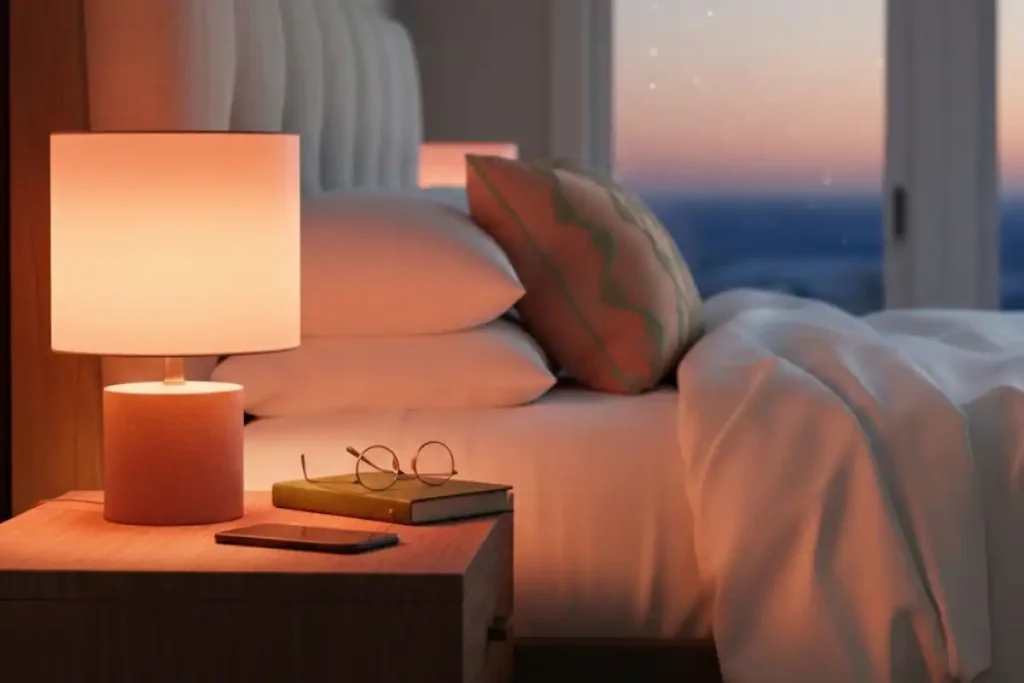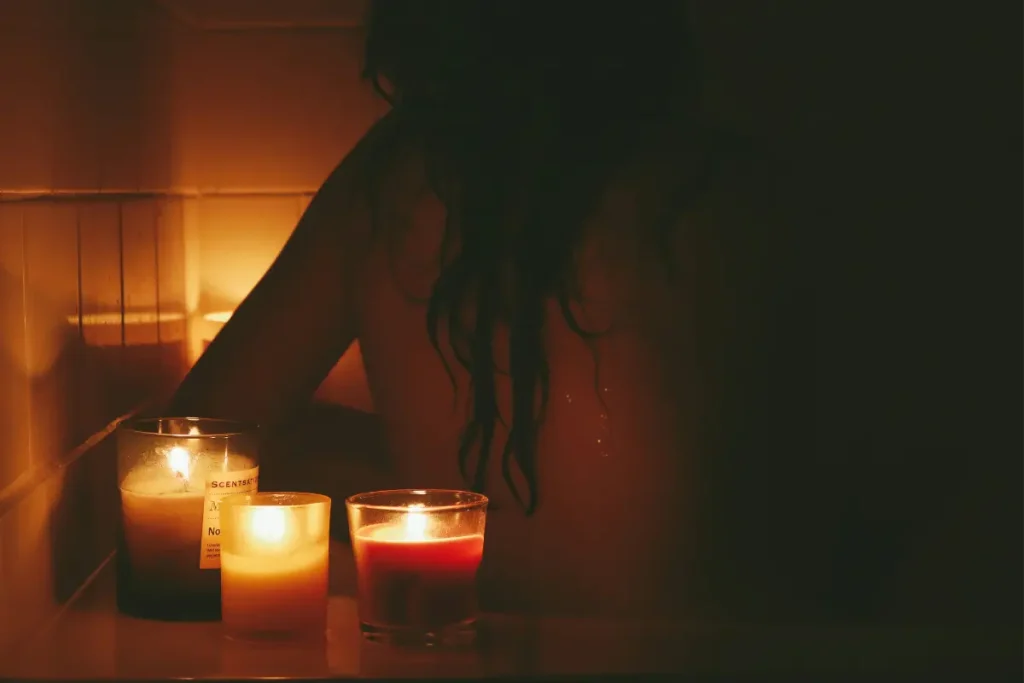
The first time I tried showering with the bathroom lights turned down, I understood the appeal immediately. The room felt quieter. I was less tempted to check my phone, and the shower became a clear transition between the busy part of the evening and bedtime.
But I would not recommend what I originally tried: standing in a wet bathroom in complete darkness. For women over 50, especially anyone with vision, balance, dizziness, neuropathy, or mobility concerns, that creates an unnecessary fall risk. The useful idea behind “dark showering” is much simpler: reduce harsh evening light while keeping enough illumination to shower safely.
Quick Answer: Is Dark Showering Safe?
Pitch-black showering is not the safest version of this trend. A better approach is a low-light shower: use enough warm, dim illumination to see the floor, controls, products, and exit clearly. Keep the shower surface non-slip and the walking path uncluttered. If dim lighting makes you feel unsteady or anxious, keep the normal lights on and choose another wind-down ritual.
What Dark Showering Really Means
The name can be misleading if it makes complete darkness sound like the goal. It is not. The useful idea is to reduce harsh evening light while preserving the visual information you need to move safely. I now think of it as low-light showering rather than a challenge to see how dark I can make the bathroom.
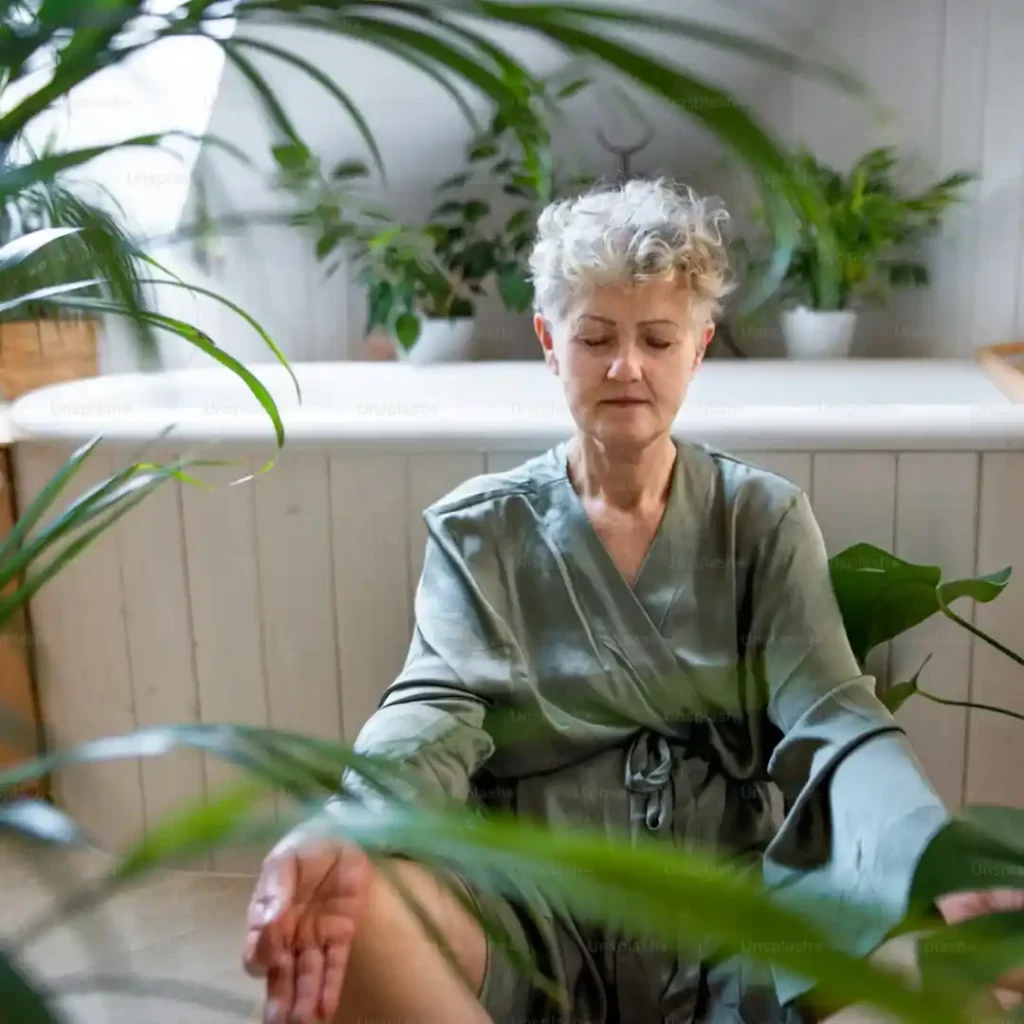
A dim bathroom, a warm-toned light source positioned safely away from water, and a phone-free shower can create a quieter transition without turning a routine activity into a balance test.
What Reduced Evening Light May Do, and What It Cannot Promise
Lower evening light can be one part of a wind-down environment, while a warm shower may feel relaxing for some people. Dark showering simply combines those ideas into one optional ritual. It does not need a complicated biological explanation to be useful.
That does not mean a dark shower has been proven to cure insomnia, regulate cortisol, correct menopause hormones, or guarantee deeper sleep. Its value may be much simpler: fewer visual distractions, no phone in my hand, and a repeatable boundary between daytime activity and bedtime.
Safety Comes Before Darkness
A wet bathroom is already a fall-risk environment. Removing useful visual information can make it more hazardous. Keep enough light to see where you are stepping and reaching.
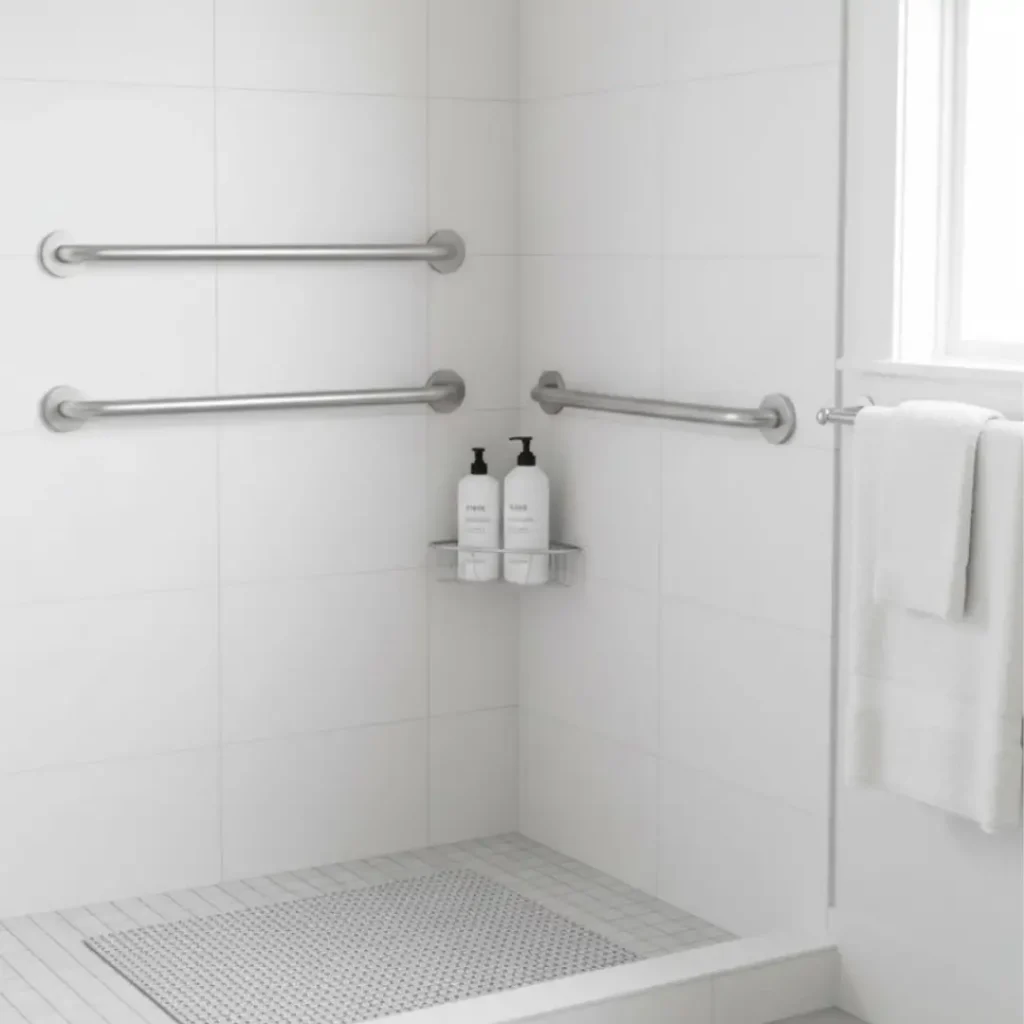
- Use a secure non-slip surface.
- Keep shampoo, soap, towels, and controls in predictable, easy-to-reach places.
- Remove loose rugs, cords, clutter, and other trip hazards.
- Use grab bars if they are appropriate for your bathroom and mobility needs.
- Do not use open flames such as candles around towels, products, or unattended bathroom areas.
- Keep normal lighting if you have poor night vision, balance problems, dizziness, vertigo, neuropathy, or any condition that makes low-light movement unsafe.
A Safer Low-Light Shower Routine
I now think of this as a five-step transition rather than a wellness hack.
- Prepare first. Put the towel and products where you can reach them easily.
- Dim, do not disappear. Lower harsh overhead light while keeping the shower area clearly visible.
- Choose a comfortable water temperature. Avoid water so hot that it makes you dizzy, flushed, or uncomfortable.
- Keep the phone out of the routine. Let the shower be a short break from messages and scrolling.
- Maintain safe lighting afterward. Do not walk through a dark bathroom or hallway just to preserve the ritual.
If you are curious whether the ritual adds anything for you, try it for three evenings without turning it into a sleep test. On the first evening, shower with your normal lighting and simply notice how the bathroom feels. On the second, use softer lighting while keeping the floor, controls, products, and exit fully visible. On the third, repeat only the version that felt both calmer and completely safe.
Then ask two questions: did this make the transition into my evening feel easier, and would I realistically want to repeat it? Those answers are more useful than asking whether three showers “cured” your sleep. If the ritual adds stress, makes navigation harder, or feels like another wellness rule to obey, it has missed the point.
When This Ritual May Be Useful
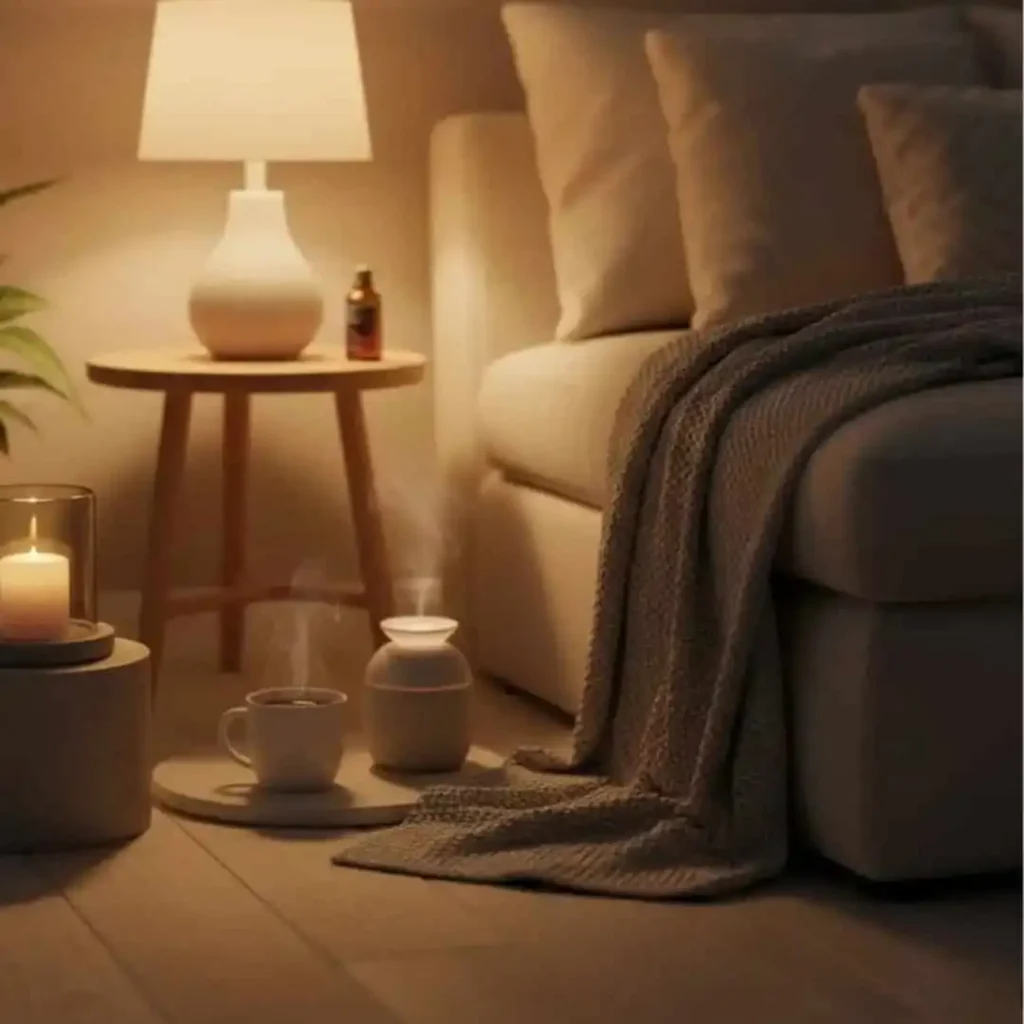
A low-light shower may suit you if bright evening routines feel stimulating, you tend to carry your phone into every part of the evening, or you want a simple cue that the active part of the day is ending. Its value is behavioral: a repeatable, quiet transition.
If it feels inconvenient, unsafe, claustrophobic, or stressful, skip it. A dim reading lamp, quiet music, gentle stretching, or another calm routine can serve the same purpose without a wet floor.
Who Should Avoid Showering in Darkness?
Do not intentionally shower in darkness if reduced visibility increases your fall risk. That includes people with significant vision impairment, balance problems, recurrent dizziness or vertigo, mobility limitations, neuropathy affecting the feet, or a history of falls. Complete darkness is also a poor choice if it triggers panic, trauma responses, or claustrophobia.
If you normally rely on glasses or other visual support to navigate safely, do not sacrifice useful visibility just to make the room darker. In an unfamiliar bathroom, such as a hotel, use normal safe lighting rather than trying to recreate the ritual. If you are unsure whether your setup is safe, keep the lights on. Better sleep is not worth a preventable injury.
What If the Shower Does Not Help Your Sleep?
That does not mean you did it incorrectly. Dark or low-light showering is optional, and sleep problems have many possible contributors. Do not keep making the bathroom darker in search of a stronger effect.
If poor sleep is persistent, worsening, substantially different from your previous pattern, or associated with marked daytime sleepiness, loud snoring, breathing pauses, gasping, significant mood changes, persistent pain, or other concerning symptoms, seek professional assessment.
This is an optional bedtime ritual, not a treatment for insomnia or a way to “reset” hormones. For the complete sleep strategy, use Lonage’s practical ways to improve sleep naturally after 50.
Frequently Asked Questions
Do I need complete darkness for dark showering?
No. Complete darkness adds unnecessary fall risk. A safer version uses warm, dim lighting while keeping the floor, controls, products, and exit clearly visible.
Can dark showering cure insomnia?
No. A low-light shower can be an optional wind-down ritual, but it is not a treatment or cure for insomnia. Persistent sleep problems may require a broader sleep plan or professional assessment.
Are candles a good way to light a dark shower?
Open flames are not the preferred option in a bathroom because of fire and burn risks. Use a safe fixed or battery-powered light source that provides enough illumination to move confidently and is appropriate for the bathroom environment.
Who should avoid showering in very low light?
Anyone whose safety depends on clear visual cues should avoid it, including people with significant vision impairment, balance problems, recurrent dizziness or vertigo, mobility limitations, neuropathy affecting the feet, or a history of falls. Keep normal lighting if low light feels unsafe.
How long should a low-light evening shower last?
There is no sleep-specific required duration. Shower for a comfortable, practical length of time and avoid very hot water if it makes you dizzy or uncomfortable. The routine should support relaxation without creating a safety risk.
The Bottom Line
The best version of dark showering after 50 is not truly dark. It is a safer low-light ritual that reduces harsh evening stimulation while preserving visibility and balance. Use it only if it feels comfortable and secure, and treat it as one optional bedtime cue rather than a medical or hormonal solution. This article is for general education and does not replace individualized medical advice, diagnosis, or treatment.